
Abstract
This personal research essay aims to describe my experiences of mothering, with a particular focus on lactation as a bodily and institutional site where maternal and trainee-therapist identities, care, separation, abjection, and professional presence become entangled. Within art psychotherapy research, there is very little focus given to the profound psychological changes for an art therapist when she becomes a mother. Literature is held within the patient or client’s transference responses to the art therapist’s pregnancy (Skaife, 1997), or in responsive images created by the art therapist post session (Nash, 2020). The response art of the art therapist can be a safe container to hold the conflicting emotions that matrescence stirs in and out of the therapy room. The process of creating images can illuminate emotional connections between the art therapy profession and new motherhood. During my initial training in art psychotherapy there was a profound desire to explore and normalize the emotional and psychological shifts that pregnancy, childbirth, and mothering bring to the profession.
Through art works which include paintings, drawings, collage and printmaking, as well as poetry and episodic narratives, this a/r/tographic analysis demonstrates my own diverse lived experience as a mother and trainee art therapist woven with sociological, feminist and psychodynamic theory. It brings into focus a personal view of maternal subjectivity through a rigorous journey of both studio and professional therapeutic practice. I hope the images and ideas offer a richness to the reader, highlight the complexity of matrescence and prove to be an empowering and necessary read for mothers, trainees, and therapists.
Episodic narrative:
I managed to speak with a woman who was suffering- so young, so vulnerable and innocent.. Recovering. Not recovering. I immediately felt drawn to her. Her story resonated with me; she described a lack of trust in others, missing her family, feeling a sense of guilt from being separated from them, whilst recovering from major surgery just a few weeks earlier. She was also grappling with similar existential questions, and it was apparent just how concerned she was for the welfare of her family. She had a visceral effect on me.
I wonder what it would be like to be completely separated from my daughter, and I won’t lie- I’m struggling now as I write this at university. But what is it I struggle with? Is it that I miss her so much? Is it that I sometimes forget to think about her when I am immersed in painting- even though motherhood themes are at the forefront of the process and the making? That I feel selfish for enjoying some of the quiet and uninterrupted time to focus on my learning, on me? That I feel guilt that I should be with her (and am reminded of this every. single. time. my breasts fill up with milk and then I need to pause my day and express and relieve myself from the physical discomfort)? And then there is the constant checking in with my mother-in-law or quick glances at my phone during lectures in case there are 1,000,000 missed calls and unanswered texts.
Breathe Megan, breathe.
I sometimes feel that she or I am not ready to be independent just as quick. But when are we ready? Our job as mothers is to help our children become independent eventually. I am reminded now of childbirth and at that immediate moment when she hurried out after only five (excruciating) hours of labor our physical attachment was literally cut via the umbilical cord. Our first real separation… Sometimes I wish for her to be back inside my belly, where she was safe, contained, nourished, protected from the outside world.
Introduction
Matrescence. If only it came with a manual. Nothing can prepare you for the confusing hormones and sleep deprivation, long, and often broken nights and early mornings, cracked and bleeding nipples, moments of uncertainty, consuming self-doubt and mistrust, coupled with cuddles and kisses, sheer bliss, pride and joy and overwhelming adoration and love. Similar to adolescence (Sacks, 2018), matrescence is feeling different feelings at the same time. It can be defined as the transformative, emotional and physical experiences of being and becoming a mother (Raphael, 1975). Throughout this process, a mother’s sense of self undergoes a matrix of change, a metamorphosis (Ettinger, 2006), bringing with it a new identity, body, emotions, perspectives, and relationships.
Matrescence invokes an emotional crisis of deep feelings about our own mothers, alongside mental and physical exhaustion and psychic confusion (Rich, 1986). In 2020 I fell pregnant in the middle of art therapy training, and had so many questions: Was I ready? What about my studies? How would this impact my learning? Can I breastfeed whilst on placement? Would I be able to pause and return to the course? Could I still qualify? My future art therapist self was fading into the distance. Pregnancy certainly curtailed my studies, and I was unable to take part on placement or work with clients due to the COVID pandemic. I then paused my training for eleven months maternity leave to spend as much time with my daughter as possible. As such, this experience provided a rich seam of reflections that I was eager to explore.
My training provided in/significant and un/necessary lessons in mothering, from theoretical concepts such as holding, containment, attachment theory, and object relations. I often wondered how much knowledge had or has influenced or hindered how I mother, which I explored in personal therapy as I found that in my first year of motherhood, my (undiagnosed) postpartum anxiety escalated each time my daughter cried or appeared distressed in some way. I felt a failure, unable to attune to her non-verbal cues. I desperately missed my own late mother, hungry for her guidance and support. Likewise, breastfeeding was a traumatic and upsetting challenge in the beginning, which I felt impacted and delayed our bond early into our relationship. This presented the ultimate question: How could I be a good enough therapist when I didn’t feel like a good enough mother?
As a white heterosexual feminist living in Scotland I recognize my position of privilege. Class, race, disability, sexuality, gender identity, family structure, and access to lactation support may shape a mother’s experiences differently, and I acknowledge the ongoing failings of the patriarchal institution of motherhood. A woman bears the brunt of patriarchal, social and cultural expectations of maternal femininity through her bodily reproductive functions (Brock, 2026; Ettinger, 2006). Such projections may disconnect her from her sense of self and natural instincts (Seu and Heenan, 1998), which I could relate to. As a feminist I often reflected on the gender expectations of women, and what being a mother entails (Marchiano, 2021). Observed as childbearing vessels, women’s bodies are viewed through a feminine lens as sexual, reproductive objects (Neumann, 1963). Yet, our bodies bloat and bleed and leak, in some ways deemed disgusting and monstrous in their feminine potential (Agarwal, 2021; Kristeva, 1982). Recently, art therapy has been shown to help validate a woman’s growth, her evolving maternal identity and her experience of becoming a mother (Swan-Foster, 2021; Hogan, 2021; Armstrong et al, 2019), whilst challenging stereotypical projections which can ignite potential feelings of failure and inadequacy in their mothering (Hogan, 2021). Significantly, art therapy can provide the mother with a concrete, creative timeline of visual progress and regression, bringing her matrescence journey into consciousness through the art making process (Armstrong et al, 2019). Images can thus be living, solid evidence that document the highs and lows of being and becoming a mother.
Thoughts about my body, identity and responsibilities as a woman and mother realigned my priorities for both my here-and-now and future selves, and the art therapist I hoped to become post qualifying. A remarkably different – and I think better – version of me returned to training, and I was curious how I would be able to navigate and balance my studies alongside being a breastfeeding mother, who struggled to be away from her daughter. Likewise, I wondered how my separation anxiety would affect the relationships I built with my patients. Would I be able to be fully present in the here-and-now of their worlds, care for them, contain them (Winnicott, 1971) and hold them (Bowlby, 1988) in mind as my body filled up with milk?
Using a/r/tography methodology, this personal retrospective essay explores the transformative lived experience of being and becoming a mother in the context of art therapy training. To achieve understanding of my personal and professional development whilst highlighting the complexity of new motherhood, I focused on process led arts-based research including diaristic images, poetry and journaling created throughout matrescence and art psychotherapy training over a two-year period. I explored my experiences of breastfeeding as a new mother and art psychotherapy trainee; considered my experiences of mothering without a mother; and potential changes in my relationship to and understanding of art psychotherapy theory. Making art helped create a transitional space to think about the impact of this new maternal identity and how this impacted my relationships with patients and my infant simultaneously.
Why tell my story? Becoming a mother during art psychotherapy training is a new area of research, a phenomenon that will have a profound effect on how other art therapist trainee mothers’ mother round the world. Therefore, I do consider it a responsibility to share my personal experiences with the reader, and to provide a meaningful, authentic and reflexive space to initiate new ideas and knowledge, understandings and conversations, and expose the intimacies and vulnerabilities of both the personal and professional self. Stories have the ability to resonate, to disentangle readers on a universal level (Agarwal, 2021). I hoped- and still do hope- that my research and personal stories will touch and resonate with the reader(s), helping them to experience the self through another.
Methodology
Being and becoming a mother whilst undergoing art psychotherapy training was my own subjective experience of multiple moments, created continuously within my lifetime (Carter, 2014); a process of learning and knowing within a matrix of constant flux, emotional tension, growth, development, and motion. My experiences and research could not be numerically calculated, therefore, to enrich my understanding and search for new meaning, it seemed logical and necessary that my research should be carried out using a qualitative methodology (Patton, 2002).
A/r/tography is an arts-based qualitative research methodology rooted in the researcher’s personal experiences and presented through autobiographical storytelling (Chang, 2008; Ellis, 2001). As an autoethnographic methodology, a/r/tography weaves identities together through here-and-now storytelling and creative writing, interspersed with theory and artistic practice through a personal and educational lens (LeBlanc et al, 2015). From an epistemological stance, I was, and am an artist, researcher, student, (then) trainee and new mother, thus I had and lived with multiple voices and overlapping identities (Carter, 2014). From an ontological stance, a feminist framework supported my search for meaning and new knowledge, therefore, within this research I positioned my personal narratives within a critical feminist frame, relating my research to current feminist issues, artists, theorists or art psychotherapists. Each of my identities had unique lived experiences, perspectives and outlooks, wishing to speak and be heard, written, and be read. Each voice linked to, wove, complimented and/or challenged the other through a living and embodied practice of art making and creative writing (Springgay et al, 2005). I sought to understand the coming together of these voices, to dwell within and between the liminal and corporeal spaces of each identity. To give time and space to each role, to breathe in the transitional spaces, to listen to and learn from them. It was imperative that my research made visible the interrelatedness and transitory nature of these roles (Springgay et al, 2005).
A/r/tography is the creative practice of active and unpredictable living inquiry, a responsibility that involves both the arts and education (Irwin and Springgay, 2008; Springgay et al, 2005). Originally linked to education, a/r/t stands for artist/researcher/teacher (Carter, 2014), however, in my research I substituted t for (t)eacher, to the position of (t)rainee and/or (t)herapist. To practice as an a/r/tographer is to embrace an embodied life in search of deeper understandings of self and meaning. To live life through a rhizomatic and curious lens is to ask personal, political, social and provocative questions; to struggle in the anxiety, fear or excitement of what is revealed by the research and to interrogate assumptions of the pre-determined, emerging in the un/folds of the creative processes through forms of art and written text (Springgay et al, 2005; Carter, 2014).
A/r/tography is built upon six renderings that provide theoretical spaces for the researcher to engage with creativity: openings, living inquiry, metaphor/metonym, contiguity, reverberations and excess (Springgay and Irwin, 2005). However, a/r/tography is also a non-linear, fluid, embodied, and emerging process of aesthetic discovery that dwells in the in-betweenness and is entrenched with personal feelings (Leggo et al, 2011). Therefore, these concepts were not treated as a strict framework or rigid structure to follow, but rather a suggestion for enabling immersive re/thinking through knowing (theoria), doing (praxis) and making (poesis) (LeBlanc et al, 2015; Sullivan, 2008; Irwin and Springgay, 2008).
A/r/tography looks inwards to the mind and body of the researcher, reshaping the thinking self through practice-based research. The role of the a/r/tographer is to engage in creativity to uncover new understandings, meanings and knowledge. Throughout my research I focussed on including unconventional qualitative forms of data collection and research methods such as diaristic research images, supporting journal entries to acknowledge affect (Nash, 2020), poetry and episodic narratives (Irwin and Springgay, 2008; Springgay et al, 2005; Bochner and Ellis, 2016) across a two-year period. The data and process of research was self-reflexive, generated throughout a substantial and significant time in my training and matrescence and organized into sub-themes as part of a larger master’s thesis. To facilitate openness and further reflexivity in my learning and research process, I presented this ongoing body of work to my therapist in personal therapy on a weekly basis, a requirement of my training. Consent was obtained to vocally recorded and transcribed my own relevant post session reflections and meaningful content verbatim.
To immerse myself further within the research process, I engaged in conversations with the images or art objects themselves, recording the speaking of experience and process of creating the life in and around the picture (Schaverien, 1991). Journal notes were transcribed, re-read and re-viewed. Further notes were generated to detail the aesthetic components of the creations, through the personal lens of the artist, researcher, trainee and mother selves, to refine and understand new meanings and knowledge. I then grouped the art works together to consider, consolidate and refine meaningful connections (Carter, 2014) according to a variety of recurring, linked and/or contrasting themes, such as emotion, aesthetic, memory, story, materials and archetypal symbols. I edited and identified important thematic works of what I felt to be salient and representative of my personal experiences of matrescence within art psychotherapy training.
In line with the interwoven practice of engaging with theory and critical discourse within a/r/tography practice, I read literature throughout the research process. As an alternative to presenting a separate literature review, relevant theoretical perspectives and references have been imbedded within the ongoing making, writing and analysis to maintain reflexivity, reflection, fluidity and continuity.
As Delamont (2009) argues, I too believe honesty is a vital contribution to the authentic tic nature of self-reflexive research. A/r/tography is a temporal practice that is rooted in personal story and human existence (Springgay et al, 2005) and I anticipated that whilst I was uncertain which direction(s) the research will take me, this would be an incredibly emotional and challenging body of work to create. There was no doubt there would be struggles and darkness in the work and I was aware that my identity would be known to the reader(s). Admittedly, this caused some initial anxiety prior to embarking on the research as it revealed and exposed the personal self, in an educational and pre-professional context. It begged to question my development and competence as a trainee art therapist on placement, and future professional art therapist self. Through a pedagogical and professional lens, conducting research in this way was inextricably linked to ethical and confidential considerations of the trainee therapist practitioner (Edwards, 2013). As this research was both personal and educational in its aims, verbal consent was obtained from living family members and my personal art therapist, who is referenced in this body of work. Strict confidentiality of placement was maintained, as well as client anonymity. Written consent was also obtained.
Episodic narrative:
Whenever I go out, and I see a breastfeeding woman, I can’t help but feel so moved. I am constantly in awe. How beautiful it is, how magnificent it must be, and feel. To mother, to nourish. I have to sometimes remind myself to stop bloody staring, but I can’t help myself.
It’s the most natural thing in the world, so I hear. And yet, I am scared that somehow, I will not be able to do it. Perhaps this is because so many mothers I know have told me just how hard it is; many have ‘given up’, as they have put it. If it’s the most natural thing in the world, then why do so many women not breastfeed?
I can’t answer this as there must be so many different reasons as to why a woman can’t or won’t breastfeed- her body, her choice! I am simply desperate to breastfeed, but there’s something at the back of my mind telling me it’s not going to happen, like my body won’t be able to manage or cope, produce or provide. Like I won’t be good enough…
If this is the case, I know I will worry too much about our attachment. Breastfeeding must surely be the ultimate gate or doorway into that special bond between a mother and her child. Yes, I know, there will be other ways of bonding… but there’s something about breastfeeding. That skin-to-skin feeling that contact. To look into each other’s eyes, to hold in that way.
I wonder if I would worry about this so much if I wasn’t training to be an art therapist. There’s so much theory about mother and child relationships, and the content I remember from previous lectures is looming over me, taking over me. It’s like I know too much and it’s causing me anxiety before the baby is even here! Surely my ‘motherly instincts’ will kick in, and I can hold some of the theory in mind but not let it consume or overwhelm my natural ability. Or worse, affect our relationship.
I wish my mum was here. I have no idea how long she breastfed me, or how it was for her. Did she have these worries? Was she full of self-doubt? What would she say now, if she was here? I miss her.
I notice in my mind and body that I don’t want to write anymore. I don’t want to write anything about these journal images. About the media, or the process. Not right now. I’m finding it too emotionally difficult. I don’t feel strong enough. I’ll just let them sit as they are, in the non- verbal space, silent but saying so much. I’m too anxious, and I need some space. Some distance.
Maybe later.
Public health narratives within the UK and beyond consider breast milk an essential source of nutrition and comfort that contributes to the overall physical health and emotional development of infants, with long lasting benefits continuing throughout adult life (Gaskin, 2003; Gatrell, 2017; Galson, 2009; Pontin and Dowling, 2017). The World Health Organization (2022) recommends mothers should exclusively breastfeed infants until six months of age, and until at least two years of age alongside solid food intake (Burns et al, 2012; Faircloth, 2011). Furthermore, it has been argued that breastfeeding contributes to nation-wide economical benefits including lowering the cost of healthcare and reducing overwhelming pressures within the NHS (Pokhrel et al, 2015; Renfrew et al, 2012). Additionally, breast milk was discovered to have protective and healing antibodies in the fight against covid (University of Rochester, 2021).
Whilst breastfeeding is presented as a maternal and personal choice to women (van Amsterdam, 2015; Gatrell, 2017), it is clear however that there is a societal expectation placed onto mothers for improving the health of current and future generations through breastfeeding (Gatrell, 2017). Most recently in the United Kingdom, infant formula was recalled due to toxin discoveries which poisoned and subsequently hospitalized 36 infants and have instilled fear in parents considering formula feeding (BBC, 2026). Similarly in the United States of America, infant formula recalls led to nation-wide shortages, and new mothers were urged to ‘just breastfeed’ (Washington Post, 2022). I myself was given a book about how to successfully breastfeed during my first midwife appointment, with little information, emphasis or encouragement on formula feeding. Similarly, shortly after giving birth to my second child, I overheard a male doctor doing rounds urging a new mother wishing to formula feed, to “breastfeed [her] baby as this was best” for her newborn. But what about her views? Her circumstance? Her wishes? I found his demand to reflect patriarchal undertones, and worried about the frequency of medical professionals projecting their views onto new mothers, with the potential to scaremonger them to feel they have little choice or they might risk their infant’s health. Could this scenario potentially be an example that may lead to toxic guilt and postpartum depression, or those who are unable to or do not wish to breastfeed, to feel helpless, incompetent and inadequate in their parenting?
Seu and Heenan’s (1998) collection of essays written by feminist psychotherapists highlight the historical maternal obligations and pressures placed upon women as childbearing vessels and reproducers within a patriarchal society. As an art psychotherapy trainee, utilizing my spare time to write and create diaristic images throughout my first pregnancy provided an opportunity to process my desire and need to breastfeed, as a way to feel competent in my mothering. I often wondered about my knowledge of psychodynamic theories from my studies and training and regularly questioned if having such knowledge would benefit and contribute to my parenting skills, or hinder my natural instincts and abilities to mother. Ironically, Winnicott (1971) writes about his difficulty as a male pediatrician in disturbing a mother’s natural and intuitive ability to mother her infant but continues to promote and advocate breastfeeding as the most natural or inherently easy way to mother and nurture. He expands by stating that breastfeeding sets the foundation for her infant’s mental health, strength of character and personality traits. What does this mean for formula-fed or bottle-fed babies? Are they doomed from the beginning? As a new mother-to-be, studying psychotherapy where Winnicott is deemed ‘a master and theorist to admire, I was shocked by this professional perspective, and I felt this was a huge pressure to bear and knowledge to hold. Therefore, it was imperative to journal and write alongside my artwork to process and challenge unswerving, patriarchal attitudes. If anything, it could be a potential gift later in my life to look back on my worries, having (hopefully) overcome any obstacles in my matrescence journey.
Figures 2-8. — Journal images: untitled.
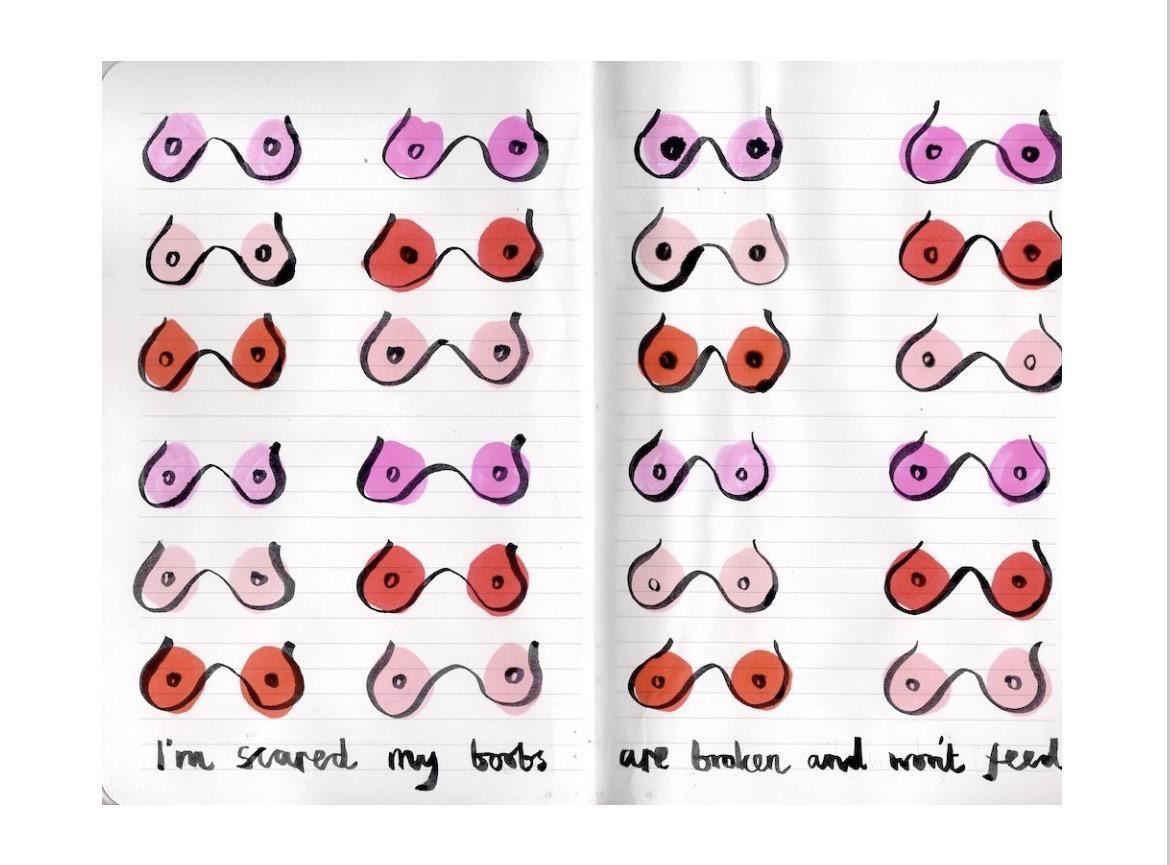
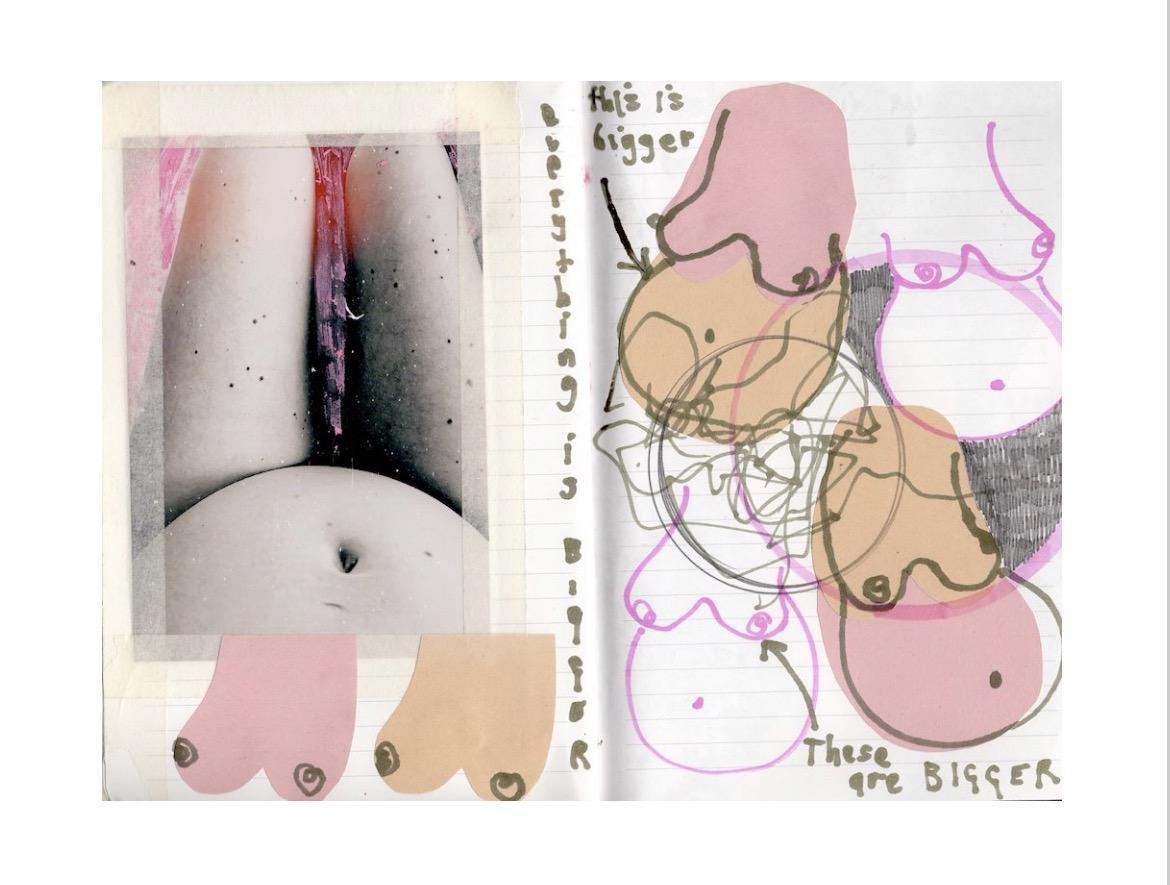
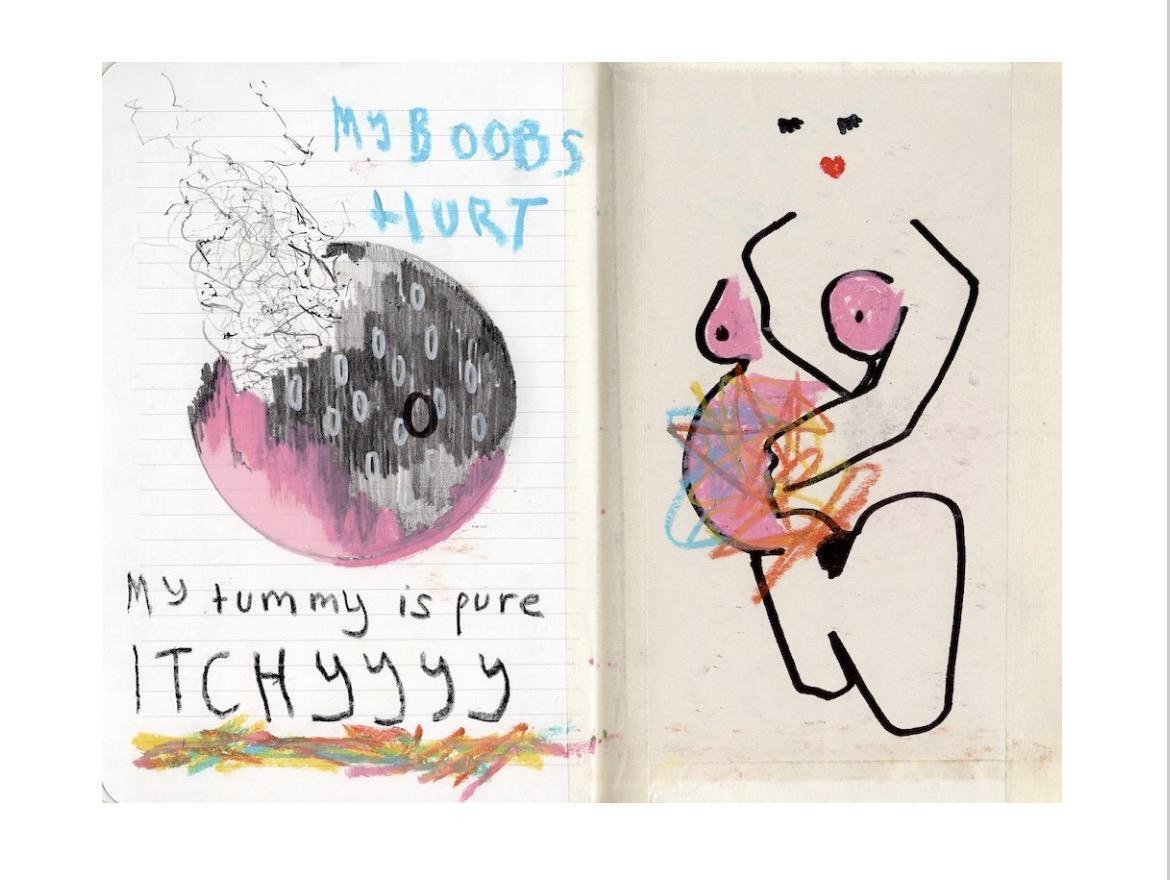
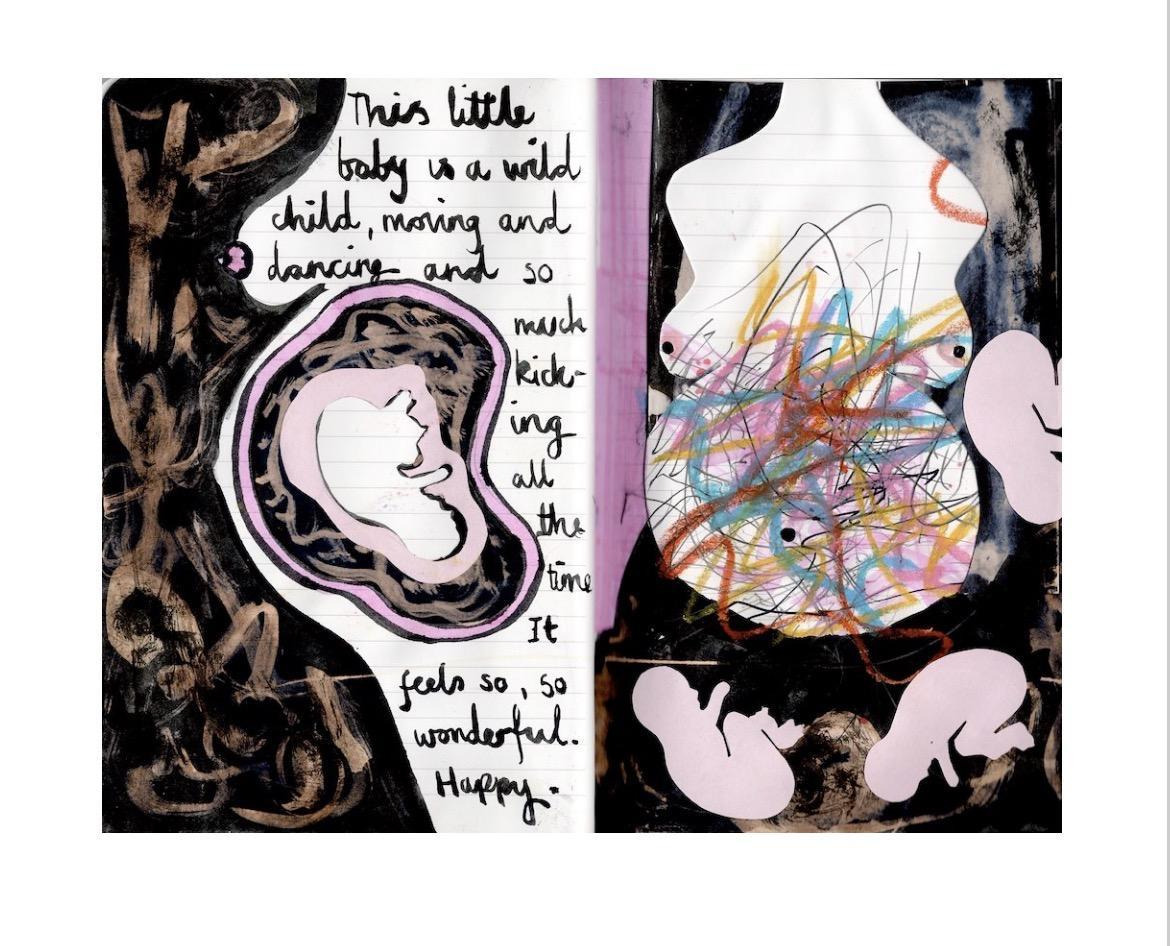
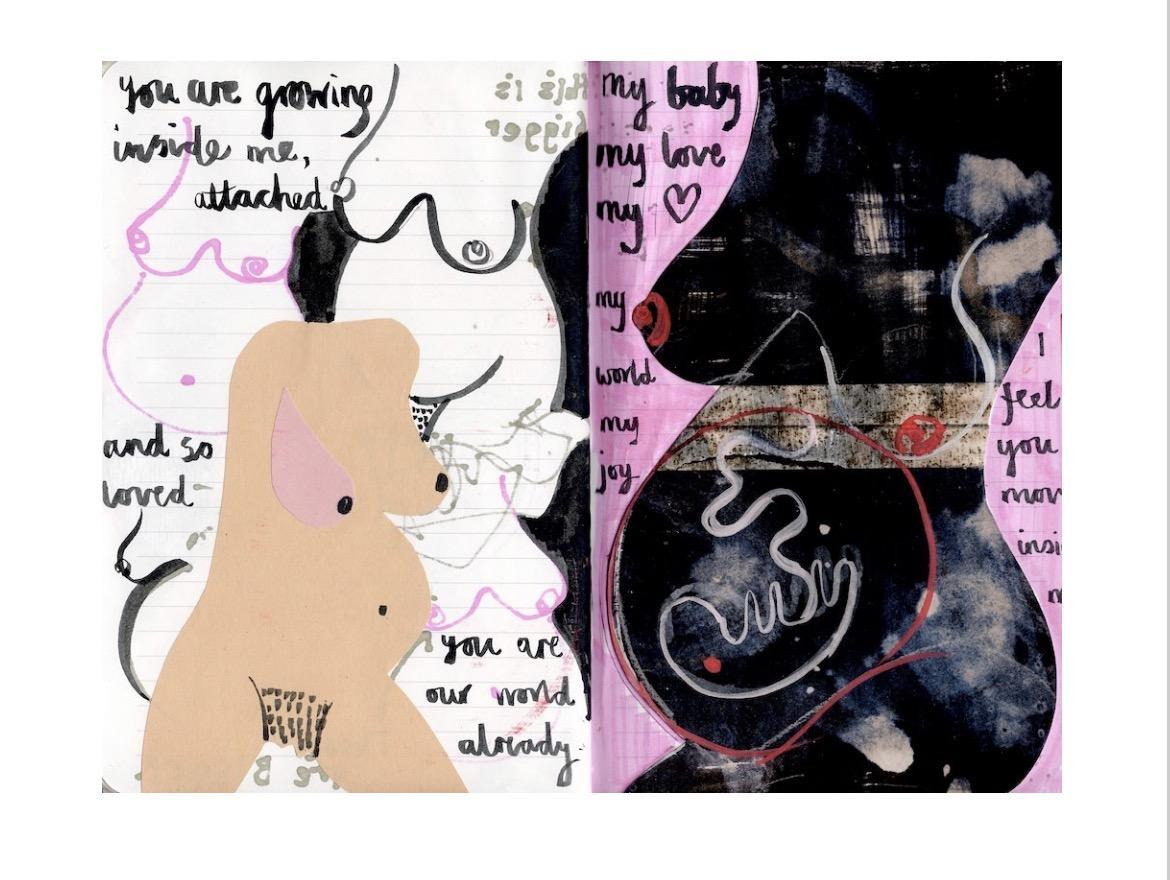
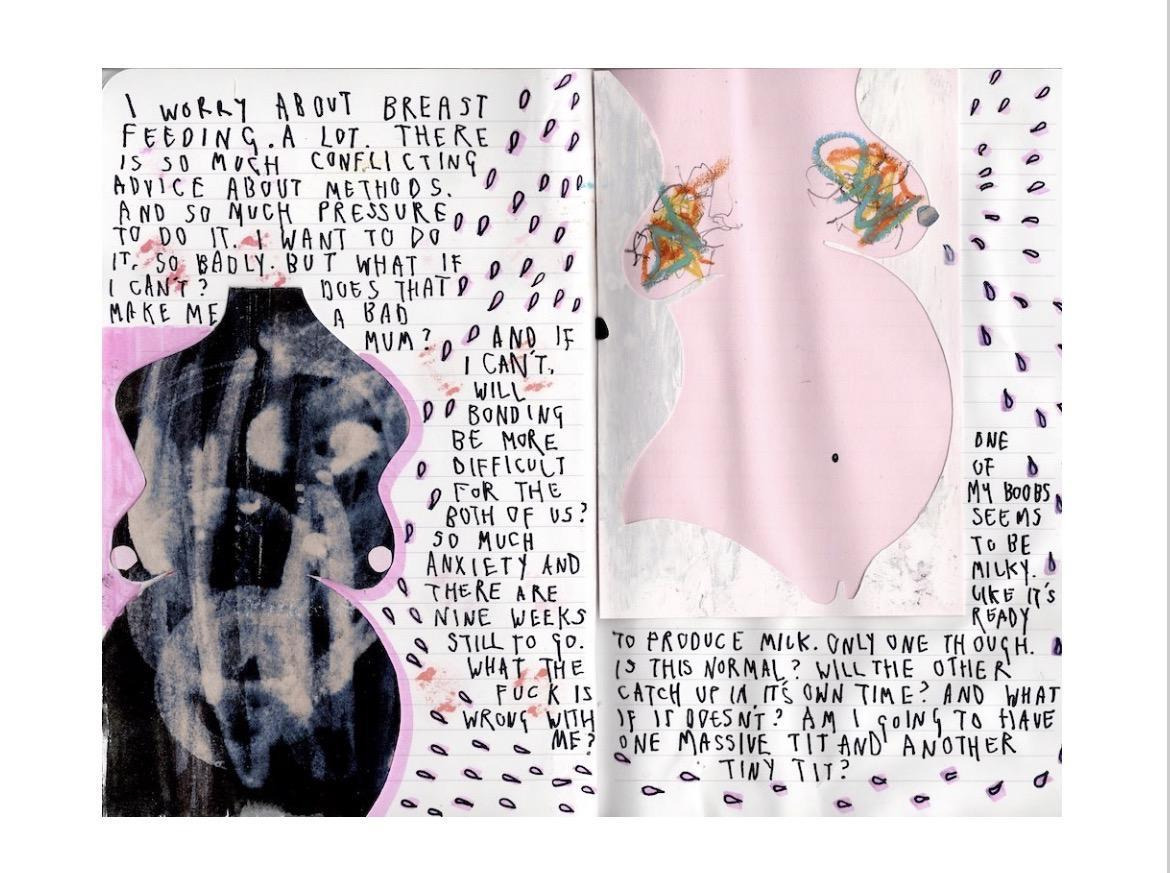
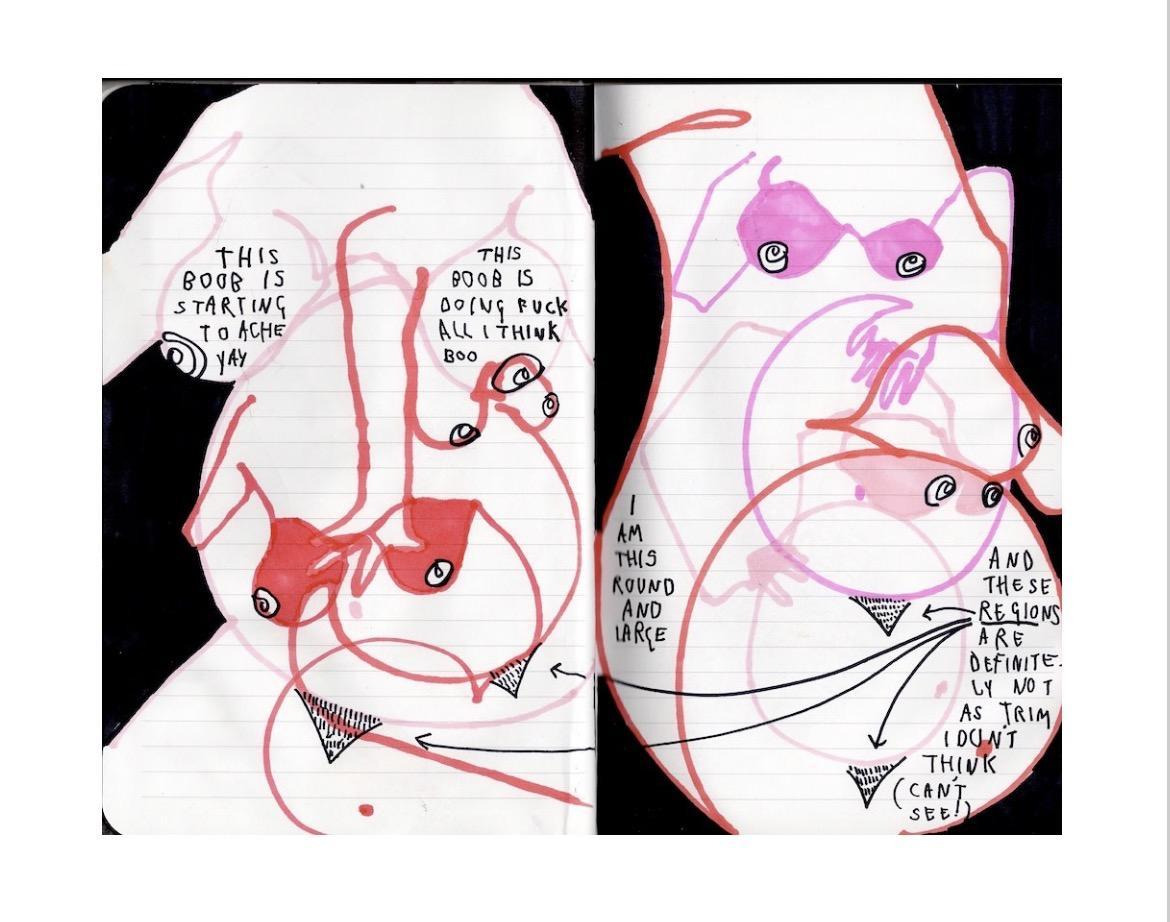
Much like the art therapy viewing process for the client, these diaristic drawings offer a visual timeline of progression and maturation for my daughter and I to look back on.
Breast is best or so they say.
I look in the mirror and I stop.
I stare and sigh,
There’s a “good breast”
Round, large, veiny
Full of confidence,
Instinctual.
There’s another breast, a bad breast.
Small, limp and flat
Nipple inward, facing away.
Hiding?
Inadequate.
Both stare back, taunting me.
Haunting me.
I am split in two.
Who will win?
Episodic narrative:
Today was the longest day of not breastfeeding my little girl, or expressing. I fed her once before I left, but today it just didn’t work out with timings, and it could have. I was quite annoyed with myself. I should have been more prepared, or more assertive in my need to express. Other people can wait, right? My little girl comes first, as do I. I also have a responsibility to maintain an expressing schedule to remind my body that it needs to produce milk, that it needs to meet the nutritional and comforting demands of my little girl.
I expected there would be encouragement and support of breastfeeding. I was taken aback at some comments made about my need to express for my 13-month-old. Someone was disgusted by the idea of a ‘toothed toddler drinking milk’. There was just not enough evidence I could spout from the World Health Organization that could convince her of the benefits…not to mention I didn’t ask for their remarks.
And so, as I put W to bed tonight, I felt so full, despite feeding her. It felt like she drank for hours and hours. And it felt like a constant physical filling up. Of milk, of love, of devotion.
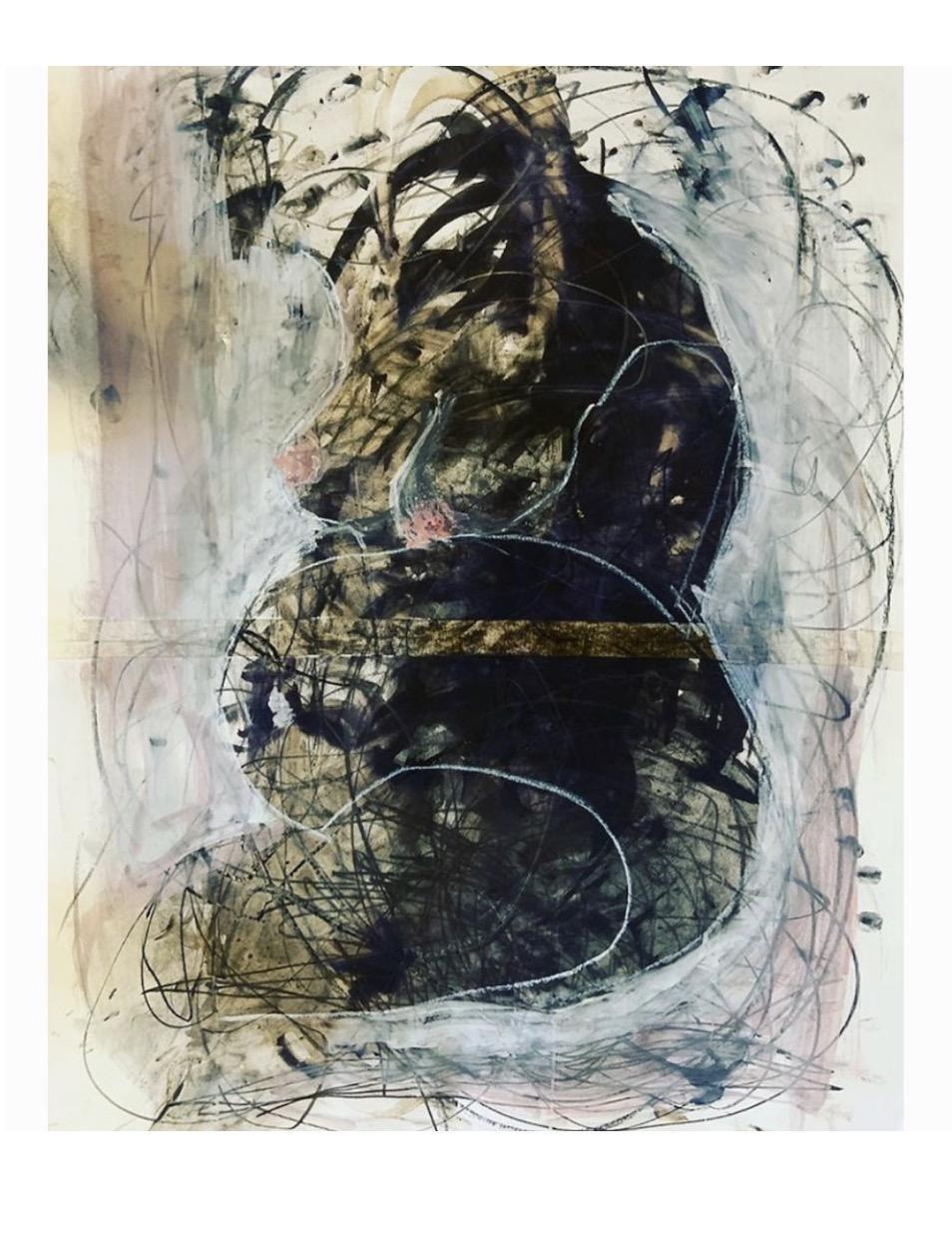
I see the paper in front of me and I am aware I am filling up with ideas to paint, like creativity and thoughts and feelings oozing and erupting like lava. It needs to be wet, soaking wet. It’s had a visceral effect on me that I cannot shake, like my milk is disgusting, bad. And so I start to paint, seeing the milk not for its purity and goodness, but as something wrong. It has to be black, not white. Soaking wet. And there goes the oil sticks and charcoal, illuminating engorged and full breasts not ready to give up on feeding. They sit there looking bold and strong, as I color and lean heavier and heavier. They ought to be proud. I ought to be proud. And so I continue build layer upon layer of oil sticks, trying to defeat and stand out against the black.
I am proud.
By situating my experiences of breastfeeding in relation to feminist psychotherapy theory, I was reminded of Kristeva’s concept of abjection (1982), which can be defined as the social responses of disgust of the other, that which repels the human mind. Obvious examples include bodily substances of human waste deemed improper, impure and unclean such as blood, faeces, and vomit, as well as excretion processes such as breastfeeding and menstruation (Gatrell, 2017). Within patriarchal, societal and cultural relationships, women’s reproductive organs are associated with the abject because the maternal body can inspire feelings of loathing and disgust (Kristeva, 1982, 1986); notably childbirth, breastfeeding and menstruation cross physical borders (Ettinger, 2006) and cannot be contained inside the body, demonstrating women’s inability to control their bodies (Shildrick, 1997). The maternal functions of my body, as m/other, and notably my breast milk and breastfeeding practice inspired disgust in another, threatening the border position (Ettinger, 2006) between what should be viewed as natural, nurturing, loving and instinctual (Gaskin, 2003) to be considered unnatural, disgusting and inherently wrong (Kristeva, 1982).
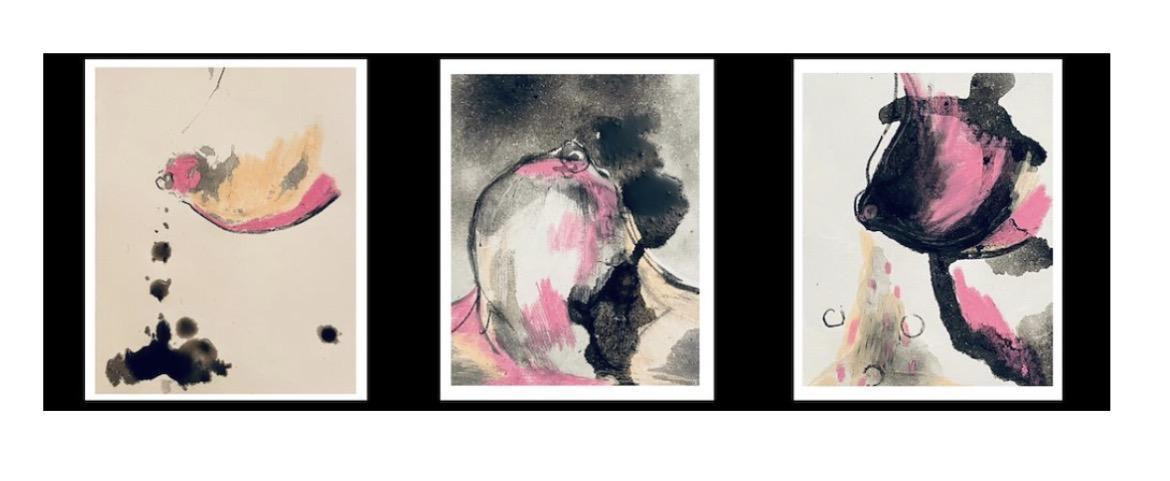
Soaking wet in aesthetics through inky materials and dense applications, these images explicitly reveal self- fragility and the potential for abject leakiness. It reminded me of recurring symbols featured in much of Frida Kahlo’s work such as dripping blood and tears, milk, umbilical cords, and fetuses. Latimer (2009) successfully draws the viewer’s attention to the abject nature of Kahlo’s work. In her attempt to explore her reality of the female self, Kahlo unsettles the male gaze (Mulvey, 1975; Butler, 1990) and challenges our relationship to viewing images of bodies (Jones, 2006), their unique forms and functioning parts. Similar to Kahlo’s aims, my own work was created in an attempt to view, absorb and understand my body and self.
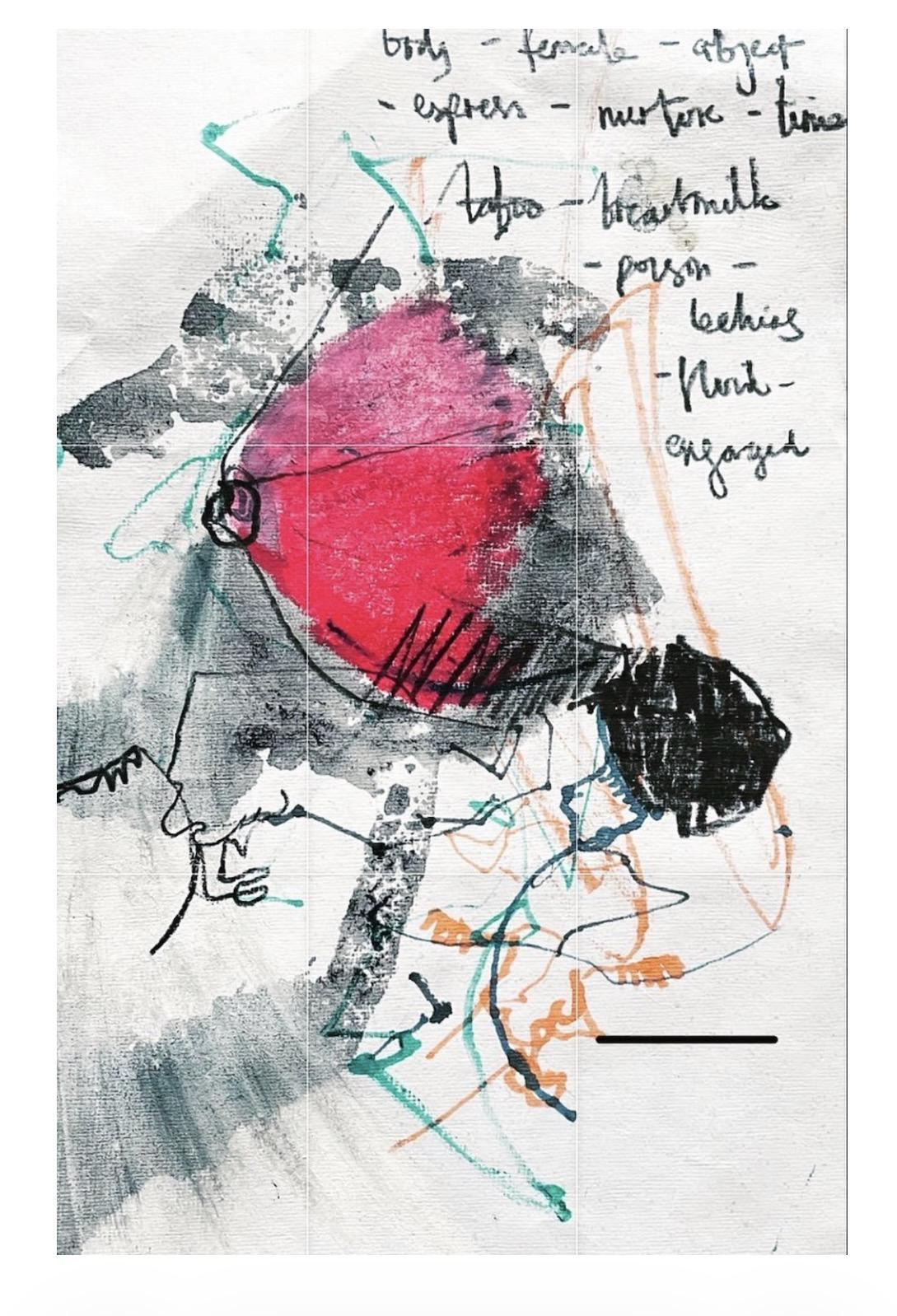
Breastfeeding
I fill up and I express
And I am haunted
By the days when you could not latch
By the blood and pain and tears of those days
Thinking we would never be a match
For breastfeeding.
I fill up and I express
And I am hauntedBy the days when you could not latch
By the blood and pain and tears of those days
Thinking we would never be a match
For breastfeeding.
I fill up and you drink
When you are here and I am here
It makes sense,
and we sink
Into this fused state, so close
So connected.
When you are here and I am here
It makes sense,
and we sink
Into this fused state, so close
So connected.
I fill up and I leak,
Now it’s easy
But it wasn’t back then
For days and then weeks
But I couldn’t give it up
Too determined, too anxious
Now it sends you off to sleep.
Now it’s easy
But it wasn’t back then
For days and then weeks
But I couldn’t give it up
Too determined, too anxious
Now it sends you off to sleep.
I fill up one year on
And however long to go
Until you need milk no more.
I’m in no hurry,
We made it this far
And I’m so fucking proud
Of our journey
And dread the day it stops.
And however long to go
Until you need milk no more.
I’m in no hurry,
We made it this far
And I’m so fucking proud
Of our journey
And dread the day it stops.
When will it stop?
Will will you no longer need it?
Need me?
Will will you no longer need it?
Need me?
Reflecting on these images, I was reminded of a memory in those early postpartum weeks: in my desperation I booked an appointment with a lactation consultant. All it took was one swift look at my daughter and after one short listen to her cries she stated, “she clearly has a dairy intolerance”. Overwhelming feelings of failure and questions of incompetence consumed me. How could I mistake my daughter’s cries for colic? Why did I not realize she was allergic? Why was I a bad mother (Kullberg, 2019), unable to attune to my daughter’s distress and discomfort through adequate maternal mirroring (Pines, 2010)? Ultimately, my milk was poisoning her due to my own dairy intake and transmission, evident in her bowel movements and itchy, red skin. Pines (2010) suggests that a baby reacts to her mother’s negative feelings symptomatically through his/her skin and can visually manifest as a skin disorder. Consumed by eczema rashes and baby acne, (and from a psychodynamic perspective) my pre-verbal daughter may have been communicating her distress physically through her skin and yet I felt un-containing and unable to soothe her discomfort. Similarly I wondered how I could help contain patients’ feelings in sessions, and to help them feel safe, when I did not feel adequate in holding my own daughter’s feelings.
Kristeva’s (1982) themes of abjection felt visceral and significant here: I felt wicked, shameful and monstrous in my breastfeeding practice. These feelings resonate with archaic themes in Hogan’s (2008) research article considering the historical uncanny rituals and taboos related to properties transmitted through breast milk. Until wet nursing practices ceased, the color of colostrum and breast milk in older times seemingly reflected personality traits as well as physical, emotional and mental traits such as melancholia and depression (Hogan, 2008). Through their milk transmission, wet nurses could then be blamed for the outcome of an infant’s mental and physical development, as well as their attachment styles, as mothers were not expected to nurture their offspring.
The encounter reawakened these upsetting memories of the beginning of my breastfeeding journey, jolting me back to a time full of doubt, uncertainty and severe anxiety when I should have been focused on my clinical work. As I looked back on these memories I couldn’t help but feel repulsed by the discomfort of these early experiences. I was haunted by the agonizing pain of my daughter’s shallow latch, the bloodied milk and my blistering, seeping nipples; and her relentless crying every evening for hours on end. Daily for almost six weeks, I found myself questioning my ability and functioning as a mother unable to do what society deems natural (Gaskin, 2003). I longed for the holding experience Winnicott (1971) describes, the attuned state, the fusion and merging through skin-to-skin contact (Bick, 1986; WHO, 2020), whilst not having to faff around with nipple shields.
To me, the word shield stirs themes of barriers, protection and defense, and it pained me to look at these words in the context of our relationship as mother and child. I found myself reflecting on resistance, a psychodynamic concept which refers to the un/conscious ways in which clients expose or hide their personal patterns of behavior, feelings or fantasies from the therapist, as a form of protection (Messer, 2002). What should have been beautiful and loving experiences, I simply dreaded and often avoided, turning instead to expressing and bottle feeding.
Episodic narrative:
I took part in self defense training. It’s incredible (terrifying) to think I need this sort of training to carry out therapeutic work with patients. It makes me wonder about my health and safety. I have to think about my body, not just for me but for my little girl. I have a maternal responsibility to keep my body and my mind safe and protected, and in turn keep my little girl safe, protected. This is… or is this, an ir/rational fear on placement in terms of risk to self, and subsequent risk to my little girl? After all, I am her mother, caregiver, provider, protector, and so I have a responsibility for sel—care..
So, it’s not irrational actually. When I think about the fear and worry about keeping me safe, keeping my little girl safe, I’m reminded about why and where this fear comes from. My own mother died, suddenly and unexpectedly. It wasn’t her fault, of course, but it happened. And so, my sisters and I were left, without a (living) mother, hungry for her care, her guidance, her protection, her shelter, her love. All that was left was her memory and legacy, a void. Her absence, so present. Abandoned. So yes, I know what it feels like, to feel unsafe and unprotected, to live in fear. I don’t want that for my little girl.
And so, as I put my little girl to bed tonight, I felt so full, despite feeding her. It felt like she drank for hours and hours. And it felt like a constant physical filling up. Of milk, of love, of devotion.
Enough
I’ll always wonder
if I kissed you enough
If I kissed you too much
If I hugged you enough
If I hugged you too much
If I was present enough
If I was absent too much
If I stared at the tv too much
If I looked at my phone too much
If I did the dishes too much
If I tidied too much
If I wasted these moments when I should have been looking at you and playing with you and being with you.
No, surely there cannot be too much
But I’ll always wonder if enough was enough,
If I was enough.
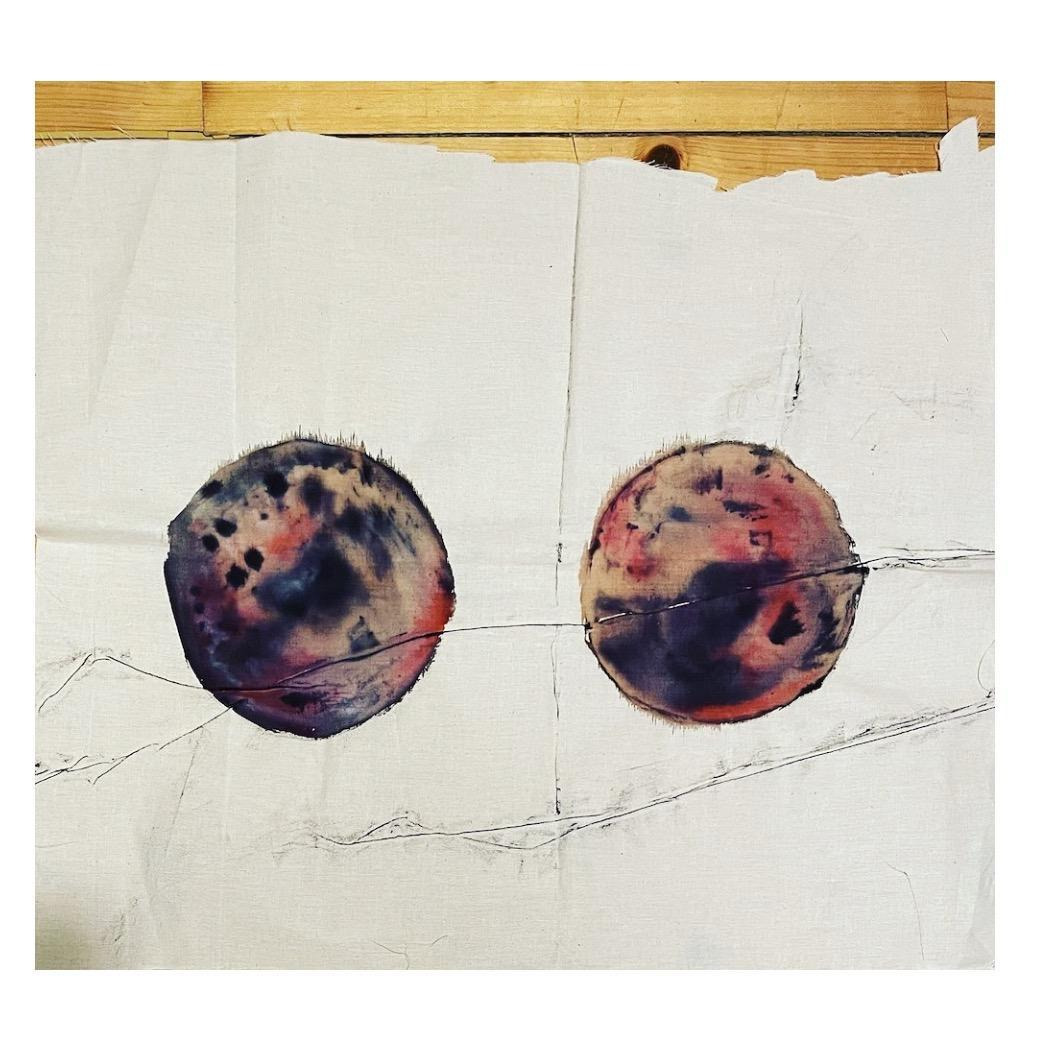
About tomorrow
I’m crying because I miss you
Even though I’m right next to you
Smelling you
Cuddling you
Kissing you
Playing with you
As I have done these past eleven months.
I’m crying about tomorrow
And it hasn’t even happened yet
And I know I should stay here, in this moment
In the here and now
And smile because I’m here right now
Beside you
Smelling you
Cuddling you
Kissing you.
And yet
Here I am
Thinking about tomorrow
Not holding onto this moment
Still missing you,
still.
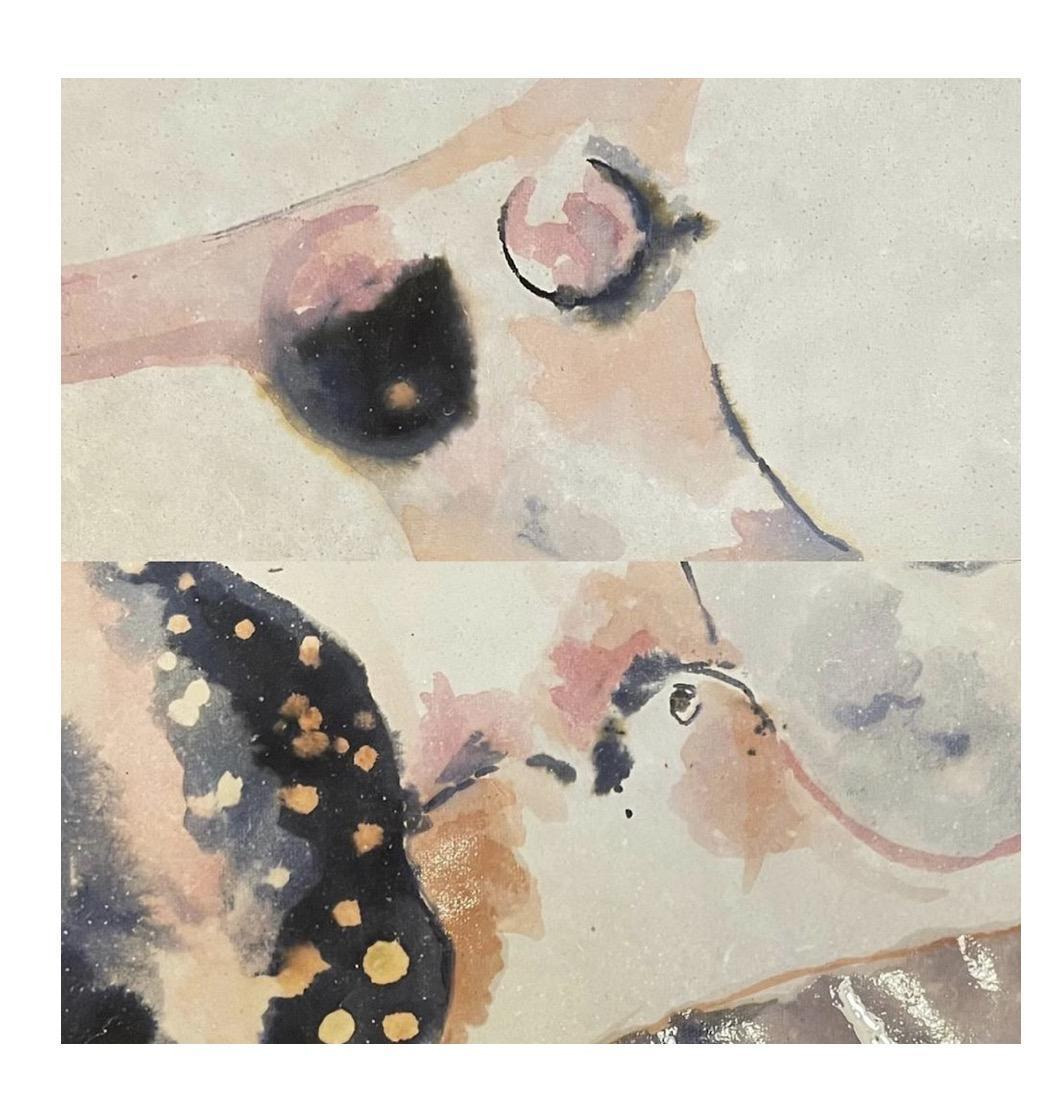
In my professional and personal attempts to be Klein’s definition of the nurturing and attentive good breast (Gomez, 1997), I often felt more like the bad breast, neglectful and dangerous. As a breastfeeding mother on placement, my internal milk body clock signaled to me to express, often during the middle of the open art therapy group I facilitated. During these fleeting moments I often found myself mentally drifting out from the therapy space briefly and reflecting about my daughter. This led to regular feelings of shame for not being with my daughter and guilt for not staying in the here-and-now of the client’s world. Similar to the unconscious feelings communicated in the transference and countertransference between client and therapist within the analytic frame (Schaverien, 1991), I often wondered and worried if my daughter was picking up on my un/conscious resistance to nursing her. It could be observed that both my own resistance and fear of breastfeeding as well as the nurse’s feelings of disgust and horror on placement were abject in nature; similar to themes described in Gatrell’s (2017) qualitative study on breastfeeding in the workplace as abjection in practice. Drawing on Kristeva’s theories of abjection, Gatrell exposes the experiences of a group of lactating mothers considered abject within their place of work, evidenced by personal examples of hostile behavior and treatment from employers and fellow employees. Similarly, I felt unsupported rather than nurtured. Gatrell highlights the discomfort and challenges suffered by breastfeeding workers, conflicted by the demands of their maternal responsibilities, and of satisfying their job roles whilst meeting public infant health guidelines. As a nursing mother on placement, this resonated deeply. I struggled with time management, most specifically balancing patient work alongside a rigorous expressing schedule whilst allocating necessary time for self and client reflection. Each day required precision and accuracy in my planning. As I sat in the staff toilet expressing milk twice per day each week on placement, I used this time to jot down salient themes from client sessions, produce diagrammatic drawings (Schaverien, 1991) of patient positioning and participation in the open art therapy groups, and recreated my own anonymized and confidential interpretations of patient art works (Nash, 2020). Needless to say, I often worried about failing to meet organizational and educational responsibilities, expectations and requirements of my training (BAAT, 2022; HCPC, 2022; van Amsterdam, 2015), let alone maintain “a good enough” as Winnicott (1971) would say, milk supply for my nursing daughter.
What I didn’t realize as a first-time mother was that breastfeeding is a dual journey for both the mother and her infant. Similar to the patient and therapist relationship, breastfeeding can be a shared experience of trust, adaptation, vulnerability and uncertainty, a journey of problem solving to securing a sense of connectedness and joint attention, all of which can be said to be person-centered therapeutic values (Rogers, 1951) required to establish the therapeutic alliance between patient and therapist. Patience, determination and time are crucial. Significantly, art making in the therapeutic context engages with our bodies through emotional and physical sensations (Edwards, 2013). My images communicated and contained personal experiences of breastfeeding, and in their concrete forms, challenged social, political and cultural expectations projected onto childbearing women (Agarwal, 2021). This in turn enhanced my confidence in my breastfeeding choices and decision making (Swan-Foster, 2021). Most importantly, it helped to maintain empowered feminine agency and authority.
Reflection
Matrescence. It has been an ongoing journey of emotional turmoil, of both good and bad times. Matrescence was empowering and life changing alongside my studies, as well as my continuing practice. After all, becoming a mother generates a new sense of self, where new meanings and experiences contribute to our evolving identities (Swan-Foster, 2021) as therapists. I underwent many physical, personal and psychological transformations during matrescence. I became more aware of the importance of self-care, my health and wellbeing – including my daughter’s and husband’s – and the need to keep my growing maternal body healthy. This led to a necessary shift towards becoming more focused on my maternal significance (Kristeva, 1982; Seu and Heenan, 1998), which may have had a detrimental impact on my responsibilities within familial relationships, as my split attention was focused on caring for my daughter, or immersed in my training.
As a new mother and art therapist trainee, I often felt feelings of shame, guilt and doubt (Sanford, 2006; Sheridan and Bain, 2020) in the decisions I made and I continue to question my capabilities and competencies within these challenging roles, regularly immersing myself in knowledge, theory and practice to guide and help ease some of these anxieties. At times, this has had a detrimental effect on my personal journey of self discovery as an art therapist and mother, looking ‘out there’ for answers instead of looking inward and attuning to the here-and-now of my personal and professional experiences. It was both a tremendous privilege and somewhat difficult process of equally balancing and managing the requirements of training and mothering
With my (firstborn) daughter in my womb, and in my arms, dedicating time and space to art making and writing contained personal feelings and unearthed new meanings of being and becoming a mother whilst training to be an art therapist, in creative concrete forms (Swan-Foster, 2021). In June 2020, I began creating artwork to self-locate my position at the beginning of and throughout pregnancy, interwoven with subconscious journaling and poetry that documented my inner world. What emerged was both the physical and emotional transformations which matrescence invoked alongside training. This gave me a place from which I could begin the research process, which continued throughout pregnancy and first year of my daughter’s life. Following from this, I continued to create more artwork, poetry and journaling data on my return to art therapy training. Centralizing and reflecting on the images and art making process (Robbins, 1987) through a feminist lens felt simultaneously healing and challenging, as I was able to process and metabolize emotions with imagination, similar to the art therapy process (Swan-Foster, 2021; Schaverien, 1991; Hill, 1945).
Throughout this research I used an a/r/tography methodology to give time and space to the embodied voices and identities that formulated my m/other and trainee self throughout matrescence. Like Chilton’s (2020) account, the institution of motherhood, and my body and mind located within it, became the focus of the writing, much like using myself as an art therapy case study. In the interest of immediacy and authenticity, I created raw and emotional episodic narratives, using an automatic writing and journalistic approach to capture my fragmented selves existing simultaneously. In response to diaristic images, each narrative was multilayered and evocative in content, interwoven with poetry to draw out themes, connections or conflicts in order to retrieve deeper meanings from the process and analysis, which allowed the artist, researcher, trainee and mother voices to emerge within the writing(s).
Using an a/r/tography methodology allowed me to read, reflect, question and interrogate my lived inquiry of matrescence within art therapy training alongside the writing and art making process. Analysis gave intentional and appropriate space to the analytical voice, the researcher’s voice. I often found the artist, mother and trainee therapist voices to weave contrapuntally, sometimes meeting in the middle and sometimes becoming one. I hoped that the natural design and approach to writing and presenting this body of work in this meandering way provided the reader(s) with an authentic, intimate and embodied experience.
As a student and art psychotherapy trainee, relevant theoretical and psychodynamic concepts entered my mind during the episodic narrative writing process, and may have influenced some of the writing on an unconscious level. However, to include and make reference to these at the time of writing felt unsettling and invasive to me, as at the time of writing, much of my knowledge of theory was felt to be one of the main causes to my postpartum anxiety in my early experiences of matrescence, of not feeling good enough. I was aware I did not want theoretical jargon to disrupt the writing process (Bochner and Ellis, 2016), or redirect the reader(s) away from emotional, personal data. I had to make uncomfortable decisions in what should be presented within the display of this research. Each episodic narrative was given a dedicated space to breathe and live on its own, visible to the world. It could be said that they simultaneously challenge sentiments of confidentiality in psychotherapeutic contexts, the sharing of information with multidisciplinary teams, as well as boundaries of storing and containing artwork (Edwards, 1997).
Art therapy training and practice is a reflexive and iterative process of personal growth, of un/knowing the self. As a trainee working with clients, and as a client in personal therapy, I was able to process experiences of self and mother through a therapeutic and reflexive lens, which helped me gain a deeper understanding of the imperfect, unknowing transition of being and becoming a mother and art therapist. Recording these fleeting moments was valuable as not only was I able to pause and reflect on these beautiful and sometimes dark moments, but I was reminded of the therapeutic power of art. Most importantly, it gave me space to acknowledge my strength. My survival. Art became a grounding anchor in my life, helping me to bond and attune to my daughter, whilst quietly focussing on my own mental health and postpartum anxiety. Similar to the process of individuation to becoming whole (Jung, 1958), becoming a mother is an initiation into motherhood (Swan-Foster, 2021), an institution of constant change and periodic transition in relation to being and becoming. This can also be said for becoming an art therapist, a lifetime of adapting one’s own practice to suit the needs of clients and institutional values. Through writing and art making, my internal world became visibly concrete, helping my maternal identity and function to grow, which in turn helped me to provide better care for my daughter, and future clients.
Creating this body of work was a fulfilling and necessary experience in acknowledging and accepting the meandering emotions matrescence brings, similar to the making of images in art therapy. I felt shame and guilt returning to university, taking me away from time which could be spent with my daughter, often wondering about the impact of my absence. Making images helped me process and articulate the inner workings of the ambivalent psyche (Adams et al, 2022), whilst accessing un/conscious ways of creative working; documenting the joy, emotional turmoil, hopes and fears, and physical changes my body was going through.] Having shared much of my artwork with mothers, feminists and art therapists, as well as my personal therapist, I discovered many of these complex feelings are viewed as normal, resonated with and experienced universally (Yalom, 2005). Sharing my images confirmed resonance, universality transferability and credibility in my research findings. Knowing I was not alone was a relief, and sharing my work brought relief to others. Therefore, this work highlights the need for more art therapy resources, mental health and supportive platforms to facilitate inclusive, unshaming dialogue throughout matrescence. Looking back, I continue to believe my insights contribute to the field of art therapy and can assist art therapists working with new mothers. Art psychotherapy could help mothers by facilitating communication focused on resonance, building connection and shared meaning. This could support more realistic and honest perceptions of the complexity of the mothering experience. I suggest that, as art psychotherapists, it is through our own bodily experiences that we are then able to bear witness to, and have deep therapeutic engagement, in the experience of another
Reference List
Adams, S.L., Cassidy, T., and Hogan, S. (2020). The Maternal Tug: Ambivalence, Identity and Agency. USA: Demeter Press.
Agarwal, Pragya. (2021). Motherhood: On Choices of Being a Woman. Edinburgh: Canongate Books Ltd.
Amsterdam, N. Van. (2015). ‘Othering the ‘leaky body’: An autoethnographic story about expressing breast milk in the workplace’, Culture and Organisation, 21, pp. 269–287.
Bick, E. (1986). ‘Further Considerations on the Function of the Skin in Early Object Relations’, British Journal of Psychotherapy, 2(4), pp. 292-299.
Bochner, A.P., and Ellis, C. (2016). Evocative Ethnography: Writing Lives and Telling Stories. New York: Routledge.
Bowlby, J. (1988). A secure base: clinical applications of attachment theory. London: Routledge.
Brock, S. (2026). The Sociology of Motherhood, Dr Sophie Brock. Available at: https://drsophiebrock.com (Accessed 3 August 2026).
Burns, E., Schmied, V., Fenwick, J., & Sheehan, A. (2012). ‘Liquid gold from the milk bar: Constructions of breast milk and breastfeeding women in the language and practices of midwives’ Social Science & Medicine, 75, pp. 1737–1745.
Butler, J. (1990). Gender Trouble: Feminism and the Subversion of Identity. London: Routledge.
British Association of Art Therapists. (2022). Careers and Training. Available at: https://www.baat.org/Careers-Training (Accessed 1 June 2022).
British Broadcasting Cooperation. (2026). More baby formula products recalled over toxin fears. Available at: https://www.bbc.co.uk/news/articles/cn424v43q5vo (Accessed 14 May 2026). Carter, M. R. (2014). The teacher monologues: Exploring the identities and experience or artist-teachers. Rotterdam: Sense Publishers.
Chang, H. (2016). Autoethnography as method. New York: Routledge.
Chilton, A.L. (2021). ‘Reframing Motherhood: Photography as a Creative Application to Re-image Mother’, in S. Hogan (ed.) Therapeutic Arts in Pregnancy, Birth and New Parenthood. Oxon: Routledge, pp. 71-87.
Delamont, S. (2009). ‘The only honest thing: Autoethnography, reflexivity and small crises in fieldwork’, Ethnography and Education, 4(1), pp. 51-63.
Dowling, S., and Pontin, D. (2017). ‘Using liminality to understand mothers’ experiences of long-term breastfeeding: ‘Betwixt and between’, and ‘matter out of place’, Health, 21(1), pp. 57– 75.
Edwards, D. (1997). ‘Endings’, International Journal of Art Therapy: Inscape, 2(2), pp. 49-56.
Edwards, D. (2013). Art Therapy. London: SAGE.
Ellis, C. (2001). ‘With mother/with child: A true story’, Qualitative Inquiry, 7, pp. 598–616.
Ettinger, B. (2006). The Matrixical Borderspace. University of Minnesota Press: Minneapolis.
Faircloth, C. (2011). ‘It feels right in my heart: Affective accountability in narratives of attachment’, Sociological Review, 59, pp. 283–302.
Galson, S. (2009). ‘Surgeon General’s perspective: The status of breastfeeding today’, Public Health Reports, 124, pp. 356–358.
Gaskin, I.M. (2003). Ina May’s Guide to Childbirth. Bantam/Dell: New York.
Gatrell, C. (2017). ‘Boundary Creatures? Employed, Breastfeeding Mothers and ‘Abjection as Practice’, Organisation Studies, 40(3), pp. 421-442.
Gomez, L. (1997). An Introduction to Object Relations. London: Free Association Books.
Hill, A. (1945). Art Versus Illness. London: George Allen and Unwin Ltd.
Hogan, S. (2008). ‘Breasts & the Beestings: Rethinking Breast-Feeding Practices, Maternity. Rituals, & Maternal Attachment in Britain & Ireland’, Journal of International Women’s Studies, 10(2), pp. 141-160.
Hogan, S. (2021). Therapeutic Arts in Pregnancy, Birth and New Parenthood. Oxon: Routledge.
Irwin, R., L. and Springgay, S. (2008). ‘A/r/tography as practice-based research’. In: S. Springgay, R. L. Irwin, C. Leggo, P. Gouzouasis, (eds.) Being with a/r/tographys. Rotterdam: Sense Publishers.
Jones, A. (2006). Self/Image: Technology, Representation and the Contemporary Subject. Oxon: Routledge.
Jung, C. G. (1958). The Basic Writings of C.G. Jung. New York: Random House.
Kristeva, J. (1982). The Powers of Horror: An Essay on Abjection. New York: Columbia University Press.
Kristeva, J. (1986). The Kristeva Reader. Oxford: Blackwell.
Kullberg, P. (2019). ‘The Bad Mother’, Psychological Perspectives: A Quarterly Journal of Jungian Thought, 62(1), pp. 4-14.
Latimer, J. (2009). ‘Unsettling bodies: Frida Kahlo’s portraits and in/dividuality’, The Sociological Review, 56(2), pp. 46-62.
LeBlanc, N., Davidson, S.F., Ryu, J.Y., Irwin, R.L. (2015). ‘Becoming through a/r/tography, autobiography and stories in motion’, International Journal of Education Through Art, 11(3), pp. 355-374.
Leggo, C. (2008). Autobiography: Researching our lives and living our research. In S. Springgay, R. Irwin, C. Leggo, & P. Gouzouasis (Eds.), Being with a/r/tography (pp. 3-24). Rotterdam, the Netherlands: Sense.
Marschiano, L. (2021). Motherhood: Facing and Finding Yourself. Colorado: Sounds True Inc.
Messer, S.B. (2002). ‘A Psychodynamic Perspective on Resistance in Psychotherapy: Vive la Resistance’, Psychotherapy in Practice, 58(2), 157–163
Mulvey, L. (1975). Death 24X a Second: Stillness and the Moving Image. London: Reaktion Books Ltd.
Nash, G. (2020). ‘Response art in art therapy practice and research with a focus on reflect piece imagery’, International Journal of Art Therapy, 25(1), pp. 39-48.
Neumann, E. (1963). The Great Mother: An Analysis of the Archetype. New York: Bollingen Foundation Inc.
Patton, M.Q. (2002). Qualitative Research and Evaluation Methods. 3rd ed. Thousand Oaks: Sage Publications LTD.
Pines, D. (2010). A Woman’s Unconscious Use of her Body: A Psychoanalytical Perspective. Routledge: Oxon.
Pokhrel A,. Quigley MA,. And Fox-Rushby J. (2015). ‘Potential economic impacts from improving breastfeeding rates in the UK’, Archives of Disease in Childhood, 100, pp. 334–340.
Rafael, D. (1975). Being Female: Reproduction, Power, and Change. Available at: http://ebookcentral.proquest.com(Accessed: 17 February 2022).
Renfrew, M.J,. Pokhrel, S., and Quigley M. (2012) Preventing Disease and Saving Resources: The Potential Contribution of Increasing Breastfeeding Rates in the UK. New York: UNICEF.
Rich, A. (1986). Of Woman Born: Motherhood as Experience & Institution. London: Norton.
Robbins, A. (1987). The Artist as Therapist. London: Jessica Kingsley.
Rogers, C.R. (1951). Client-Centered Therapy. Boston: Houghton Mifflin
Sacks, A. (2018). A New Way to Think About the Transition to Motherhood. Available at: https://www.ted.com/talks/alexandra_sacks_a_new_way_to_think_about_the_transition_to_motherhood(Accessed January 29th 2022).
Sanford, K.M. (2006). ‘Muddled Milk of Motherhood’, Psychological Perspectives, 49(1), pp. 79-89.
Schaverien, J. (1991). The Revealing Image: Analytical Art Psychotherapy in Theory and Practice. London: Jessica Kingsley.
Segal, H. (1989). Klein by Hanna Segal. London: Taylor & Francis Ltd.
Seu, L.B and Heenan, M.C. (1998). Feminists & Psychotherapy: reflections on contemporary theories and practices. London: Sage Publication.
Sheridan, G., and Bain, K. (2020). Living the Theory: The Complexity of Being Both a Psychodynamic Psychotherapist and a Mother, Contemporary Psychoanalysis, 56(1), pp. 29-56.
Shildrick, M. (1997). Leaky bodies and boundaries: Feminism, Postmodernism and (bio)Ethics. London: Routledge.
Skaife, S. (1997). ‘The pregnant art therapist in an art therapy group’, in S. Hogan (ed.) Feminist Approaches to Art Therapy. England: Routledge, pp. 177-197.
Springgay, S., and Irwin, R.L. (2005). ‘A/r/tography as Living Inquiry Through Art and Text’, Qualitative Inquiry, 11(6), pp. 897-912.
Sullivan, G. (2008). Afterword. In: S. Springgay,. R. L. Irwin,. C. Leggo., and P. Gouzouasis, (eds.) Being with a/r/tographys. Rotterdam: Sense Publishers.
Swan-Foster, N. (2021). Art Therapy and Childbearing Issues: Birth, Death and Rebirth. London: Routledge.
Washington Post. (2022). The Solution to Formula Shortage Isn’t Calling For More Breastfeeding. Available at: https://www.washingtonpost.com/outlook/2022/05/18/solution-formula-shortage-isnt-calling-more-breastfeeding/ (Accessed: 18 May 2020).
Winnicott, D.W. (1953). Babies and Their Mothers. London: Free Association Books.
Winnicott, D.W. (1971). Playing and Reality. New York: Basic Books.
World Health Organisation. (2022). Breastfeeding. Available at: https://www.who.int/health-topics/breastfeeding#tab=tab_1 (Accessed 16 April 2022)
Yalom, I.D. (2005). The Theory and Practice of Group Psychotherapy. New York: Basic Books.


