
By: Sarah McCarthy, AVCM, BA Hon (Mus), MA (Mus), MA (Ed
1. Introduction
Singing during pregnancy and early motherhood has been shown to reap many benefits for both mother and child (Fancourt and Perkins, 2019b; Irons and Hancox, 2021; Trehub; 2015). With appropriate encouragement, the mother’s voice can act as a conduit to personal and maternal empowerment. This boost to one’s self-efficacy may also assist mothers on their path to self-actualization (Hendry, Lynam and Lafarge, 2022).
This paper discusses the aims of the research project, the current literature, methodologies employed in this project, findings and discussion, limitations and recommendations, and conclusions.
2. Research Aims
My personal experience of early motherhood was one of shifting identity, loneliness and a desire for social support. I attended lots of classes and groups with my baby but came away from them feeling disappointed. I yearned for support as a mother and as an individual coping with matrescence. My experience inspired me to examine the potential benefits of community singing for mothers in the first year postpartum in Ireland.
The focus of my research is to devise a new type of community mother and baby singing group with two distinct aims:
First: To increase mothers’ perceptions of their maternal self-efficacy, singing and creative ability through the medium of an infant-directed song repertoire education programme to use with their babies in daily life.
Second: To increase mothers’ perceptions of peer support and well-being through the medium of adult-directed group singing with an emphasis on fun and the release of inhibition. The mothers actively choose the repertoire and shape the program through the Community of Musical Practice model. A community of musical practice is a group of individuals who share a common interest in creating music, and who engage in collaborative learning and development through shared experiences and knowledge (Kenny, 2016).
Opportunities for social engagement through discussion in person and online will also be important elements of each group. The program aims to enable mothers to feel seen and heard and to have their collective and individual experiences validated. In short, the focus of the group is to lift and support the mother, to address their needs and offer honest and open connection through the medium of song.
2. Literature
2.1 Singing and Maternal Well-Being
In recent years, a significant amount of research has been conducted on the effects of singing in relation to maternal well-being ( Hendry, Lynam and Lafarge, 2022; Trehub, Plantinga and Russo, 2015; Wulff et al., 2021). Communal singing has been shown to decrease symptoms of mild-moderate postnatal depression (Fancourt and Perkins, 2019a). For mothers, singing has also been shown to be very effective at accelerating social connection between strangers when compared to attending other types of mother and infant groups (Fancourt and Perkins, 2019b; Warran et al., 2022).
2.2 Singing Perception and Self-Efficacy
In Western society, musical ability is often seen as an innate trait linked to elite musicianship, but singing skills can be developed in adults with the right encouragement and guidance (Numminen et al., 2015; Richards and Durrant, 2003). Although we are all born innately musical, many adults avoid singing due to negative past experiences, particularly from childhood, where criticism or lack of support can foster a negative self-image as a singer (Welch, 2006; Welch, 2017).
Many adults label themselves as “tone deaf”, often comparing themselves to what they perceive as more skilled peers, even though these peers often possess average singing ability (Demorest, Kelley and Pfordresher, 2017; Knight, 2010). This self-perception, along with social anxiety or fewer opportunities to sing as adults, can prevent them from developing their skills further (Welch, 2017).
Amusia, a rare condition involving difficulty with pitch discrimination, is often confused with being tone deaf, but less than 1.5% of the global population has amusia (Lévêque et al., 2023; Szyfter and Wigowska-Sowińska, 2022). Studies reveal that between 85-90% of the general population can sing in tune suggesting that negative self-perceptions are often inaccurate (Welch, 2017).
2.3 Sound, Singing and the Infant
Infants are born with a sophisticated and critical ear when it comes to sound, music, and singing. In fact, infants are born innately musical (Welch, 2017). The music perception ability of young infants has been shown to be very similar, if not more advanced than adults (Trehub, 2001; Trehub, 2003). Indeed, infants are born with the ability to recognize consonance over dissonance, can discriminate between major and minor keys and are very responsive to rhythm. As a result, music is inbuilt and ready to be interacted with from birth (Henriksson-Macaulay and Welch, 2015; Trehub, 2013). When armed with this knowledge, the mother can develop their singing and mothering confidence and connect with their infant in a deep and primal way.
2.4 Self-Actualization
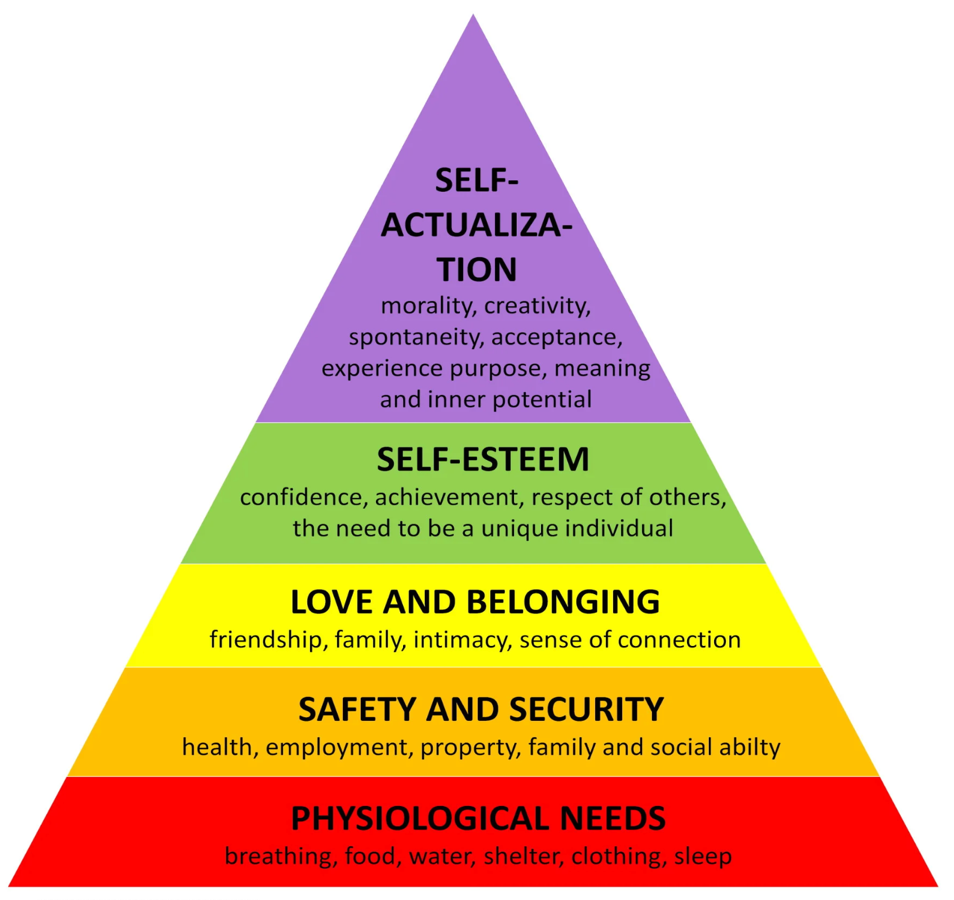
Figure 1 Maslow’s Hierarchy of Needs (McLeod, 2025)
Psychologist Abraham Maslow’s theory, The Hierarchy of Needs, is based on the idea that an individual is an organized whole (Maslow, 1943). Therefore, when a person has a need, conscious or unconscious, it is their whole self that experiences that need, not just one part. For example, when a person is hungry their desire for food will overtake all other desires or needs in their body. It is not the need of their stomach, it is the need of their whole being. Once a need is satisfied (starting at the bottom with physiological needs) its place is taken by the next “level up” of need and the cycle repeats until the new need is satisfied.
Self-actualization needs refer to an individual’s desire to fulfil their potential and become self-fulfilled. Self-actualization in terms of how it is manifested or appears is different for everyone. In other words, everyone’s idea of self-fulfilment will be different. When all other needs are met, the individual can focus on self-actualization (Maslow, 1987). When an individual reaches the pinnacle of self-actualization, there is no guarantee that they will maintain this state unless they are pursuing their higher purpose:
Even if all these needs are satisfied, we may still often (if not always) expect that a new discontent and restlessness will soon develop, unless the individual is doing what he or she, individually, is fitted for. Musicians must make music, artists must paint, poets must write if they are to be ultimately at peace with themselves. What humans can be, they must be. They must be true to their own nature. This need we may call self-actualization (Maslow, 1987, p. 22).
3. Methodology
Utilising a pragmatic, mixed methodology approach I employed an explanatory and sequential design to carry out quantitative and qualitative data collection across the cohorts of mothers and pregnant people. This took the form of an initial quantitative internet questionnaire (N=257), followed by qualitative interviews (N=19). Finally, a 7-week randomized control trial feasibility study was carried out with a cohort of mothers and infants (N=24) in Cork, Ireland in May and June 2024.
The feasibility study was carried out as weekly singing sessions for the mothers and their infants only. The control group were offered exclusively infant-directed singing education. The experimental group consisted of a mix of adult and infant-directed singing as well as the opportunity to engage socially over refreshments for 30 minutes at the end of each session. Participants in both groups completed questionnaires that assessed their perceptions of their maternal and singing self-efficacy amongst other topics. These questionnaires were repeated at the end of the study and 6 months post intervention.
4. Findings and Discussion
The findings of the internet questionnaire as completed by mothers of infants aged 0 – 1 years of age (N=188) were analysed and used to inform the generation of questions in the second stage of data collection: qualitative interviews (N=13). The interview data was used to triangulate the questionnaire data. The structure and content of the feasibility study was guided by the findings from the first two stages of the data collection process.
4.1 Internet Questionnaire
The online questionnaire revealed a clear desire among mothers for group singing opportunities. Participants associated singing with emotional release and enjoyment. Many reported singing privately without inhibition in the car, shower and at home. Despite this enjoyment of private singing, respondents overwhelmingly reported low levels of singing confidence, especially in public settings.
Socially, mothers highlighted loneliness, emotional exhaustion, and a longing for peer connection. Singing, in this context, was identified not only as a potential means of enjoyment but a possible pathway toward rebuilding identity, improving well-being and making new meaningful friendships. The idea of singing in a group was thought to be most appealing when accompanied by an atmosphere that encouraged singing participation rather than demanding it, social inclusion, and emotional safety.
4.2 Qualitative Interviews
Reflexive thematic analysis was employed in the analysis of the qualitative interviews (Braun and Clarke, 2022). Five core themes emerged:
4.2.1 Loneliness and Disconnection
Mothers described early motherhood as an isolating time, often marked by emotional and social withdrawal despite external support. Group singing was imagined as a potential method to ameliorate loneliness—an emotionally validating space where mothers could feel seen, heard, and understood.
4.2.2 Shifting Selves
Participants articulated the profound transformation of identity following birth. Singing emerged as a practice that could potentially help mothers reconnect with parts of themselves that had become neglected. It symbolized the possibility of reclaiming autonomy and joy, separate from the demands of caregiving.
4.2.3 Everyday Creativity in Mothering
Creativity was identified as a practical asset in terms of daily infant care via problem-solving, improvisation and emotional attunement. Mothering as a creative act, particularly with regard to problem solving, was recognised as a meaningful form of creativity.
4.2.4 Voice, Confidence, and Emotional Safety
While most participants reported low singing confidence, shaped by past criticism or cultural constructs, they were willing to participate in groups if the environment felt safe and welcoming. Singing was described as emotionally therapeutic, especially when free from judgment or performance pressure.
4.2.5 Enabling Spaces – Safety, Flexibility, and Participation
The importance of physical and emotional environments that support maternal participation were identified as being important. Respondents emphasized that group singing must accommodate the unpredictability of infant care, offering flexibility around arrival time, feeding, and soothing. Emotional safety, created through warm facilitation and a non-judgmental atmosphere, was deemed to be essential. Mothers valued informal social time at the end of the session, circular seating arrangements that encouraged connection, and facilitators who embraced not only their maternal needs but also their individual desire for adult social interaction. These elements and more were seen as central to creating a space where mothers could be free to express themselves without fear or shame.
4.3 Feasibility Study
The feasibility study demonstrated strong participant enthusiasm for structured but flexible singing groups. Mothers wanted spaces that were welcoming to their babies but also fundamentally for them. Preferences included a relaxed format, light refreshments, optional participation, and facilitators who focused on wellbeing rather than performance. Singing was not perceived as an endpoint but as a catalyst; an activity that could open doors to confidence, friendship, and self-expression.
5. Limitations and Recommendations
The sample size of the feasibility study was small (N=24). The study was also limited in its time frame of 7 weeks. It is recommended that the study be repeated with a larger sample size across a longer period of time.
I attempted to recruit pregnant people to take part in a similar feasibility study on two separate occasions, however I was unable to recruit enough participants to carry out the study with this cohort. Many pregnant participants in the interview stage expressed little desire to take part in a pregnancy singing group. Rather, they indicated willingness to take part in a mother and baby singing group when their baby was born as they felt it would be more beneficial for them postpartum. This lack of data from pregnant people is a limitation, as a comparison between the mother and pregnancy group would have been beneficial.
6. Conclusion
Although a larger study is warranted, this study shows promising signs of how communal singing may partially meet the esteem, social and emotional needs of mothers in the first year postpartum. The study shows the potential of community singing groups to, at least partly, meet the love and belonging and self-esteem needs as outlined by Maslow’s Hierarchy of Needs (Maslow, 1943). This in turn may help participants on their path to self-actualization.
It is my intention to place the mother’s voice, power and self-actualization at the center of communal singing for mothers in Ireland. Offering mothers the opportunity to connect socially and emotionally through song, giving them time to explore their new identity and voice organically. To build new relationships and grow in maternal confidence, to thrive as a person and a mother.
7. References
Braun, V., & Clarke, V. (2022). Thematic analysis: A practical guide. SAGE Publications.
Citizensinformation.ie. (2025). Maternity benefit. https://www.citizensinformation.ie/en/social-welfare/families-and-children/maternity-benefit/
Demorest, S., Kelley, J., & Pfordresher, P. (2017). Singing ability, musical self-concept, and future music participation. Journal of Research in Music Education. Advance online publication. https://doi.org/10.1177/0022429416680096
Fancourt, D., & Perkins, R. (2019a). Creative interventions for symptoms of postnatal depression: A process evaluation of implementation. Arts & Health, 11(1), 38–53. https://doi.org/10.1080/17533015.2017.1413398
Fancourt, D., & Perkins, R. (2019b). Does attending community music interventions lead to changes in wider musical behaviors? The effect of mother–infant singing classes on musical behaviors among mothers with symptoms of postnatal depression. Psychology of Music, 47(1), 132–143. https://doi.org/10.1177/0305735617742197
Hendry, N., Lynam, D., & Lafarge, C. (2022). Singing for wellbeing: Formulating a model for community group singing interventions. Qualitative Health Research, 32, Article 10497323221104718. https://doi.org/10.1177/10497323221104718
Henriksson-Macaulay, L., & Welch, G. (2015). The musical key to babies’ cognitive and social development. International Journal of Birth and Parent Education, 2, 21–25.
Irons, J. Y., & Hancox, G. (2021). Singing (1st ed.). Emerald Publishing.
Kenny, A. (2016). Communities of musical practice. Routledge. https://doi.org/10.4324/9781315541706
Knight, S. D. (2010). A study of adult ‘non-singers’ in Newfoundland (Doctoral dissertation, University of London, Institute of Education). UCL Discovery. https://discovery.ucl.ac.uk/id/eprint/10006515/
Lévêque, Y., Barone, P., Tillmann, B., & Caclin, A. (2023). Individuals with congenital amusia remember music they like. Cognitive, Affective, & Behavioral Neuroscience. Advance online publication. https://doi.org/10.3758/s13415-023-01084-6
Maslow, A. H. (1943). A theory of human motivation. Psychological Review, 50(4), 370–396. https://doi.org/10.1037/h0054346
Maslow, A. H. (1987). Motivation and personality (3rd ed.). Harper & Row.
McLeod, S. (2025, March 14). Maslow’s hierarchy of needs. Simply Psychology. https://www.simplypsychology.org/maslow.html
Numminen, A., Lonka, E., & Ruismäki, H. (2015). “Singing is no longer forbidden to me – It’s like part of my human dignity has been restored.” Adult non-singers learning to sing: An explorative intervention study. The European Journal of Social & Behavioral Sciences, (1). https://doi.org/10.15405/ejsbs.149
Richards, H., & Durrant, C. (2003). To sing or not to sing: A study on the development of ‘non-singers’ in choral activity. Research Studies in Music Education, 20(1), 78–89. https://doi.org/10.1177/1321103X030200010501
Szyfter, K., & Wigowska-Sowińska, J. (2022). Congenital amusia—Pathology of musical disorder. Journal of Applied Genetics, 63(1), 127–131. https://doi.org/10.1007/s13353-021-00662-z
Trehub, S. E. (2001). Musical predispositions in infancy. Annals of the New York Academy of Sciences, 930(1), 1–16.
Trehub, S. E. (2003). The developmental origins of musicality. Nature Neuroscience, 6(7), 669–673.
Trehub, S. E. (2013). Music processing similarities between sleeping newborns and alert adults: Cause for celebration or concern? Frontiers in Psychology, 4, Article 644. https://doi.org/10.3389/fpsyg.2013.00644
Trehub, S. E. (2015). Mothers as singing mentors for infants. In G. E. McPherson (Ed.), The Oxford handbook of singing (pp. xx–xx). Oxford University Press. https://doi.org/10.1093/oxfordhb/9780199660773.013.25
Trehub, S., Plantinga, J., & Russo, F. A. (2015). Maternal vocal interactions with infants: Reciprocal visual influences. Social Development, 25, 665–682. https://doi.org/10.1111/sode.12164
Warran, K., Fancourt, D., Wiseman, T., Perkins, R., & Rose, J. (2022). Scalability of a singing-based intervention for postpartum depression in Denmark and Romania: Protocol for a single-arm feasibility study. BMJ Open, 12(12), e063420. https://doi.org/10.1136/bmjopen-2022-063420
Welch, G. (2006). Singing and vocal development. In G. McPherson (Ed.), The child as musician: A handbook of musical development (pp. 311–330). Oxford University Press. https://doi.org/10.1093/acprof:oso/9780198530329.003.0016
Welch, G. (2017). Singer identities and educational environments. In R. MacDonald, D. J. Hargreaves, & D. Miell (Eds.), The Oxford handbook of musical identities (pp. 543–565). Oxford University Press.
Wulff, V., Hepp, P., Feuchtinger, J., Schaal, N. K., & Brandstetter, S. (2021). The influence of maternal singing on well-being, postpartum depression and bonding – A randomized, controlled trial. BMC Pregnancy and Childbirth, 21, Article 501. https://doi.org/10.1186/s12884-021-03933-z


 - JourMS -