
By Jillian Morley, MPA and Elizabeth Day, PhD
Abstract
This pilot study uses a qualitative approach to examine the employment decisions of mothers in New York State (NYS) to more deeply examine the established relationship between female labor market outcomes and Paid Family Leave (PFL) policies. Preliminary evidence indicates labor market gains among NYS-based mothers of newborns following the implementation of the NYS PFL policy (Kim & Lenhart, 2024). Kim & Lenhart’s (2024) results mirror early findings from California, but the ten year outlook for mothers in California suggests a need for more research on how access to state level PFL entitlement shapes mothers’ decisions about workforce attachment. This study used semi structured interviews with mothers in NYS who both used the state PFL policy to facilitate leave after birth (n=10) and mothers who were not able to utilize the benefit (n=5). The findings highlight potential differences in decision making between the two groups, such as negotiation of initial leave times vs. time off extensions made during leave. However, there were many similar factors in return to work decisions between each group, including breastfeeding, childcare issues, and the benefits of remote work options.
Keywords: Paid family leave, maternity leave, work-family policy, Female labor force participation
Introduction
Evidence from decades of international research on paid family leave (PFL) programs has demonstrated its association with positive female labor market outcomes such as the rate of mothers’ return to work, the speed at which mothers return to work, and mothers’ hours worked in the years following the birth of a first child (Ronsen & Sundstrom, 1996; Ruhm, 1998; Jaumotte, 2004; Low & Sanchez-Marcos, 2015; Valentova, 2019; Del Rey et al., 2021). This literature also suggests a possible inverse relationship between leave length and certain labor outcomes such as return to work (Lalive and Zweimüller, 2009), labor force participation (Del Rey et al., 2021), and wages (Ruhm, 1998), wherein longer leave entitlements reduce each of these outcomes for mothers. In the United States, the majority of state mandated PFL programs were fully implemented in 2020 or later, meaning research is limited on these policies (Bipartisan Policy Center, 2026). Findings from initial U.S. studies– which predominantly use data from California’s first-in-the-nation policy–have echoed those in the international literature: implementation of PFL has been associated with greater maternal labor force attachment (Baum & Ruhm, 2016; Rossin-Slater et al., 2013; Das & Polachek, 2015). However, in a recent study looking at the long term effects of California’s PFL program, Bailey et al. (2025) were able to access a much larger sample size with more precise information around birth timing and employment through tax data, and their results complicated this narrative. They found no evidence that PFL improved mothers’ employment outcomes in the long run, and even found a decline in employment among first time mothers.
The reason for this divergence is unclear, but may lie in building a stronger understanding of how state level PFL programs shape mothers’ employment decisions. This is a nuanced question, and is best answered through qualitative investigation. Additionally, many other studies of maternity leave in the United States have been industry-specific and occurred prior to the onset of the COVID-19 pandemic. This is an important intersection to examine because of the ways the pandemic impacted working parents independent of paid leave. Early on, it was clear the pandemic had exacerbated existing labor market inequities for working mothers (Dias, Chance, and Buchanan, 2020; Collins et al., 2021; Petts, Carlson, and Pepin, 2020), and qualitative work indicated that new mothers in particular were positioned to face unique challenges during this time period (Joy et al., 2020; Kinser et al., 2021; Critchlow et al., 2022). At the same time, the pandemic also offered opportunities for researchers to explore the remote and flexible work arrangements that became more common during lockdowns, and examine how they might complement maternity leave policies (De Laat, Doucet, and Gerhardt, 2023; Miller, Bradshaw, and Fernald, 2025). The findings from this study offer one set of perspectives on how mothers in New York used flexible and remote work arrangements alongside their parental leave arrangements. The impact of COVID-19 is especially important to consider in research about the implementation of New York’s PFL program in particular, as it was phased in from 2018-2021 (New York State Department of Financial Services, 2026), overlapping with pandemic response measures.
There is still work to be done to better understand the depth and nuance of mothers’ experiences and how these are related to longer-term workforce attachment outcomes. Therefore, in this study, we sought to delve into an initial exploration of complex experiences of mothers in New York who did and did not use PFL. Our goal was to contribute to a deeper understanding of how PFL may relate to mothers’ return to work decisions via in-depth qualitative interviews, which allowed mothers the chance to openly discuss and explain their experiences.
Unanswered Questions about PFL Design and Maternal Workforce Attachment
Much of the existing research on PFL programs is situated in non-U.S. countries (Ronsen & Sunstrom, 1996; Ruhm, 1998; Waldfogel, 1999; Pettit & Hook, 2005; Lalive & Zweimuller, 2009; Valentova, 2019; Del Rey et al., 2021; Bergemann& Riphahn, 2023). While evidence from the international literature does suggest that PFL policies may contribute to positive outcomes around maternal return to work, conflicting results emerge as leave lengths increase (Ruhm, 1998; Waldfogel, 1999; Pettit & Hook, 2005; Lalive & Zweimuller, 2009; Del Rey et al., 2020). For example, findings from Norway and Sweden have shown that mothers with the right to paid parental leave were much more likely than the pre-leave access group of mothers to return to work, and did so twice as quickly in Norway, and three times as quickly in Sweden (Ronsen & Sunstrom, 1996). In Luxembourg, findings suggested a causal relationship between the introduction of a universal parental leave policy and an increase in working hours for mothers in the first three years after the birth of a first child, and in the following year after the birth of a second child (Valentova 2019). Further, in a review across Organisation for Economic Co-operation and Development (OECD) countries, findings have shown that Paid Family leave outcomes tend to boost labor market outcomes for women (Jaumotte, 2003).
However, consistent across the international literature, results have suggested a point at which leave length becomes detrimental to female labor market outcomes (e.g., Ruhm, 1998). For example, in a study using cross-national data from 19 countries Pettit and Hook (2005) observed slight increases in likelihood of being employed among mothers of children ages 0-3 with each additional week of leave, but also found that the association in this study was non-linear, and mothers’ workforce attachment declined with longer leave provisions starting at the three-year mark. This finding was echoed in studies from Austria, Germany, and large cross-national samples (Lalive and Zweimüller, 2009; Bergemann & Riphahn, 2023; Del Rey et al., 2021), with a 30-week threshold identified by Del Rey et al. (2021).
Far fewer studies have analyzed PFL outcomes across the United States, despite the rapid uptake of the policy. Since 2002, 14 states have passed mandatory PFL policies across the United States: California, Connecticut, Massachusetts, New Jersey, Rhode Island, Washington, Colorado, Delaware, Maine, Maryland, Minnesota, New York, Oregon, and Virginia, as well as the District of Columbia (Bipartisan Policy Center, 2026). California was the first state to implement PFL, offering researchers two decades to study its effects. Initial research suggested that effects of the short leave entitlement in California were consistent with trends seen in the international literature: implementation of PFL led to positive female labor market outcomes, including increases in hours worked and wages (Baum & Ruhm, 2016; Rossin-Slater et al., 2013; Das & Polachek, 2015). However, more recently, Bailey et al. (2025) found that initial labor market gains made by mothers may decline substantially over time, with potentially negative impacts on labor market participation among first-time mothers. Bailey et al. propose a few explanations for the results and primarily argue that PFL encouraged mothers to opt out of the workforce in favor of in-home and childcare specialization. Ultimately, however, the question of why so many mothers that used CAPFL did not return to work remains unanswered, and is one that can be examined through the collection of qualitative data from the same population. Across these studies, analyses have largely focused on quantitative data, which help paint a broad picture of what is happening, but fall short in describing potential explanations for mixed findings.
Qualitative studies offer the chance to dig deeper into mother’s experiences and potentially unpack mixed findings. One interview-based study by Collins (2021) for example, compared the feelings of working mothers in Europe vs. the United States in relation to work-family policies, and found that while both sets of mothers expressed feelings of guilt, American mothers tended to describe more intense guilt than their counterparts. In the United States, qualitative work has largely been industry specific (Juengst et al., 2019; Ma et al., 2021; Zimmerman et al., 2023) or focused on mothers with low incomes (Setty et al., 2018; Winston et al., 2019). Findings across these studies have shown PFL policies associated with mothers’ physical, emotional, and financial outcomes, as well as their return-to-work practices. For example, in New Jersey, common experiences between PFL users and non-users included financial hardship, struggles with physical recovery, and confusion around PFL eligibility. However, non PFL users experienced greater physical, emotional and financial distress than their counterparts (Setty et al., 2018). In a study conducted in California, New Jersey, and Rhode Island, mothers described their main reasons for returning to work as financial need and desire to work. The participants described things such as recovery time, subsidized time to arrange childcare, and financial support as supportive of workforce attachment, whereas lack of job protection and administrative challenges around effective use of the policy, as well as only partial wage replacement, were barriers to workforce attachment (Winston et al., 2019).
In studies across a variety of occupations, mothers have described feeling discouraged about their workplaces and advancement opportunities after taking maternity leave. Buzzanell and colleagues’ (2017) participants described needing to “rein in” their feelings about pregnancy and maternity leave due to the conflict between their own positive feelings about maternity leave and their bosses’ negative sentiments. This study was an interview-based analysis of mothers in “pink-collar”, or historically female dominated occupations, in the United States. Participants in their study described guilt surrounding work and the desire to work, as well as view of maternity leave and pregnancy as a disability or sickness. They also discussed being blamed for mistakes, facing demotions, and not being given previously promised promotions, all of which they attributed to pregnancy and leave taking. After birth, participants described a range of experiences, including needing to make ends meet, or deciding not to return to work when their maternity leave came to a close, despite having planned otherwise (Buzzanell et al., 2017)
Paid Family Leave: The New York Context
Research on PFL in New York State is sparse, with studies mostly focused on employer perceptions (Bartel et al., 2021-a; 2021-b), quantitative uptake of leave over time (Dennison et al., 2022-b), newborn immunization rates (Chatterji et al, 2022), breastfeeding rates (Dennison et al., 2022-a), and food insecurity (Kim & Lenhart, 2024). New York State Paid Family Leave Claim data indicate that there were under 90,000 approved newborn bonding claims in 2018, the program’s first year (Dennison et al., 2018). However, several studies have provided evidence of increased leave-taking after the implementation of PFL in New York as the program was phased in, as well higher rates of PFL use in New York compared to PFL programs in California, New Jersey, and Rhode Island (Bartel et al., 2021-a; 2021-b; Dennison et al, 2022-b).
Increased leave-taking in New York has been especially prevalent for women of color (Ngyugen, 2023), particularly Black and Latine women. Findings have also provided evidence linking implementation of PFL to increased newborn immunization rates, increased breastfeeding initiation and length among Black women, and reduced the prevalence of households with newborns experiencing food insecurity, with particularly large effects for households living under 185% of the federal poverty line (Chatterji et al., 2022; Dennison et al., 2022-a; Kim & Lenhart, 2024). Notably, findings have also shown that, consistent with prior studies on mothers’ labor force attachment in other states (Baum & Ruhm, 2016; Rossin-Slater et al., 2013; Das & Polachek, 2015), PFL increased the labor force participation of parents with a newborn by 12.2% points– which was driven entirely by mothers (Kim & Lenhart, 2024). Another recent study also found lower turnover of female employees and subsequent improvements in firm operating performance in New York and other states where PFL programs were old enough to assess (Bennett et al., 2025).
To the authors’ knowledge, just one study has qualitatively explored mothers’ experiences with New York PFL (Coombs et al., 2022). This study was centered around mental health outcomes, examined outcomes for mothers who were eligible for PFL (including several mothers who opted not to utilize the benefit) across four states. Across these states, the authors found that mothers who took PFL were able to take additional leave time and reported that they had better access to mental health services, were able to sleep more, and bond with their babies.
PFL use also supported mothers’ mental health by reducing financial stress, allowing them to maintain their health insurance coverage, creating externally enforced boundaries with work, a variety of other benefits around time use (e.g. sleep, breastfeeding, and bonding) and improvements in partners’ leave taking. One caveat for the final theme (partner’s use of leave) was that financial barriers prevented them from being able to take as much leave time.
Twenty seven of the mothers who participated in these focus groups were based in New York, and eligibility challenges were a major issue among this group compared to the others. Because New York requires that individuals remain with the same employer for twenty six weeks in the PFL eligibility period in order to take advantage of the program, the threat of losing PFL eligibility if they needed to leave their employer was a source of stress for some of the mothers.
The Current Study
The growing literature on PFL policies in the United States offers initial insights as to how the policies might impact a variety of outcomes for parents. Yet, gaps exist in understanding how mothers in New York experienced PFL policies, particularly in the context of the onset of COVID-19. Remote and hybrid work arrangements adopted during and after lockdowns may have had unique impacts on mothers’ experiences. The use of qualitative methods in policy analysis offers a variety of avenues for evaluation that are not available when using a strictly quantitative approach. For example, Maxwell (2020) explains that qualitative approaches are ideal for building an understanding of the meaning, context, and processes associated with the policy being evaluated. Similarly, Kopec (2023) offers a comprehensive overview of the ways qualitative methods have been, and can be used to uplift the most marginalized perspectives in policy feedback research. The current study used an in-depth interview approach to offer mothers the chance to explain and explore their experiences.
Methods
Recruitment
Recruitment utilized convenience and snowball sampling strategies, with initial contacts reached through posts in New York-based new parent Facebook groups and listservs. Participants were compensated $20 for their time. Eligibility and demographic questions were asked in a screener survey, which also included consent forms. For an in-depth description of the recruitment process, including navigating imposter participants–or fraudulent responses (Roehl & Harland, 2022) see supplemental material. A minimum of five individual interviews was established for each group of mothers included in the sample (Francis et al., 2010; Guest et al., 2006). Stopping criteria were established prior to data collection based on the recommendation by Francis et al (2010), and included the collection of 2-3 additional interviews after the first interview where no new codes emerged. All interviews were conducted over Zoom (Falter et al., 2022) in order to limit potential travel or childcare costs for participants and to involve participants from many different locations throughout New York. Consent forms were shared before each interview began, and participants were reminded that consent could be withdrawn at any point during the interview. Interviews were recorded and transcribed with participant consent. This study was approved by the Cornell University Institutional Review Board (#0146712).
Analysis
The first author led data analysis using a blended approach. The majority of the coding was inductive, and utilized a modified Grounded Theory (Vollstedt and Rezat, 2019) approach wherein no hypothesis was developed before interviews began, and codes were continuously evaluated for appropriateness as new data were collected, before the list of 21 axial codes (which were then used by the second author) was finalized. The inductive approach diverged from Grounded Theory in that prior literature was reviewed extensively to identify gaps in knowledge, and to inform the development of the interview protocol. A small subset of the codes were derived from the literature and applied before beginning. One of these codes was confusion, which came from prior qualitative work that found mothers to be unclear on the benefits they have access to (Coombs et al., 2022). Though code names were refined throughout the process, work like that of Coombs’ et al. also informed the development of the codes negotiation and personal initiative, given their work regarding work boundaries. Guilt was another code derived from prior qualitative literature linking the feeling of guilt to mothers’ decisions around return to work (Buzzanell et al., 2017; Collins, 2021). Physical disability was derived from Buzzanell’s (2017) finding that some mothers describe their need for maternity leave, and pregnancy more generally, as if it were a disability or sickness. This code only applied in one interview.
The inductive process started with open coding, and codes were developed and refined in between interviews, followed by a round of axial coding, which fed into the final stage of the first author’s analysis and the establishment of themes (Vollstedt & Rezat, 2019). Initial development of the coding scheme and the first two rounds of coding were conducted by the first author using Dedoose version 10.0.23 (2023).Two subsequent rounds of coding were completed by the second author using the first author’s established axial codes. The first author then completed a final round of coding to review any discrepancies flagged by the second author. After coding was completed, code presence was examined for the PFL user and non-user groups separately. Notable differences in code presence between the two groups can be seen in table 1, and codes with similar rates of presence across both groups can be seen in table 2. The authors sorted the agreed upon final list of axial codes into three major themes: Feelings, Challenges, and Experiences.
After all rounds of coding were completed, results were shared with all study participants for the member checking process via email (McKim, 2023), with the exception of one participant, whose email address was no longer active. Participants were informed that their choice to offer comments on the results was completely voluntary. Four participants offered feedback and all were supportive of the findings.
Participant Descriptions
Participants were all mothers who had given birth in New York State in 2018 or later, and had taken some amount of parental leave after birth. Fifteen interviews were conducted, five of which were with individuals that were unable to utilize PFL, but had given birth in New York State in 2018 or later, after the PFL policy had been implemented. Ten mothers utilized PFL to supplement at least one maternity leave in the period after the policy was implemented. Of the 15 interviewed participants, 13 identified as white, and two identified as Asian. Most (73%) interview participants were between 25 and 34, three were between 35 and 44, and one was between 45 and 55 at the time of the interview. Six interview participants had a master’s degree, one had a terminal degree, and one had completed some college/university. All of the interview participants were partnered at the time of their leave. Five interview participants had given birth to two children, one had given birth to 5 children, and the rest had given birth to one child. We describe considerations regarding the sample homogeneity and the participants’ privileged positionality across many intersections in the discussion and limitations sections.
Researcher Positionality Statements
At the time of data collection and initial analysis, the first author was a Master’s student. Additional rounds of analysis were conducted by both authors following the first author’s graduation, and she remained attached to the same university as a research support specialist throughout. She identifies as a white woman, has no children of her own, and has never utilized New York PFL. The second author was a lecturer and associate director of an institute focused on knowledge mobilization and translational research. She identifies as a white woman and mother of three children. She had direct experience with New York PFL via two children born in New York prior to this study. She has a strong pragmatist view that guides her scholarship and drives her work studying education and social policy in ways that create meaningful change and support positive child development. Given that recruitment utilized snowball and convenience sampling approaches, the researchers’ identities likely shaped the final sample demographics heavily.
Findings
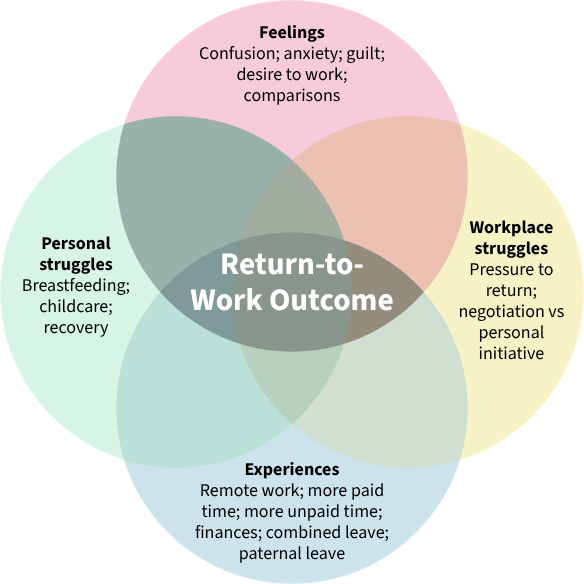
Analysis of participants’ interview responses surfaced three primary themes: feelings, challenges (divided into personal struggles and workplace struggles) and other experiences (see Figure 1). Individual participant quotes, descriptions of their experiences, and the code presence tables all denote their eligibility for PFL or whether employers had opted out of PFL. While this helps to illustrate areas that warrant further investigation, differences between these groups should not be attributed solely to PFL access, as participants may differ in other ways across these groups. Importantly, it is possible that the kinds of employers choosing to opt-out (each of which are public) exhibit commonalities in attributes that would shape participants’ responses differently from those who were eligible for PFL. The small sample size also limits the extent to which conclusions can be attributed to PFL.
Theme 1: Feelings
Confusion
Many mothers expressed feelings of confusion around navigating leave options. Mothers in both groups spoke similarly about experiences that left them confused. When asked about arranging her parental leave period, PFL user Christine1 offered the following statement:
Oh, actually it was quite confusing! It was kind of a hot mess, for the entire time I was pregnant…for the PFL you couldn’t settle until very close to your due date. Most of the maternity things you really couldn’t do anything until about 36 weeks. They basically didn’t wanna hear from you until then… they literally need you to file the paperwork after the baby is born – the most chaotic time.
Anna, another PFL user, echoed these feelings as she described her experience navigating the New York State paid leave website: PFL was“not super clear once you got to the state side of things”. Participants that were not able to use PFL also mentioned confusion, as described by Gianna, whose employer opted out of PFL:
It was this little harder to find some answers which I don’t know if that was just I happened to ask the wrong person, or what, but I would have…I think I would have been happier if it were just easier to find out what our solutions were, and you know there was just so many questions, even up until like right before I was getting ready to go.
Guilt and Desire to Work
One major difference between PFL users and non-users was the presence of guilt around return to work. Mothers, particularly in the non PFL user group, often described a sense of guilt coming up when describing the desire to work (which was a code that was mostly discussed in similar ways across the two different groups of mothers). The largest difference between groups in the area of guilt and desire to work was the fact that only one PFL user expressed a feeling of guilt when talking about valuing her career compared to four non-PFL-users who expressed guilt.
I wanna be the best at everything, and you can’t be the best employee and the best mom…one is always gonna bring down the other…I wish I could say I always put ‘Mom’ [higher], but there are definitely times when I’ve got a big event, or…something where my kids are like, ‘mommy come’ like when I’m writing some emails…and I’m like ‘Yeah, just give me a second’ and I’m like, ‘God, I should just go play with them. Why am I doing this right now?’ But like it goes back and forth… it’s a balance, but I mean… I could never be a stay at home mom… I couldn’t do it…my mental health couldn’t do it… it’s hard. And that’s why I give half of my income to someone else!- Olivia, PFl user
Katherine, one of the mothers without PFL access also discussed her experience with reconciling her desire to return to work with her discomfort around it, stating:
I am returning to work right now, and…a part of me feels like it’s a little bit easier…but then a part of me feels like it’s just weird to be away from her for so long. I feel kind of torn, you know. I’m wondering if what I’m doing seems more important than raising my child, which doesn’t feel like it is. So yeah, I don’t know. Part of it doesn’t feel right that we have to like, be away from our kids during these early times. -Katherine, opt out employer
Most of the mothers in the sample provided statements about how they enjoyed/missed working or planned to continue working in the long run. Even among the mothers that felt as though the only option they had was to leave the workforce (one PFL user and one ineligible participant), when asked about their feelings around ever returning to work, they both stated that they felt it would be ideal to have some kind of employment in the long run, especially after their kids entered public school.
One potential explanation for the differences in the way guilt was experienced between the two groups may be seen in the following quote from Mona (who has an opt-out employer) about how policy interacted with pressure to return:
The other thing about, you know, like just wanting to get back because you’re afraid of what people might think and say, and that kind of thing (is that) I think if there was a policy (available) that said that, you know, I could have extra time off that would make me feel like there’s space for something like that and it’s okay. Take it into, have it. I’m nice. So I wouldn’t have been so worried about that. I would have been like, okay, it’s okay to realize that you need more time
.
This quote implies that the feeling of pressure to return, a feeling which was described with more intensity by mothers without access to PFL, could exacerbate feelings of guilt around mothers’ decision to reenter the workforce, which is consistent with the findings presented by Collins (2021) about policy and guilt.
Anxiety
Mothers’ descriptions of feeling nervous about leaving their baby were similar among both groups of mothers, however, participants described varying levels of distress associated with anxiety. Often, anxiety was heightened around the time of return to work. To demonstrate the range in experiences, the following two quotes are included.
As I was getting closer to going back, I think it was just anxiety, and you know a lot of there’s a lot of emotions there, and hormones…It was definitely an increase in anxiety. Mental health wasn’t the greatest, but it also was nice, because it was nice to kind of go back to something that was just me, not just being Mom, but just being myself.-Gianna, Opt-Out Employer
While Gianna described light anxiety around returning to work, Mona, another mothers whose employer had opted out, responded to a question about what it felt like to return when she did with the following comment:
The restrictions (on how much time could be taken off) made me feel like these sorts of things weren’t being prioritized, and that I had to get back right after I had the baby. They didn’t care that the baby was born in November. I had to get back in January, and I was still going to campus shaky and jittery. -Mona, Opt-Out Employer
Comparisons
Many mothers responded to questions about their satisfaction or dissatisfaction with their leave options by discussing the experiences of other groups of mothers, typically in other countries and/ U.S. states. When this occurred, it was coded as “comparisons.” Interviews with comparisons sometimes included a quote describing how lucky the speaking mother felt to have access to the leave options she did compared to mothers in other states or groups of women throughout the United States (which was tagged as “positive”, but more often included a statement about how mothers in another country or area had better options (which was tagged as “negative”). Sometimes quotes finished with a qualifying statement about how a longer policy would have better met one or more specific need (s). In a quote exemplifying this code, PFL user, Olivia stated:
You see, like other countries, and like the fact that, like, you know, Germany and France offer like one year maternity leave and things like that, like I don’t know if I’d need a whole year but the fact that, like (those governments) actually show that, like caring for children and providing like that sort of care and thoughtfulness into like the well-being of the family, that shows a lot… My complaints are coming from a really privileged standpoint, you know, like, my complaints of like, yeah, it sucks that I had to like get only paid $400 for my 6 weeks…we do not do even close to enough to support women and mothers like in this country, and also like, I mean, yeah, there’s a whole other side to that too, that I don’t have to go into, but like there’s only like 6 or 7, I think, at this point states the offer paid family leave like, which is, mind boggling to me…it’s all so broken.
Theme 2: Challenges
Personal Struggles
Breastfeeding Challenges
Breastfeeding challenges, referring to either mothers’ concerns about, or actual experiences with difficulty feeding their baby after returning to work, were generally similar for PFL users and non PFL users. Most of the mothers that discussed breastfeeding challenges after actually returning to work placed particular emphasis on how challenging it was to navigate externally imposed time and space limits on pumping. The following statement was made by Mona, who did not have access to PFL:
I think one time I entered back like (three or four minutes late) or something. And she said she immediately noticed, and she said, if there are further accommodations that you need, you have to let me know…it made me feel like I was being very unprofessional, right, and the two things (breastfeeding and professionalism) were frictioning quite a bit, and I couldn’t understand why I had to make a choice between one and the other.
However, challenges around breastfeeding also arose before return to work decisions were made, and were relevant in the decision making process with PFL user Heather describing the following: “because of the bottle refusal we did not know if he would be able to successfully start at daycare to the extent that I did have a conversation with my supervisor about possibly needing to extend my leave.”
Childcare Challenges
Mothers that relied on paid childcare tended to make statements about how difficult it was to find a local childcare provider that was either accepting children, or within their budget (coded as “finances”), with frequent reference to long wait lists. Isabella described having a difficult time finding a childcare center that would take her baby
So I got on at least three, maybe four wait lists for childcare centers when I was 3 months pregnant, and we still did not have a spot until it was like March…when I was going back to work one of the places was like, Oh, we’ll have a spot for you in April. Yeah, so so over a year, like 13 months. – Isabella, PFL User
Christine, a PFL user, also provided a statement about childcare that mirrored statements made by many of the mothers in the study, as she explained “The daycare situation was very difficult at the time. Everywhere had, like a super, crazy, long wait list, and then also (high) rates.” and added later on in the interview that she “would have been like losing money, paying full-time care, and working part time” had she chosen to pursue external childcare options.
Physical Recovery
Physical recovery was characterized differently based on the kinds of issues mothers required recovery from, however, mothers’ feelings regarding physical recovery, and the ways that physical recovery factored into decisions about when to return to work were generally similar. 12 weeks was enough time for several of the mothers to feel physically recovered, however, several other mothers reported longer recovery periods. Physical recovery challenges led to leave extensions in some situations, but mothers like Fiona, who had an Opt-Out Employer, had to return to work long before making a full physical recovery. When asked by the
interviewer: “So did you feel physically, as though you’d recovered fully by the time that you went back?” Fiona responded:
No! With (my first son) I was not fully recovered. I had a really bad tear. I had a stage 4 tear, but (the doctors) cauterized part of it… I was not fully healed all the way. It took like 6 months for me to be completely healed from cuts and stuff.
Heather, a PFL user, also faced a longer recovery period than the 12 weeks included in the state policy, however she was able to schedule a longer leave of 17 weeks for herself using combined forms of leave, and was therefore able to recover within her originally scheduled leave time, with no additional disruption from extending her leave for additional time.
Interviewer: So did you feel that the 12 weeks was long enough to ensure that you were able to make a full recovery after labor?
Heather : No, no. I mean, I had a C-section, I had a traumatic birth… so it was a very difficult recovery in conjunction with trying to… provide full care to another human being that had medical issues… I do feel like I was mostly physically healed by like the 8 to 12 week mark but I was still recovering.
Interviewer: Okay. And what about at that 16 or 17 week mark?
Heather: Yeah, I mean, like, physically, I was mostly back to my old self by that point in time.
Workplace Struggles
Pressure to Return
Pressure to return, referring to a mothers’ expression of feelings that people at her workplace were expecting her to return sooner than she wanted to was best represented by the following exchange:
Interviewer: Did you ever feel any pressure from family or people in the
workplace to go back at a certain time?
Gianna (Opt-Out Employer): Oh, yeah, definitely, work. My supervisor, unfortunately, is a little passive aggressive…so I had to tread lightly when coming up with my maternity leave plan…So like, yeah. So it wasn’t ideal. I think next time I’ve already thought about asking for longer when (or) if the next time comes.
Negotiation vs. Personal Initiative
The final codes within the axial code category workplace struggles yielded some differences in responses across the two groups. Negotiation refers to a mother’s engagement with her employer in which she attempts to receive accommodations, such as a longer original leave period, leave extensions, or remote work, which were not initially offered to her. Personal initiative refers to times in which mothers described needing to do independent research to find information on the options available to them for maternity leave.
Negotiation may have been more present in interviews with mothers whose employers had opted out of offering PFL because of the fact that mothers who were ineligible for PFL (or those who had exhausted their state benefits) needed to coordinate the details of their leave with their employers directly instead of simply making the decision to use existing entitlements. Gianna (Opt-Out Employer), wanted additional time to transition back to full time, in person work, and she submitted a request to work in a hybrid format, she explained
So I’m in the process of trying to get (my request for a hybrid work schedule) reviewed and approved because it’s working.You know my work is getting done. It’s not penalizing us at all… Unfortunately, we’re in the process of trying to come up with a work from home, like hybrid situations that is accommodating to everybody. So I think, until that’s done I don’t think it will get approved. I asked, anyway, but it’s not looking great, so we’re in the process.
Conversely, personal initiative was mentioned more by PFL users. The major implication of this difference is that there may be a need to either ensure that workplaces in New York State are able to offer their employees complete and accurate information about the leave options available to them, or encourage workplaces to share information about leave options with their employees more proactively. The following quote exemplifies the kinds of statements that were coded as personal initiative:
So with my first. It was through a co-worker who had just had a baby. My job wasn’t really too like open about sharing it, but I also think that was because they were like, we want you back as soon as possible, so me, like all of the information right off the bat. So I had to do some digging, and then I had some coworkers help me– Elizabeth, PFL user
Theme 3: Experiences
Remote Work
Participants described remote work, which refers to statements about how the availability of remote work options impacted the transition back into work, with mostly positive language, and statements about how it was a helpful experience. For mothers that were able to utilize remote work in some way, it was often central to their decision to return to work at the time that they did. A representative experience described by Diane was that, although she was considering extending her leave, the fact that she believed she would have a hybrid work arrangement upon returning was the reason she ultimately chose not to extend her leave. On the other side, one of the mothers (Christine) that chose to quit her job did so, in large part, because her workplace began to require in person work for all employees. Christine became pregnant in 2020, and was able to work from home during the Coronavirus lockdown. When she initially made the decision to return, she did so because she had been given the option of a hybrid remote work schedule, for financial reasons related to childcare and feeding expenses, the flexibility offered by remote work to continue breastfeeding, and limit the amount of paid childcare needed, made continuing to work possible.
Although Christine expressed anxiety about how her work had been “piling up” while she was on leave, which also factored into her decision to quit her job, she had expressed desire to work at several points throughout the interview, and described being home alone caring for her child as a very difficult experience, so she entered into a multi-week negotiation with her workplace hoping for a hybrid schedule. When her workplace ultimately decided that she would not be able to work remotely at all, she made the difficult decision to save money on childcare and formula by staying home and continuing to breastfeed.
The most notable experience with remote work was described by Natalia. Natalia gave birth two times after PFL had been implemented in New York state, the first being in 2020. Natalia’s workplace shut down the day after she returned from using PFL, and employees at her workplace were allowed to continue working remotely through 2021. Because her experience working remotely after her first parental leave was so positive, Natalia actually chose to forego using PFL, or any extended leave period entirely, in favor of working full time, but remotely, for as long as she felt was necessary. Natalia took one week of personal time off after giving birth in early 2022, and has been working full time remotely ever since. When asked more about her experience working remotely, Natalia said
I was actually able to see him grow and be there and be present for him…Now you know, if I ever had to go back to work (in person), I always said that I’d probably quit before going back, because I think those years you never get them back to spend with your child.
Overall, Natalia had mostly positive things to say about this experience, although she did make a statement that was coded as comparison.
Additional Paid Time Off (PTO)
Additional PTO simply represented additional time taken off from work after a mother’s initial parental leave period came to a close, however mentions of additional PTO specifically include those that were paid (partially or in full). Although the categories are relatively self explanatory, the following quote exemplifies the use of both unpaid time and additional PTO:
So I (took) 7 months in total. The 12 (weeks) was within the 7 months, and whatever I took post that 12 weeks within that 7 month would (have been) unpaid. I did have some time that, like I begged for; sick and personal, and vacation (some of which) I actually had to use prior to the Paid Family Leave Starting cause there’s like a grace period, or something like that- Christine, PFL user
PFL user Christine had utilized a combination of short term disability and then PFL, up to a total of 18 and a half weeks, but used additional paid time off between the two while waiting for PFL to take effect and also used some after PFL before taking additional unpaid time off.
Unpaid Time
Unpaid time, referring to extensions of leave time taken where pay was not offered, were more common among those who were ineligible for PFL. One feature of the leaves taken by mothers who were not eligible for PFL was that use of sick, vacation, and/or personal time was often built into the time they took off in their initial leave period, meaning that the choice to extend leave for longer generally occurred after any paid time off options had already been exhausted.
Finances
The code finances was applied to any decisions made based on financial considerations. All participants mentioned the code finances, The code finances had the most co-occurrence with the codes childcare or childcare challenges, which may indicate that other costs were more manageable within the income systems mothers had established for themselves, however, the finances code also had some co-occurrence with the combined leaves code. Interestingly, finances had low co-occurrence with additional PTO. This indicates that even for mothers within this relatively privileged sample (predominantly white and partnered), there was immediate need to supplement the leave options provided and string together multiple types of paid time off before leave even began, but that the decision to take additional paid time off was not always one made as a direct consideration of financial situation. Also important to note is the fact that three situations were coded as both finances and positive- two of which were related to participants being thankful that they were able to cut costs by breastfeeding during a formula shortage, and the third was related to being able to forego childcare expenses because of having in-family childcare.
Combined Leaves
The code combined leaves, while similar to codes referring to additional time taken off after the initial leave period, is distinct in that it refers solely to the initially scheduled leave period, and not to extensions of time made. Combined leave taking and experiences around it were generally similar across both groups of mothers regardless of whether the initial leave was made up of a combination of short term disability and employer offered time or PFL, employer offered time or PFL and existing PTO (sick, vacation, or personal time), or whether it was a combination PFL and short term disability.
Paternal Leave
A code present in all 15 interviews was paternal leave time, which referred to the decision for fathers to return to work after a shorter period of time than mothers. Whenever possible and appropriate, follow up questions about the way parents made this decision were asked in interviews. The reason offered behind the decision for fathers to take less leave time than mothers was usually because they could not afford to have a long term reduction in pay for both parents, which was coded as finances. The reasons mothers were the ones to take more leave time were generally related to physical recovery and breastfeeding, as exemplified by the following quote:
Interviewer: How did you go about deciding who was going to take time off from work between the two of you?
Katherine, Opt-Out Employer: That was just based on breastfeeding and financial and kind of who found it easier. Yeah, it made sense for me (to take the time off).
Jessica, a PFL user, also described that her husband chose to take some time off with each of her children, and even took longer off with their second child because of the increase in wage replacement offered through PFL, however she explained that “it definitely would have been financially, I wanna say impossible (or) very difficult for us to both have been paid… the 67 or 60% at the same time, for the full time.”
Discussion
Findings from this study offer insights into the different experiences of mothers with and without PFL. Perhaps most notably, mothers who were unable to use NYSPFL were more likely to describe sacrificing pay in order to take a sufficient amount of time off, and more frequently mentioned guilt–particularly when discussing the desire to work. Mothers that were able to utilize the state’s PFL experienced many of the same issues, such as breastfeeding challenges, struggles with child care access, and longer leave taking than their partners. However, the PFL users in this sample were more often able to plan for leaves that drew on combined forms of time off, and when their initially scheduled leave periods came to an end, they more often had access to additional forms of PTO if necessary. For both groups, access to remote work stood out as an important resource for maintaining employment.
While the findings from this study highlight potential differences in feelings around parental leave for mothers that were and were not able to use PFL, feelings still had less of an impact on the final decisions of if and when to return to work than challenges and experiences overall. Participants described breastfeeding, childcare challenges, and to a lesser extent, physical recovery, as were important factors in the decision to extend leave, whereas the accessibility of remote work and the lack of additional PTO were usually central to the decision to return to work sooner. The factors identified as potentially relevant in return to work decision making reflect Winston et al.’s (2019) findings that child care costs, lack of job protection, and PFL program limitations each impacted mothers’ decisions to stay home, while need for income, supportive workplace practices, family help, and accessible, trustworthy child care were relevant to mothers’ decision to return to work. In contrast, while feelings of anxiety and guilt were troubling for the participants in this study, they were primarily observed alongside their larger feelings of satisfaction with the parental leave options available to them, rather than their ultimate decisions around leave extensions or choices to stay home permanently.
Notably, two mothers that used PFL needed to extend their leave using unpaid time off, while four of the five mothers that did not have access to PFL needed to extend their leave using unpaid time off, suggesting the need for further investigation into how potential financial security for mothers without PFL access may influence the timing of return to work. Conversely, the fact that the majority of mothers in the PFL group (eight of the ten) saw it necessary to initially plan for longer paid leaves using combined forms of leave suggests that before leaving work, mothers do not anticipate that 12 weeks will be a long enough period of time. Furthermore, the fact that half of the PFL user mothers needed to extend their maternity leave with additional PTO, and that another two even needed to extend their leave with additional unpaid time off suggests that 12 weeks may not be a sufficient period of time. The extension of originally scheduled leave time through use of vacation time, sick time, or even beyond PTO, is an important decision to make note of, as it signifies that leave extension is important enough to use time off that could be necessary at a later point in the year.
Additionally, an interesting finding around the theme of feelings was that the desire to work, like other feelings, also seemed to be unrelated to leave length and the ultimate decision to return to work. Mothers who expressed the desire to work made a variety of choices, including extending their leave time and even leaving their jobs indefinitely. This finding is particularly important in relation to results such as those shown by Bailey et al. (2025) or Del Rey et al.(2021). The fact that desire to work did not seem to factor into decisions to extend leave or leave work permanently indicates the need for additional research on the reasons underlying long-term declines in employment after PFL in California or declines in employment seen after particularly lengthy leaves internationally. Future research should examine the relationship between expressed desire to remain employed and labor force attachment.
The link between guilt and work that has been seen in previous qualitative research (Buzzanell et al., 2017; Collins, 2021) was also described by mothers in the present study. Guilt was mentioned more by participants who were not able to utilize PFL, and desire to work was mentioned more by those who did utilize PFL. Future research examining feelings of guilt among mothers who do not have paid leave options may provide valuable insights into the ways in which PFL policies influence mothers.
Mothers eligible to use PFL may face different workplace challenges than mothers that are not eligible. Pressure to return and negotiation may be a more substantial contribution to the decision making process of non-PFL user mothers when determining if and when to return to work. Among the mothers that utilized PFL, personal initiative was a more relevant challenge, as they were more often required to learn about the leave options available to them independently. In addition to personal initiative being required for several PFL users to establish what they were entitled to for taking leave, confusion around leave was also noted among the majority of PFL use. While confusion and personal initiative did not seem to present issues with underuse of entitlements/overuse of company paid time off among mothers in this particular sample, the presence of both codes indicates an avenue for further research in how confusion impacts the types of time off mothers take.
An important finding from this study is how beneficial remote work was for helping mothers return to work. While there would be many challenges associated with using public policy to encourage companies to allow transitionary remote work periods for mothers after childbirth, future research should continue to examine the ways that remote work can be leveraged at individual firms to promote equality between mothers and other groups within the workforce.
Mothers from both groups reported their partners taking less leave time than themselves, which was consistent with the large body of literature on paternal leave taking and gendered tradeoffs of parental leave policies, as well as estimates presented by Dennison et al. (2022). While childbirth necessitates a period of physical recovery, many of the mothers in this study suggested that their partners would have been able to take more leave time if the leave had been fully paid.
In this sample, PFL users described negotiation in different ways, and to a lesser extent than those who were ineligible to use PFL, which may point to a way that PFL policies could provide mutual benefit to employees and employers. The examples of negotiation discussed in this study required time and effort on both the part of mothers hoping to improve their leave experiences and employers trying to prevent employment gaps and other complications. PFL’s structure as a uniform benefit guaranteed to all employees could be assessed for its impact on the inefficiencies associated with leave taking processes. After PFL has been in place for longer, it may be valuable to build on Bennett et al.’s (2025) to examine whether PFL improves efficiency, or allows for workplaces to plan more effectively for extended absences.
Importantly, New York state’s demographic makeup and observed leave taking patterns (Nguyen et al., 2023) necessitate targeted focus on how PFL is experienced by Black and Latine women. It is difficult to predict the differences in how PFL shapes return-to-work outcomes across mothers of different racial and ethnic categories, as this is a gap in the research available on longer-standing United States programs. Bailey et al’s (2025) dataset is comprehensive and detailed in many ways, but the tax data lack information on race and ethnicity (United States Department of Labor, 2022), limiting the scope of the primary analysis substantially. Even for studies where race and ethnicity variables are available, measuring disparities related to PFL has been challenging due to the already small sample sizes available in traditional census datasets (Rossin-Slater et al., 2013 p. 240). This pilot study was initially conducted with time and resource constraints, and the convenience sampling method, employed over a relatively short period of time, resulted in a homogenous sample. The work that builds on these data should seek to examine gaps around differences in PFL experiences across racial and ethnic categories.
Finally, in examining pathways for evaluating the impact of New York State’s PFL policy specifically, and comparing the policy’s results to those shown by Bailey et al. (2025) it may be useful to employ a mixed methods strategy. After enough data are available for years after the pandemic lockdowns, results from future difference-in-difference analyses of PFL and New York mothers’ labor market outcomes could be complemented by longitudinal and qualitative data with PFL users.
Limitations
The recency of New York State’s Paid Family Leave policy created two notable obstacles for this study. First, there was a limited amount of existing research specific to New York’s PFL program to inform the study, resulting in a reliance on literature which examined California’s PFL outcomes as a domestic case study. While the data from California provided useful insights, the differences in policy between New York and California’s PFL programs, as well as other differences between the two states, require that an acknowledgement be made that the effects of New York State’s PFL policy may differ greatly when more data are available.
Second, because New York’s PFL policy was only fully implemented two years prior to the time interviews were conducted, a lack of widespread knowledge about the program may have inhibited some participants understanding of what the new policy offered, how that compared to other forms of leave, and knowledge of the plans offered by their employers before its implementation.
Beyond the limitations imposed by the policy’s novelty are a few drawbacks which originated from the sample itself. First, the sample size is small which precludes any generalizations or direct comparisons between mothers eligible and ineligible for PFL. The findings from this study are, by nature, exploratory, and must not be interpreted as predictive of mothers’ return to work more generally. Second, although the paper’s findings highlight reasons that fathers may choose to take shorter leaves or entirely forgo leave more frequently, these are only discussed from the perspectives of mothers. Future research is necessary to better understand the perspectives of New York’s fathers regarding parental leave taking.
Finally, compensation was offered to all participants to incentivize the participation of less privileged mothers than those represented in the pilot survey, but the sample was overwhelmingly white, partnered, and employed full time at the time of their maternity leaves. This is likely due to the short window available for initial data collection and the convenience sampling approach. The participants recruited came from highly privileged backgrounds across many intersections, meaning that findings are not as applicable when considering the experiences of maternal subgroups with fewer advantages supporting their return to work. As described more thoroughly in the discussion, the missing perspectives of Black and Latine mothers is a substantial drawback of this study, both because the sample provides a very incomplete picture of how PFL is being experienced across the state and because these are the mothers who saw the most notable increases in leave use upon the program’s implementation (Nguyen et al., 2023). Future research building on these findings must utilize more intentional sampling approaches to ensure that a full range of demographic characteristics are represented. Several other salient traits were also left entirely unrepresented in this sample, for example, there were no low-income or single mothers recruited. The issues experienced by participants in this sample may be both smaller in scale, and different in scope, when compared to mothers across New York state.
The convenience sample’s homogeneity also carries implications for the authors’ analysis. As outlined in the positionality statements, both authors are white women with postgraduate degrees and the commonalities between the authors and the sample may have contributed more sympathetic interpretations of the participants’ narratives.
Although the recent implementation of the policy creates several limitations, it has also provided an opportunity for a wide range of exploratory research topics. Because of the detailed nature of interview data, it was possible to find themes across responses, such as remote work, that did not necessarily answer the research questions directly, but highlight avenues for future research.
Conclusion
Findings from this pilot study offer an initial glimpse into the experiences of mothers’ experiences and decision making after birth. While differences between the experiences of the two groups of mothers are likely attributable to a wider range of employer attributes, such as workplace culture or occupation type, future research can examine mothers who do and do not have access to PFL on a larger scale to better understand its role. The participants described feelings ranging from guilt to a desire to work, personal struggles around issues like childcare and breastfeeding, and challenges planning and negotiating leave arrangements. Participants also described experiences with remote work and finances as relevant to their decisions about returning to work. Follow-up studies should also seek to fill knowledge gaps on how mothers experience PFL across different income levels, racial and ethnic categories, and marital or partnership status. Finally, to better understand the relationship between mothers’ long-term desire to work and their decisions about employment, additional research should focus on how mothers feel about work, and which factors outweigh the desire to work when mothers choose not to continue their employment.
Acknowledgment
I am grateful to Professor Kelly Musick for her role as faculty advisor of my master’s thesis, from which this paper is adapted. My thanks also go to the Cornell Brooks School of Public Policy for funding this study, and to the interviewees who participated.
Disclosure statement
No potential conflict of interest was reported by the author(s).
Works Cited
Bailey, M., Byker, T., Patel, E., & Ramnath, S. (2025). The Long-Run Effects of California’s Paid Family Leave Act on Women’s Careers and Childbearing: New Evidence from a Regression Discontinuity Design and US Tax Data. American Economic Journal: Economic Policy, 17(1), 401–431. https://doi.org/10.1257/pol.20200277
Bartel, A. P., Rossin-Slater, M., Ruhm, C. J., Slopen, M., & Waldfogel, J. (2021). Support for Paid Family Leave among Small Employers Increases during the COVID-19 Pandemic. Socius: Sociological Research for a Dynamic World, 7, 237802312110619. https://doi.org/10.1177/23780231211061959
Bartel, A., Rossin-Slater, M., Ruhm, C., Slopen, M., & Waldfogel, J. (2021). The Impact of Paid Family Leave on Employers: Evidence from New York (w28672; p. w28672). National Bureau of Economic Research. https://doi.org/10.3386/w28672
Baum, C. L., & Ruhm, C. J. (2016). The Effects of Paid Family Leave in California on Labor Market Outcomes. Journal of Policy Analysis and Management, 35(2), 333–356. https://doi.org/10.1002/pam.21894
Bennett, B., Erel, I., Stern, L., & Wang, Z. (2025). Paid leave pays off: The effects of paid family leave on firm performance. Review of Finance, rfaf072. https://doi.org/10.1093/rof/rfaf072
Bergemann, A., & Riphahn, R. T. (2023). Maternal employment effects of paid parental leave. Journal of Population Economics, 36(1), 139–178. https://doi.org/10.1007/s00148-021-00878-7
Bipartisan Policy Center. (2026, April 10). State paid family leave laws across the U.S. https://bipartisanpolicy.org/explainer/state-paid-family-leave-laws-across-the-u-s/#:~:text=State%20Paid%20Family%20Leave%20Laws%20Across%20the%20U.S.
Buzzanell, P. M., & Liu, M. (2005). Struggling with Maternity Leave Policies and Practices: A Poststructuralist Feminist Analysis of Gendered Organizing. Journal of Applied Communication Research, 33(1), 1–25. https://doi.org/10.1080/0090988042000318495
Buzzanell, P. M., Remke, R. V., Meisenbach, R., Liu, M., Bowers, V., & Conn, C. (2017). Standpoints of Maternity Leave: Discourses of Temporality and Ability. Women’s Studies in Communication, 40(1), 67–90. https://doi.org/10.1080/07491409.2015.1113451
Chatterji, P., Nguyen, T., Ncube, B., & Dennison, B. A. (2022). Effects of New York state paid family leave on early immunizations. Social Science & Medicine, 315, 115539. https://doi.org/10.1016/j.socscimed.2022.115539
Collins, C. (2021). Is Maternal Guilt a Cross-National Experience? Qualitative Sociology, 44(1), 1–29. https://doi.org/10.1007/s11133-020-09451-2
Collins, C., Ruppanner, L., Christin Landivar, L., & Scarborough, W. J. (2021). The Gendered Consequences of a Weak Infrastructure of Care: School Reopening Plans and Parents’ Employment During the COVID-19 Pandemic. Gender & Society, 35(2), 180–193. https://doi.org/10.1177/08912432211001300
Coombs, E., Theobald, N., Allison, A., Ortiz, N., Lim, A., Perrotte, B., Smith, A., & Winston, P. (2022). Explaining the positive relationship between state-level paid family leave and mental health. Community, Work & Family, 1–25. https://doi.org/10.1080/13668803.2022.2140029
Critchlow, E., Birkenstock, L., Hotz, M., Sablone, L., Riley, A. H., Mercier, R., & Frasso, R. (2022). Experiences of New Mothers During the Coronavirus Disease 2019 (COVID-19) Pandemic. Obstetrics & Gynecology, 139(2), 244–253. https://doi.org/10.1097/AOG.0000000000004660
Das, T., & Polachek, S. W. (2015). UNANTICIPATED EFFECTS OF CALIFORNIA’S PAID FAMILY LEAVE PROGRAM. Contemporary Economic Policy, 33(4), 619–635. https://doi.org/10.1111/coep.12102
Del Rey, E., Kyriacou, A., & Silva, J. I. (2021). Maternity leave and female labor force participation: Evidence from 159 countries. Journal of Population Economics, 34(3), 803–824. https://doi.org/10.1007/s00148-020-00806-1
De Laat, K., Doucet, A., & Gerhardt, A. (2023). More than employment policies? Parental leaves, flexible work and fathers’ participation in unpaid care work. Community, Work & Family, 26(5), 562–584. https://doi.org/10.1080/13668803.2023.2271646
Dennison, B. A., FitzPatrick, E., Zhang, W., & Nguyen, T. (2022). New York State Paid Family Leave Law Associated with Increased Breastfeeding Among Black Women. Breastfeeding Medicine, 17(7), 618–626. https://doi.org/10.1089/bfm.2022.0015
Dennison, B. A., Ncube, B., & Nguyen, T. (2022). First-Year Enrollment and Utilization of New York State Paid Family Leave: 2018. Journal of Public Health Management and Practice, 28(5), 525–535. https://doi.org/10.1097/PHH.0000000000001540
Dias, F. A., Chance, J., & Buchanan, A. (2020). The motherhood penalty and The fatherhood premium in employment during covid-19: Evidence from The united states. Research in Social Stratification and Mobility, 69, 100542. https://doi.org/10.1016/j.rssm.2020.100542
Falter, M., Arenas, A. A., Maples, G. W., Smith, C. T., Lamb, L. J., Anderson, M. G., Uzzell, E. M., Jacobs, L. E., Cason, X. L., Griffis, T. A. N., Polzin, M., & Wafa, N. Z. (2022). Making Room for Zoom in Focus Group Methods: Opportunities and Challenges for Novice Researchers (During and Beyond COVID-19). Forum Qualitative Sozialforschung / Forum: Qualitative Social Research, Vol. 23 No. 1 (2022). https://doi.org/10.17169/FQS-23.1.3768
Francis, J. J., Johnston, M., Robertson, C., Glidewell, L., Entwistle, V., Eccles, M. P., & Grimshaw, J. M. (2010). What is an adequate sample size? Operationalising data saturation for theory-based interview studies. Psychology & Health, 25(10), 1229–1245. https://doi.org/10.1080/08870440903194015
Guest, G., Bunce, A., & Johnson, L. (2006). How Many Interviews Are Enough?: An Experiment with Data Saturation and Variability. Field Methods, 18(1), 59–82. https://doi.org/10.1177/1525822X05279903
Jaumotte, F. (n.d.). Labour Force Participation of Women: Empirical Evidence on the Role of Policy and Other Determinants in OECD Countries. OECD Economic Studies, 2003/2, 51-108. https://doi.org/10.1787/16097491
Joy, P., Aston, M., Price, S., Sim, M., Ollivier, R., Benoit, B., Akbari-Nassaji, N., & Iduye, D. (2020). Blessings and Curses: Exploring the Experiences of New Mothers during the COVID-19 Pandemic. Nursing Reports, 10(2), 207–219. https://doi.org/10.3390/nursrep10020023
Juengst, S. B., Royston, A., Huang, I., & Wright, B. (2019). Family Leave and Return-to-Work Experiences of Physician Mothers. JAMA Network Open, 2(10), e1913054. https://doi.org/10.1001/jamanetworkopen.2019.13054
Kim, J., & Lenhart, O. (2024). Paid family leave and the fight against hunger: Evidence from New York. Health Economics, hec.4818. https://doi.org/10.1002/hec.4818
Kinser, P. A., Jallo, N., Amstadter, A. B., Thacker, L. R., Jones, E., Moyer, S., Rider, A., Karjane, N., & Salisbury, A. L. (2021). Depression, Anxiety, Resilience, and Coping: The Experience of Pregnant and New Mothers During the First Few Months of the COVID-19 Pandemic. Journal of Women’s Health, 30(5), 654–664. https://doi.org/10.1089/jwh.2020.8866
Kopec, A. (2023). Policy Feedback & Research Methods: How Qualitative Research Designs With Marginalized Groups Inform Theory. International Journal of Qualitative Methods, 22, 16094069231217915. https://doi.org/10.1177/16094069231217915
Lalive, R., & Zweimüller, J. (2009). How Does Parental Leave Affect Fertility and Return to Work? Evidence from Two Natural Experiments. The Quarterly Journal of Economics, 124(3), 1363–1402. JSTOR.
Landivar, L. C., Scarborough, W. J., Ruppanner, L., Collins, C. M., & Rouse, L. (2023). Remote Schooling and Mothers’ Employment During the COVID-19 Pandemic by Race, Education, and Marital Status. RSF: The Russell Sage Foundation Journal of the Social Sciences, 9(3), 134–158. https://doi.org/10.7758/RSF.2023.9.3.06
Low, H., & Sánchez-Marcos, V. (2015). Female labour market outcomes and the impact of maternity leave policies. IZA Journal of Labor Economics, 4(1), 14. https://doi.org/10.1186/s40172-015-0029-1
Maxwell, J. A. (2020). The Value of Qualitative Inquiry for Public Policy. Qualitative Inquiry, 26(2), 177–186. https://doi.org/10.1177/1077800419857093
Ma, E., Wu, L., Yang, W., & Xu, S. (Tracy). (2021). Hotel work-family support policies and employees’ needs, concerns and Challenges—The Case of Working Mothers’ maternity leave experience. Tourism Management, 83, 104216. https://doi.org/10.1016/j.tourman.2020.104216
McKim, C. (2023). Meaningful Member-Checking: A Structured Approach to Member-Checking. American Journal of Qualitative Research, 7(2), 41-52. (n.d.).
Miller, J., Bradshaw, P. T., & Fernald, L. C. H. (2025). Maternity leave and breastfeeding during COVID: A cross-sectional study. International Breastfeeding Journal, 20(1), 88. https://doi.org/10.1186/s13006-025-00779-5
New York State Department of Financial Services (2026) Paid Family Leave in New York State https://www.dfs.ny.gov/consumers/health_insurance/Paid-Family-Leave
Nguyen, T., Dennison, B. A., Radigan, A., FitzPatrick, E., Zhang, W., & Ncube, B. (2023). New York State’s Paid Family Leave Program is Associated with More Equitable and Increased Use of Paid Leave Following Childbirth. Maternal and Child Health Journal, 27(3), 516–526. https://doi.org/10.1007/s10995-022-03510-6
Pettit, B., & Hook, J. (2005). The Structure of Women’s Employment in Comparative Perspective. Social Forces, 84(2), 779–801. https://doi.org/10.1353/sof.2006.0029
Petts, R. J., Carlson, D. L., & Pepin, J. R. (2021). A gendered pandemic: Childcare, homeschooling, and parents’ employment during COVID‐19. Gender, Work & Organization, 28(S2), 515–534. https://doi.org/10.1111/gwao.12614
Roehl, J., & Harland, D. (2022). Imposter Participants: Overcoming Methodological Challenges Related to Balancing Participant Privacy with Data Quality When Using Online Recruitment and Data Collection. The Qualitative Report. https://doi.org/10.46743/2160-3715/2022.5475
Rönsen, M., & Sundström, M. (1996). Maternal employment in Scandinavia: A comparison of the after-birth employment activity of Norwegian and Swedish women. Journal of Population Economics, 9(3), 267–285. https://doi.org/10.1007/BF00176688
Rossin‐Slater, M., Ruhm, C. J., & Waldfogel, J. (2013). The Effects of California’s Paid Family Leave Program on Mothers’ Leave‐Taking and Subsequent Labor Market Outcomes. Journal of Policy Analysis and Management, 32(2), 224–245. https://doi.org/10.1002/pam.21676
Ruhm, C. J. (1998). The Economic Consequences of Parental Leave Mandates: Lessons from Europe. The Quarterly Journal of Economics, 113(1), 285–317. https://doi.org/10.1162/003355398555586
Setty, S., Skinner, C., & Wilson-Simmons, R. (2020). Bonding time: Low-income mothers and New Jersey’s family leave insurance program. Community, Work & Family, 23(2), 141–161. https://doi.org/10.1080/13668803.2018.1501551
United States Department of Labor (2022). The long-term effects of California’s 2004 Paid Family Leave Act on women’s careers: Evidence from U.S. tax data (Bailey et al., 2019)https://beta.dol.gov/research-data/clear/studies/long-term-effects-californias-2004-paid-family-leave-act-womens-careers-evidence-us-tax-data-bailey
Valentova, M. (2019). The impact of parental leave policy on the intensity of labour-market participation of mothers: Do the number of children and pre-birth work engagement matter? Journal of European Social Policy, 29(3), 428–445. https://doi.org/10.1177/0958928718776826
Vollstedt, M., & Rezat, S. (2019). An Introduction to Grounded Theory with a Special Focus on Axial Coding and the Coding Paradigm. In G. Kaiser & N. Presmeg (Eds.), Compendium for Early Career Researchers in Mathematics Education (pp. 81–100). Springer International Publishing. https://doi.org/10.1007/978-3-030-15636-7_4
Waldfogel, J., Higuchi, Y., & Abe, M. (1999). Family leave policies and women’s retention after childbirth: Evidence from the United States, Britain, and Japan. Journal of Population Economics, 12(4), 523–545. https://doi.org/10.1007/s001480050112
Winston, P., Coombs, E., Bennett, R., Antelo, L., Landers, P., & Abbott, M. (2019). Paid family leave: Supporting work attachment among lower income mothers. Community, Work & Family, 22(4), 478–511. https://doi.org/10.1080/13668803.2019.1635436
Yancey, C., Tisinger, R., Johnson, M., Hoffman, M. A., Davis, C., & Jean-Baptiste, M. M. (2016). Understanding Attitudes on Paid Family Leave: Discussions with Parents and Caregivers in California, New Jersey and Rhode Island.
Zimmermann, C. M., Kraus, C. L., Campbell, A. A., Kaleem, M. A., Shukla, A. G., & McGlumphy, E. J. (2023). Maternity and family leave experiences among female ophthalmologists in the United States. PLOS ONE, 18(4), e0277376. https://doi.org/10.1371/journal.pone.0277376
| Code | PFL Direct Users (n=10) | Mothers with Opt-Out Employers (n=5) |
| Additional PTO | 5 (50%) | 0 (0%) |
| Guilt | 1(10%) | 4 (80%) |
| Negotiation | 2 (20%) | 3 (60%) |
| Pressure to Return | 6 (60%) | 5 (100%) |
Table 1: Substantial Differences in Experience by Code Presence
| Code | PFL Direct Users (n=10) | Mothers with Opt-Out Employers (n=5) |
| Physical Disability | 1 | 0 |
| Confusion | 6 | 2 |
| Anxiety | 6 | 3 |
| Remote work | 6 | 4 |
| Comparisons | 8 | 3 |
| Physical recovery | 8 | 5 |
| Personal Initiative | 8 | 3 |
| Breastfeeding Challenges | 9 | 4 |
| Childcare challenges | 9 | 5 |
| Combined leaves | 9 | 3 |
| Desire to work | 9 | 5 |
| Paternal Leave Time | 10 | 5 |
| Finances | 10 | 5 |
Table 2: Similar Experience Across Groups by Code Presence
INTRODUCTION and clarification on any unclear survey responses
Rapport builder:
First, I’d love to hear about your baby – when were they born, what were they like as a newborn,
and what are they like now?
KQ #1: Next, please describe your maternity leave experience, starting with how you
found out about your maternity leave options.
Probes:
– How did you find out about your parental leave entitlement? (told by an employer, friend,
looked into it yourself?)
– When did you take your maternity leave (during what year(s)/months)
– What type of work do you do? Are you/were you employed full time or part time?
– How much time did you take off? Did you return to work?
– How was your experience bonding with your new baby?
– How did your family’s spending habits change while you were on leave?
KQ #2: Now, I’d like to hear more about the end of your maternity leave. Tell me about
your experience as your maternity leave drew to an end.
Probes
– Did you have a stable childcare plan established when it was time for you to return to
work?
– How would you describe your physical and mental health, and feelings about returning to
work when your parental leave period came to a close?
– Did you extend your leave time with any other forms of paid or unpaid time off? If so,
what factored into this decision? Probes: a) pressure to make certain choices regarding
parental leave and return to work from your workplace? Family? Partner? Friends?
– If you chose to return to work, what factored into this decision?
– When your leave came to an end, was there anything in particular that eased or
worsened your return to work?**
– Can you discuss any experiences you have had that made you consider staying home
for longer, even if you did not choose to stay home for longer?**
– Can you discuss any experiences you have had that made you consider staying home
permanently, even if you did not choose to stay home permanently?**
– FOR MOTHERS THAT BREASTFED:
– 21. What were your experiences with breastfeeding before and after your leave came to
a close?
KQ #3: Finally, I’d like to talk more about maternity leave policies. Describe your
satisfaction (or dissatisfaction) with your employer’s maternity leave policy.
Probes:
– Which, if any, aspects of this policy did/would not meet your needs, and why?
– Did you feel that the payments you received during your leave were adequate to support
your needs and/or spending preferences?
– Did you feel that your parental leave was long enough to ensure that you were able to
make a full physical recovery before returning to work?
– (if partnered) Did your partner take time off to care for your newborn, and if so how much
time?
As far as you know, how did the New York State policy change the policy in your workplace?
(follow up: In your opinion, was this an improvement?)*Interview Protocol:
- All names are pseudonyms ↩︎


