
By Amy Wagner, PT, DPT, PhD; Susan N. Smith, PT, DPT, PhD; Amy F. Crocker, PT, DPT, PhD
Abstract:
The transition to motherhood is a profound biopsychosocial transformation that reshapes women’s identities, bodies, and participation in sport. For mothers who identify as athletes, returning to sport postpartum involves more than physical recovery; it requires navigating evolving identities within broader cultural expectations surrounding motherhood, gender, and athleticism. Drawing on interdisciplinary frameworks including normative motherhood, self-presentation theory, critical cultural sport psychology, social role theory, role conflict theory, and constraint theory, and contemporary examples of elite athlete mothers, this paper argues that postpartum return to sport is best understood as a dynamic process of identity renegotiation rather than a simple restoration of pre-pregnancy performance. This paper examines how ideals of “good motherhood,” unequal caregiving expectations, and structural inequities shape mothers’ experiences in sport while also highlighting how athletic participation can function as identity reclamation, resistance to restrictive gender norms, and personal transformation. The authors assert that supporting mother-athletes requires cultural and structural changes alongside individualized care and call for future research examining the intersections of motherhood, athletic identity, gender expectations, and social policy.
Background/Introduction
Mothers embody multiple identities, and the transition to motherhood introduces profound changes across physical, mental, emotional, and social domains (Gilligan, 1993; Palmer, & Leberman, 2009). For mothers who identify as athletes, whether elite, recreational, or lifelong movers, this transition can be particularly complex (Massey & Whitehead, 2022; McGannon & Spowart, 2022). Pregnancy and childbirth disrupt not only physiological functioning but also deeply held perceptions of self, body, and capability (Bø et al., 2016; Davenport et al., 2023).
The postpartum period is often framed in biomedical terms, emphasizing physical recovery, medical clearance, and rehabilitation from conditions such as pelvic girdle pain, pelvic floor dysfunction, and diastasis recti abdominis, where there is a midline separation of the rectus abdominus muscle (Bø et al., 2016). While these physical considerations are essential for returning to sport postpartum, biomedical framing alone is insufficient and overlooks the broader psychosocial and cultural processes through which mothers renegotiate identity and meaning in sport participation (Liddelow et al., 2023; Massey & Whitehead, 2022; McGannon & Spowart, 2022).
Returning to sport postpartum is not simply about regaining prior fitness levels but rather involves navigating evolving physical capacities alongside shifting identities as both mother and athlete (Appleby & Fisher, 2009; Palmer & Leberman, 2009). Cultural constructions of “good motherhood” frequently emphasize self-sacrifice, constant availability, and prioritization of others’ needs (Miller & Brown, 2005). These expectations may conflict with athletic identities that require time, bodily autonomy, discipline, and in some contexts, public visibility (Johnson et al., 2023). As a result, athlete mothers may experience tension, guilt, or social judgement when engaging in sport (Liddelow et al., 2023; Titova et al., 2025).
Maternal studies scholars argue that motherhood is not solely a personal identity or biological transition but also a social institution that is continually produced through cultural norms, public discourse, and institutional practices (O’Reilly, 2016; Rich, 1976). Rather than treating motherhood as a universal or fixed experience, maternal studies emphasizes how expectations of the “good mother” are socially constructed and maintained through gendered assumptions regarding caregiving, self-sacrifice, and moral responsibility (Hays, 1996; O’Reilly, 2016, Rich, 1976). These expectations shape not only how mothers are perceived by others but also how women understand themselves as mothers, often influencing decisions about work, leisure, physical activity, and bodily autonomy (O’Reilly, 2016).
Viewing postpartum return to sport through a maternal studies lens shifts attention away from individual motivation alone and toward broader social conditions within which mother-athletes negotiate their identities (O’Reilly, 2016). From this perspective, the challenges mothers encounter when returning to sport are not simply consequences of pregnancy or childbirth but reflections of wider cultural beliefs regarding whose bodies deserve care, whose ambitions are socially supported, and how motherhood itself should be performed (O’Reilly, 2016; Rich, 1976). Athletic participation therefore becomes more than physical activity; it can represent a negotiation of maternal identity that both reflects and challenges dominant cultural expectations of motherhood (O’Reilly, 2016).
At the same time, motherhood can serve as a catalyst for transformation. Rather than viewing motherhood as a disruption of athletic identity, this paper views motherhood through a critical lens by which women’s reproductive identity and relationships with embodiment, achievement, caregiving, and selfhood can be re-examined and reconstructed. For some, returning to sport represents a reclamation of a pre-motherhood identity (Appleby & Fisher, 2009). For others, it functions as resistance to restrictive maternal norms (Díaz-Rodríguez et al., 2025). Still, for many, it becomes a transformative process in which athletic identity is redefined rather than restored (Johnson et al., 2023; Massey & Whitehead, 2022; McGannon & Spowart, 2022). Understanding this complexity requires a multidimensional framework that integrates physical, psychological, and sociocultural perspectives.
Motherhood does not occur within a gender-neutral sporting environment. Women have historically faced inequities in access to sport, financial support, leadership opportunities, sponsorship, and media representation (Cooky et al., 2021). Female athletes are frequently evaluated not only on performance but also on appearance, femininity, and their conformity to gender norms. Pregnancy and motherhood often intensify these expectations, positioning female athletes as incompatible with ideals of elite performance or professional commitment (McGannon & Spowart, 2022). Consequently, athlete mothers navigate multiple intersecting forms of inequality, including those associated with being women in sport and those associated with motherhood. Understanding postpartum return to sport therefore requires recognizing that maternal identities develop within sporting cultures already shaped by longstanding gender inequities.
While some mothers seek to reclaim aspects of their pre-pregnancy athletic identities, the transition to motherhood more often involves constructing a new identity that integrates, rather than prioritizes, motherhood and athleticism. The authors argue that postpartum return to sport is not a process of returning to a previous self but one of identity transformation, in which embodied change, evolving relationships, institutional structures, and gendered cultural expectations collectively reshape what it means to be an athlete and a mother. This paper examines these processes through multiple conceptual lenses, demonstrating that athletic identity after childbirth is continuously negotiated rather than restored.
Mother-Athlete Theoretical Frameworks
Theoretical frameworks are useful for interpreting the identity and lived experience of the mother-athlete. No single theoretical perspective adequately explains all facets of the mother-athlete identity or the complexity of postpartum return to sport. Accordingly, this paper draws on six complementary frameworks that collectively illuminate how identity, gender, motivation, and structural inequality shape mothers’ athletic experiences. These frameworks include: (1) self-presentation theory/theory of face, (2) self-determination theory, (3) critical cultural sport psychology, (4) social role theory, (5) role conflict theory, and (6) constraint theory. Together, these frameworks help to interpret the meaning of athlete mother identities and roles they identify with both personally and within the context of broader society. Rather than competing explanations, these perspectives provide a multidimensional lens through which postpartum return to sport can be understood as an ongoing process of identity negotiation.
Mothers who identify as athletes may feel a tension between both identities, particularly that of the “good mother,” where the norm for motherhood is selflessness, devotion and altruism (O’Reilly, 2021). This tension relates to the concept of “intensive mothering,” which involves high proximity to the child, labor-intensive mothering, and providing high amounts of time and energy towards mothering (Hallstein et al., 2020). How the mother-athlete presents herself in person or social media may be interpreted through the lens of self-presentation theory, defined as “controlling information about the self” (Johnson et al., 2023). Goffman’s theory of face also relates how a mother athlete may present herself socially, as “face” contributes social value she claims for herself in social contact with others (Goffman, 1955). These theories affect how the mother-athlete projects her public image in social interactions (such as on social media) as her identity changes from athlete to mother-athlete. Self-determination theory is an important theory underlying all athletic motivation. The mother-athlete may seek competence, autonomy, and relatedness in her journey as both an athlete and a mother (Liddelow et al., 2023). Becoming a mother may also motivate women to be a positive role model for their children. Modern day mothers may prioritize their own needs as well as their children. Finally, critical cultural sport psychology (Díaz-Rodríguez et al., 2025) views sports as an institution, reflecting the dominant culture: There is opportunity to expose underlying power structures, and athlete roles can be a tool for social critique and societal transformation through the questioning of gender stereotypes.
Mother-athlete identity may also be interpreted through the lens of social role theory which emphasizes essential gender role differences based on biology and social norms (Balducci, 2023; Eagly & Wood, 2012). Social expectations of social roles may presume that women’s responsibilities are primarily in the home and related to family (Eagly & Wood, 2012). McGannon et al. (2015) describes a potential third identity of being simultaneously a mother and athlete. Social role theory provides an important explanation for why motherhood and athleticism are often perceived as competing identities. According to Eagly and Wood (2012), gender roles are socially constructed through culturally prescribed expectations regarding caregiving, paid work, and family responsibilities. Mothers are often expected to prioritize caregiving and emotional labor, whereas athletes are expected to demonstrate commitment, competitiveness, and intensive investment in training. These contrasting expectations are not inherently incompatible, rather, they become positioned as conflicting through gendered social norms that privilege motherhood as women’s primary role. Consequently, mothers who devote time to sport may experience external judgement or internalized guilt because athletic participation is viewed as deviating from expectations of the “ideal” mother.
Role conflict theory, as well as constraint theory describe limiting conflicts and constraints the mother-athlete must deal with. Mothers may experience time constraints for athletic or leisure activities due, in part, to ideological factors. These factors include concepts related to the ideology of the “good mother,” an ethic of care that frames mothers as the primary caregiver, or through unequal division of domestic labor (Miller and Brown, 2005). Gilligan (1993) discusses an ethic of care in which women’s identities are grounded in prioritizing the needs of others above their own. This prioritization of the home may allow them less focus or time for leisure activities outside the home such as athletic endeavors.
Appleby and Fisher (2009) further describe the tension between motherhood and being an athlete as both potentially constraining, but also potentially allowing a process of self-exploration and advancement. Palmer et al. (2009) describes mother-athletes who spoke of personal sacrifice, personal pleasure in their sport, being a role model, and feeling decreased pressure in their sport after becoming a mother. Becoming a mother gave them a change in perspective regarding sport and life (Palmer et al., 2009). Mothers expanded their role to being role models and “more than just a runner” (Appleby & Fisher, 2009). They also emphasized being “. . . not just a mother” (Johnson et al., 2023).
Role conflict theory further explains how mothers may experience tension when the demands associated with motherhood and athletic participation compete for limited time, energy, and emotional resources. Rather than representing an individual shortcoming, this conflict reflects broader structural expectations that place disproportionate caregiving responsibilities on women. Role conflict is not static. Many mothers actively negotiate these competing expectations, integrating motherhood and athleticism into a new identity that challenges traditional assumptions regarding women’s roles.
Constraint theory extends this discussion by emphasizing that barriers to sport participation exist across multiple levels (Brown et al., 2001; Palmer & Leberman, 2009). Intrapersonal constraints include fear of injury, reduced confidence, and changing perceptions of the postpartum body. Interpersonal constraints include childcare responsibilities, partner support, and social expectations regarding maternal availability. Structural constraints include financial costs, limited access to childcare, inflexible competition schedules, and insufficient institutional policies supporting athlete mothers. Viewing return to sport through constraint theory highlights that participation is shaped not only by personal motivation but also by broader social and organizational environments.
Mothers taking part in sport offer a larger societal opportunity to transform not only the individual mother but societies’ views and policies. Broader changes at the societal and policy level (including public agencies, national/sport governing bodies) will improve the experience of mother-athletes (Caro et al., 2025). The United Nations Sustainable Development Goals, especially goal five (Gender Equality) and goal 10 (Reduced Inequalities) are related to sports: promoting diverse athletes, and funding accessible facilities (United Nations General Assembly, 2015).
Barriers and Facilitators for Return to Sport
Return to sport postpartum is rarely linear and supports and barriers operate far beyond the individual level. Barriers and facilitators are interacting, not opposing forces (McGannon & Spowart, 2022; Tighe et al., 2023). Barriers to return to sport postpartum are often systemic but may be experienced as personal failure (McGannon & Spowart, 2022; Miller & Brown, 2005). Physical recovery can be unpredictable, and fear of injury, especially pelvic floor dysfunction, is both real and frequently under addressed (Bø et al., 2016; Davenport et al., 2023). Time scarcity is compounded by uneven caregiving expectations, and many mothers report guilt for prioritizing their own bodies (Miller & Brown, 2005). Cultural narratives often frame maternal athleticism as indulgent or irresponsible, which further compounds these challenges, often leading to guilt (Díaz-Rodríguez et al., 2025; Johnson et al., 2023). Structural inequities, including financial constraints, lack of childcare, and limited access to safe spaces for sport, disproportionately affect marginalized mothers, reinforcing that return to sport is not equally available to all (Liddelow et al., 2023; McGannon & Spowart, 2022; Tighe et al., 2023).
These barriers should not be understood as isolated obstacles experienced by individual mothers. Rather, they emerge from interactions among personal experiences, interpersonal relationships, institutional practices, and broader cultural expectations surrounding gender and caregiving. The theoretical frameworks presented earlier help explain why barriers such as guilt, time scarcity, and diminished access to sport are not simply practical challenges, but also manifestations of broader social structures. Consequently, facilitators of return to sport must also extend beyond individual motivation to include supportive relationships, organizational change, and structural reform.
Maintaining an athletic identity may help mothers navigate the postpartum identity transition, particularly when return to sport is framed as a flexible and evolving process rather than an all or nothing, rigid return to previous performance levels (Appleby & Fisher, 2009; Palmer & Leberman, 2009). Autonomy, choosing how, when, and why to return, aligns closely with self-determination theory and supports sustainable engagement (Liddelow et al., 2023). Social validation matters deeply. Seeing other mothers participate in sport, especially visibly postpartum, normalizes athletic motherhood and expands what feels possible (Johnson et al., 2023; McGannon & Spowart, 2022). Access to postpartum informed coaching, evidence-based guidelines, and care, including physical therapy, is also critical, particularly care that recognizes pregnancy and birth as transformative rather than as experiences defined by risk, dysfunction, and loss (Bø et al., 2017; Davenport et al., 2023). These considerations also align with reproductive identity theory, which conceptualizes reproductive experiences as an evolving dimension of identity rather than solely as biological or medical events (Athan, 2020). For mother-athletes, pregnancy and childbirth may therefore reshape not only the body, but also how the self is understood in relation to motherhood, athleticism, and future possibilities. From this perspective, postpartum return to sport can be understood as part of an ongoing reconstruction of reproductive identity, in which athletic participation may become a means of integrating and expressing a transformed sense of self.
The responsibility for navigating return to sport postpartum should not rest solely on individual mothers; community and systemic supports are necessary (McGannon & Spowart, 2022; Tighe et al., 2023). At the individual level, support includes reframing success away from pre-pregnancy standards of fitness, performance, and appearance and toward sustainability and bodily trust (Appleby & Fisher, 2009). Self-compassion is not a personal weakness; it is a survival strategy within a restrictive system (Gilligan, 1993). Community support is often the most powerful facilitator. Mother-centered running groups, strength programs, and recreational leagues provide not only logistical accommodations, but also identity validation (Liddelow et al., 2023; McGannon & Spowart, 2022). Coaching environments that are explicitly postpartum aware reduces stigma and fear and allows mothers to show up as they are (Davenport et al., 2023).
At the systemic level, support must address structural constraints (Tighe et al., 2023). Family-friendly sport facilities, childcare-inclusive programming, and flexible participation policies signal that mothers belong in athletic spaces (McGannon & Spowart, 2022). Broader policies, such as paid parental leave, affordable childcare, and comprehensive postpartum healthcare, indirectly but profoundly shape whether mothers can return to sport at all (Miller & Brown, 2005; Tighe et al., 2023). Advocacy organizations and informal collectives play a key role in pushing these changes, challenging cultural narratives, and making athletic motherhood more visible and legitimate (Díaz-Rodríguez et al., 2025).
Fédération Internationale de Football Association (FIFA) regulations have begun to address some of these structural barriers to returning to sport for mothers, including the introduction of a minimum of 14 weeks of paid maternity leave for players (McGannon & Spowart, 2022). Similarly, England Netball has set a standard for how sports organizations can support women returning to play by providing pregnancy-specific guidance, such as pelvic floor exercises and return to play advice (Bø et al., 2016). In May 2026, the Women’s National Basketball Association (WNBA) changed its regulations on maternity leave, with significant protections for pregnant players and their partners (Childers, 2026). Pregnant players now have the right to veto any possible trades, decreasing the potential stress of needing to change teams and move while pregnant. Additionally, pregnant players will receive their full salary while on maternity leave, with their salaries not affecting the team’s salary cap, something that previously was an incentive to trade pregnant players. Teams are also now required to provide family and nursing rooms. These changes have shifted pregnancy, for WNBA players, from a negotiation that was dependent upon a coach or general manager having empathy for the player, to enforceable protection.
Mother as Athlete: Examples
There are multiple success stories of elite athletes who have balanced being a mother and having a career in sports. Allyson Felix, Kendall Coyne Schofield, Shelly-Ann Fraser-Pryce, Paula Radcliffe, and Serena Williams are five examples of elite mother-athletes upon whom we will expand. The number of women continuing in sports has steadily been increasing in all sports with a record number of ten mother athletes, nine from the United States, in the 2026 winter Olympics. The number of mother athletes competing in the WNBA is approximately ten percent with players like Dearica Hamby successfully pushing for reform of how pregnancy was handled by the WNBA (De Leon, 2025).
Allyson Felix
While there are many mother-athlete stories that could be told, we will focus on five, starting with Allyson Felix. Allyson Felix (see Figure 1), an 11-time Olympic medalist in track and field, was sponsored by Nike before she was pregnant. After she announced her pregnancy and it was time to renew her contract with Nike, they offered her significantly less pay, stating that her pregnancy was more of a liability than an asset. After her daughter was born premature and was in the NICU, she decided to call Nike out on their policies and wrote a powerful op-ed for the New York Times which forced Nike to review its maternity policy and led them to offer protection for pregnant athletes (Felix, 2019). Years later when she was asked how she had the courage to stand up to Nike she stated that at the beginning of her career she was afraid to speak up, scared to have an opinion, but that motherhood changed that. Once she became a mother, she stated that she understood her power and that she could use her platform to push for change. She also partnered with Pampers to create the very first Olympic Village Nursery, which provided a dedicated space for athlete parents to spend time with their young children
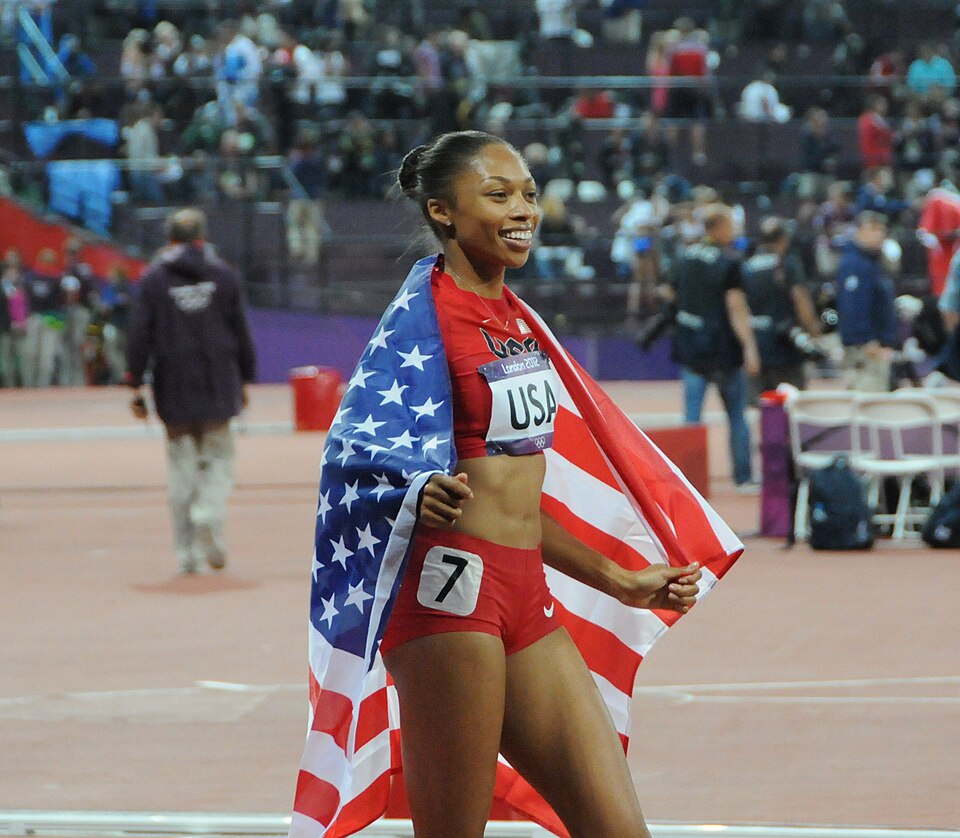
Allyson Felix
Note. From Allyson Felix, by Citizen59, 2012, Flickr (https://www.flickr.com/photos/t_abdelmoumen/). Licensed under CC BY 2.0 (https://creativecommons.org/licenses/by/2.0/).
(International Olympic Committee, 2024). She is a vocal advocate for maternal health and has worked to ensure better support for athlete mothers. Felix’s experience illustrates how motherhood exposed structural inequalities that had previously remained largely invisible within elite sport. Through the lens of constraint theory, Nike’s reduction in sponsorship reflected institutional barriers rather than diminished athletic ability. Her subsequent advocacy also demonstrates principles of critical cultural sport psychology by transforming an individual experience into collective action that challenged organizational policies. Rather than simply reclaiming pre-pregnancy athletic identity, Felix redefined what elite athletic leadership could include, integrating motherhood into her public athletic identity rather than concealing it.
Kendall Coyne Schofield
Kendall Coyne Schofield is a 4-time Olympic ice hockey forward and member of the 2026 gold medal winning team. When she announced her pregnancy, she got many text messages congratulating her and saying something like “great career” under the assumption
that her career was over. She had no intention of retiring and stated that she wanted her son to be the reason she continued to play, not the reason she stopped. She stated, “I never wanted [my son] to think he was the reason I would stop playing hockey” (Wafula, 2026). She returned to hockey when her son was six months old and had to negotiate maternity leave into her contract just days before giving birth.
She was pleasantly surprised to learn that the hockey league decided to pay for a nanny for player’s children for the first year of life to decrease the childcare burden and help enable players to continue playing. “So often, when people think of a hockey mom, they think of the mom coming into the rink to watch her kids play. I look at being a hockey mom as redefining what a hockey mom may be. And for me, that’s playing hockey with my child cheering me on” (Wafula, 2026). She has stated that motherhood has been her greatest joy, but that it came with challenges. The challenge of seeing her body change and having to work hard to get her body back to competition level was difficult and took not only her efforts, but also the efforts of the village she surrounded herself with. Her village included not only family members and teammates, but also her medical team, pelvic floor specialists, and physical therapists who all played a role in helping her return to elite competition.
Schofield’s experience illustrates role conflict theory by demonstrating how assumptions surrounding motherhood positioned pregnancy as incompatible with elite athletic careers. The expectation that motherhood signaled retirement reflects broader social role expectations that mothers should prioritize caregiving over professional achievement. Her insistence that her son would be “the reason I continued to play” directly challenged these cultural assumptions while illustrating how motherhood became integrated into rather than separate from her athletic identity (Wafula, 2026).
Shelly-Ann Fraser-Pryce
Shelly-Ann Fraser-Pryce (see Figure 2), a two-time Olympic gold medalist and widely seen as one of the greatest sprinters of all time, returned to training 10 weeks after giving birth via C-section and has referred to that period as her “planting season” where she had to lean into
patience and faith in order to return to her elite form. When Fraser-Pryce was asked about returning to sport, she stated, “Motherhood does not diminish us, it elevates us” (Wafula, 2026). She stated that her desire to continue pushing boundaries and making a legacy was inspired by
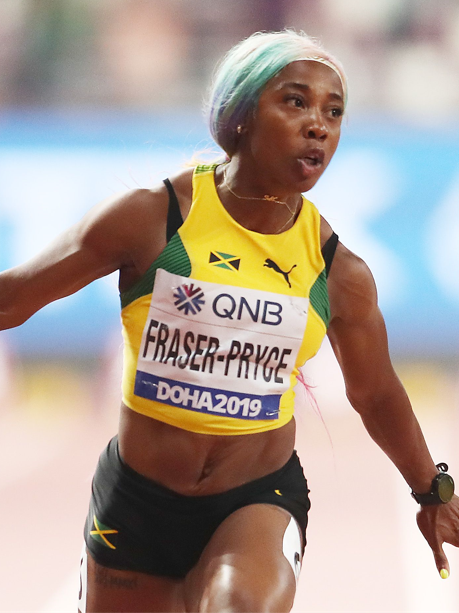
Shelly-Ann Fraser-Pryce
Note. From Shelly-Ann Fraser-Pryce, by Valerio1aiello, 2021, Wikimedia Commons (https://commons.wikimedia.org/wiki/File:Shelly-Ann_Fraser-Pryce.png). Licensed under CC BY-SA 4.0.
her desire to show women that they can do what they want and not be inhibited by societal or institutional boundaries. In April of 2025, she went viral when she competed in a parents’ race for her son’s school’s sports day.
Fraser-Pryce’s framing of motherhood as a source of strength rather than limitation challenges dominant narratives that position pregnancy as athletic decline. Her description of recovery as a “planting season” reflects an identity transformation characterized by patience and growth rather than restoration of a previous self (Wafula, 2026). Through self-determination theory, her return emphasizes autonomous motivation and personally meaningful goals over external expectations regarding performance timelines.
Paula Radcliffe
Paula Radcliffe, a marathon world record holder and Olympian, had always imagined having children and knew that was not something she wanted to sacrifice as an athlete. She also did not foresee a time when she would not be running so she knew she would have to work motherhood into her career. She felt strongly that she did not want to wait until her career “ended” to start a family only to possibly learn that she could no longer have children (BBC Sport, 2015). Once she was pregnant, she sought advice from former athletes and stated that she never felt that she would not be able to return to running at the same level she was performing prior to pregnancy.
Paula stated that once she was pregnant, her priorities changed. She was no longer concerned with being the most competitive; her focus shifted to ensuring that when she was running it was comfortable and healthy for the baby. Ten months after giving birth to her first child, she won the New York Marathon (BBC Sport, 2015). Paula, at the time she had two children, stated that she found that being an elite athlete mother was more challenging with school-aged children, than with preschool or infant children due to having to be separated from her children for long periods of time during training when the children cannot join her due to school, highlighting that the challenge of motherhood is ongoing.
Radcliffe’s experience further illustrates that motherhood is not a temporary interruption but an evolving aspect of athletic identity. Her reflections that parenting older children introduced new logistical challenges demonstrate how role negotiation continues well beyond the postpartum period. Rather than resolving tensions between motherhood and sport, mothers repeatedly adapt their athletic participation across different stages of family life.
Serena Williams
Serena Williams, the only tennis player to have accomplished a career Golden Slam in both singles and doubles, has been candid about her struggles with motherhood and maintaining an athletic career. She stated in an interview with Vogue magazine that she felt it was unfair that she was essentially being asked to choose between being an elite athlete and a parent, something that is not asked of male athletes (Vogue Australia, 2022). Serena has been open about postpartum depression and feeling like she was letting her kids down by not always being available, a struggle that is echoed by mothers of all professions.
Williams’ reflections expose the gendered assumptions embedded within elite sport. Her observation that male athletes are rarely expected to choose between parenthood and professional success highlights the operation of social role theory and illustrates how motherhood remains uniquely scrutinized within sporting culture. Her openness regarding postpartum depression also broadens dominant narratives of elite athlete resilience by acknowledging vulnerability as part of maternal identity rather than evidence of weakness.
Collectively, these examples demonstrate that athlete mothers are not simply overcoming individual barriers but negotiating identities within broader social, cultural, and institutional contexts. Although their experiences differ, each woman negotiated changing identities within sporting cultures that often assumed motherhood and elite athleticism were incompatible. Their stories illustrate how social role expectations generated assumptions regarding retirement or diminished commitment, how role conflict emerged through competing caregiving and athletic demands, how structural constraints influenced opportunities to compete, and how self-presentation became an important means of redefining maternal athletic identities publicly. Rather than representing exceptional individual success stories alone, these examples demonstrate how motherhood can become a site of resistance through which women challenge institutional practices and expand cultural understandings of who athletes can be. These women did not merely return to pre-pregnancy athletic identities. They reconstructed those identities by integrating motherhood into their athletic careers while simultaneously challenging dominant culture assumptions regarding gender, caregiving, and elite performance. Collectively, these examples reinforce this paper’s central argument that postpartum return to sport is an ongoing process of identity transformation rather than restoration.
Discussion
The findings discussed throughout this paper suggest that postpartum return to sport should be conceptualized less as a biomedical milestone than as an ongoing sociocultural process of identity negotiation. Although physical recovery remains important, mothers simultaneously navigate changing bodies, evolving relationships, organizational policies, public expectations, and personal understandings of athleticism. Viewing return to sport primarily through rehabilitation or performance risks overlooking the broader identity work required as women reconstruct what athletic participation means after becoming mothers. A multidimensional perspective provides a more comprehensive understanding of both the challenges mothers encounter and the opportunities for personal and cultural transformation that athletic participation may offer. These findings contribute not only to the scholarship on sport participation but also to maternal studies by illustrating how reproductive identity is actively negotiated through motherhood, embodiment, and athletic participation within institutions that have historically privileged uninterrupted athletic careers and masculine norms of performance.
Mother athletes benefit from continued participation in their sport for a variety of reasons. Competing may enhance motherhood, and motherhood may enhance athletics for many mothers (Darroch & Hillsburg, 2017). Returning to sports postpartum is not simply about “getting back” to sport, but about negotiating who mothers are allowed to be, in their bodies, their time, and in their identities. Mother-athletes have a dual identity of both mother and athlete, which may conflict or be a positive dual role. Support systems are imperative for continued participation. Supporting athletic mothers requires cultural change as much as individual resilience. Support in financial, healthcare, and childcare are critical for mother-athletes at both recreational and elite levels.
Areas for Future Research
More research is needed, both quantitative and qualitative, to explore the aspects of supporting motherhood and athleticism. Davenport and colleagues (2023) describe future suggestions for coaches and clinical practitioners for mother-athletes. These suggestions include: (1) conduction of high-quality research, (2) evidence-informed training and progression for sport participation post-partum, and (3) communication among a multidisciplinary team, and sports policies and cultural change that supports mother-athletes. Bø and colleagues (2017) describe suggestions for future research for the International Olympic Committee. These suggestions include research on fertility, exercise testing, breastfeeding, and medical conditions in mother-athletes who return to sport. Such research has enormous potential for improving the lives of mother-athletes at all levels, and their families’ lives.
Conclusions
Motherhood does not signal the end of athletic identity, rather, it creates opportunities for redefinition. Mothers who return to sport are not simply recovering pre-pregnancy performance but actively negotiating new understandings of their bodies, identities, and relationships within sporting cultures that continue to privilege traditional gender roles. Supporting athlete mothers, therefore, requires more than individualized rehabilitation or resilience. It requires cultural recognition that motherhood and athletic excellence are not competing identities but mutually transformative ones, alongside institutional policies that make athletic participation genuinely accessible across motherhood. As research, policy, and practice continue to evolve, recognizing motherhood as an integral rather than exceptional part of athletic careers has the potential to reshape sport into a more equitable and inclusive space for women.
References
Appleby, K. M., & Fisher, L. A. (2009). “Running in and out of motherhood”: Elite distance runners’ experiences of returning to competition after pregnancy. Women in Sport and Physical Activity Journal, 18(1), 3-17. https://doi.org/10.1123/wspaj.18.1.3
Athan, A. M. (2020). Reproductive identity: An emerging concept. American Psychologist, 75(4), 445–456. https://doi.org/10.1037/amp0000623
Balducci, M. (2023). Linking gender differences with gender equality: A systematic-narrative literature review of basic skills and personality. Frontiers in Psychology, 14, 1105234. https://doi.org/10.3389/fpsyg.2023.1105234
BBC Sport. (2015, June 7). Paula Radcliffe: Pregnancy, motherhood and marathons. https://www.bbc.com/sport/athletics/32996740
Bø, K., Artal, R., Barakat, R., Brown, W. J., Davies, G. A., Dooley, M., Evenson, K. R., Haakstad, L. A. H., Kayser, B., Kinnunen, T. I., Mottola, M. F., Nygaard, I., van Poppel, M., Stuge, B., Khan, K. M., & IOC Expert Group. (2016). Exercise and pregnancy in recreational and elite athletes: 2016 evidence summary from the IOC expert group meeting, Lausanne. Part 1—Exercise in women planning pregnancy and those who are pregnant. British Journal of Sports Medicine, 50(10), 571–589. https://doi.org/10.1136/bjsports-2016-096218
Bø, K., Artal, R., Barakat, R., Brown, W. J., Davies, G. A., Dooley, M., Evenson, K. R., Haakstad, L. A. H., Kayser, B., Kinnunen, T. I., Mottola, M. F., Nygaard, I., van Poppel, M., Stuge, B., & Khan, K. M. (2017). Exercise and pregnancy in recreational and elite athletes: 2016/17 evidence summary from the IOC expert group meeting, Lausanne. Part 4—Recommendations for future research. British Journal of Sports Medicine, 51(24), 1724-1726. https://doi.org/10.1136/bjsports-2017-098387
Brown, P. R., Brown, W. J., Miller, Y. D., & Hansen, V. (2001). Perceived constraints and social support for active leisure among mothers with young children. Leisure Sciences, 23(3), 131-144.
Childers, N. A. (2026, May 8). The WNBA’s new CBA is changing the math on motherhood for players. NewsOne. https://newsone.com/6859819/wnba-cba-changes-motherhood-players/
Citizen59. (2012). *Allyson Felix* [Photograph]. Flickr. https://www.flickr.com/photos/t_abdelmoumen/Cooky, C., Council, L. D., Mears, M. A., & Messner, M. A. (2021). One and done: The long eclipse of women’s televised sports, 1989–2019. Communication & Sport, 9(3), 347–371. https://doi.org/10.1177/21674795211003524
Davenport, M. H., Ray, L., Nesdoly, A., Thornton, J. S., Khurana, R., & McHugh, T. L. F. (2023). Filling the evidence void: Exploration of coach and health care provider experiences working with pregnant and postpartum elite athletes— a qualitative study. British Journal of Sports Medicine, 57(24), 1559-1565. https://doi.org/10.1136/bjsports-2023-107100
De Leon, A. (2025, May 11). WNBA motherhood: The balancing act between career and kids. Los Angeles Times. https://www.latimes.com/sports/sparks/story/2025-05-11/how-sparks-coach-four-players-navigate-wnba-careers-and-motherhood
Díaz-Rodríguez, C., Díaz-Pérez, D. A., Pozo, R. J., & Martínez-López, F. (2025). Sport Psychology as an agent of cultural deconstruction: Challenging gender and disability stereotypes through performance and participation. Journal of Cultural Analysis and Social Change, 10(2), 3194-3199. https://doi.org/10.64753/jcasc.v10i2.2078
Eagly, A. H., & Wood, W. (2012). Social role theory. Handbook of theories of social psychology, 2(9), 458-476.
Gilligan, C. (1993). In a different voice: Psychological theory and women’s development. Harvard University Press.
Goffman, E. (1955). On face-work: An analysis of ritual elements in social interaction. Psychiatry, 18(3), 213-231. https://doi.org/10.1080/00332747.1955.11023008
Felix, A. (2019, May 22). Opinion: My own Nike pregnancy story. The New York Times. https://www.nytimes.com/2019/05/22/opinion/allyson-felix-pregnancy-nike.html
Hallstein, D. L. O. B., Giles, M. V., & O’Reilly, A. (Eds.). (2020). The Routledge companion to motherhood (Vol. 546). London: Routledge.
Hays, S. (1996). The cultural contradictions of motherhood. Yale University Press.
International Olympic Committee. (2024, August 5). Advocacy: Allyson Felix and the fight for maternal rights in sports. Olympics.com. https://www.olympics.com/en/news/advocacy-allyson-felix-fight-for-maternal-rights-sports
Johnson, A., Brison, N. T., Harris, H. A., & Brown, K. M. (2023). “I’m not just a mother”: a content analysis of elite female athletes’ self-presentation before and after motherhood. Sport, Business and Management: An International Journal, 13(5), 622-639. https://doi.org/10.1108/SBM-02-2023-0015
Liddelow, C., White, B., Arnold, E., & Vella, S. A. (2023). A cross-sectional study of the psychosocial predictors of re-engaging in team sport during early motherhood. Mental Health and Physical Activity, 25, 100555. https://doi.org/10.1016/j.mhpa.2023.100555
Massey, K. L., & Whitehead, A. E. (2022). Pregnancy and motherhood in elite sport: The longitudinal experiences of two elite athletes. Psychology of Sport and Exercise, 60, Article 102139. https://doi.org/10.1016/j.psychsport.2022.102139
McGannon, K. R., & Spowart, L. (2022). Future directions for research into motherhood and sport. In Motherhood and sport (pp. 193-203). Routledge.
Miller, Y. D., & Brown, W. J. (2005). Determinants of active leisure for women with young children—An “ethic of care” prevails. Leisure Sciences, 27(5), 405-420. https://doi.org/10.1080/01490400500227308
O’Reilly, A. (2006). Rocking the cradle: Thoughts on feminism, motherhood, and the possibility of empowered mothering. Demeter Press.
O’Reilly, A. (2016). Matricentric feminism: Theory, activism, and practice. Demeter Press.
O’Reilly, A. (2021). Normative motherhood. Maternal theory: Essential readings, 493-507.
Palmer, F. R., & Leberman, S. I. (2009). Elite athletes as mothers: Managing multiple identities. Sport Management Review, 12(4), 241-254. https://doi.org/10.1016/j.smr.2009.03.001
Rich, A. (1976). Of woman born: Motherhood as experience and institution. W. W. Norton.
Tighe, B. J., Williams, S. L., Porter, C., & Hayman, M. (2023). Barriers and enablers influencing female athlete return-to-sport postpartum: A scoping review. British Journal of Sports Medicine, 57(22), 1450–1456. https://doi.org/10.1136/bjsports-2023-107189
Titova, J., Davenport, M. H., Humphrys, A., & Hayman, M. (2025). Barriers and enablers encountered by elite athletes during preconception and pregnancy: A mixed-methods systematic review. British Journal of Sports Medicine, 59(11), 798–814. https://doi.org/10.1136/bjsports-2024-108380
United Nations General Assembly. (2015). Transforming our world: The 2030 agenda for sustainable development (A/RES/70/1). United Nations. https://sdgs.un.org/2030agenda
Valerio1aiello. (2021). Shelly-Ann Fraser-Pryce [Photograph]. Wikimedia Commons. https://commons.wikimedia.org/wiki/File:Shelly-Ann_Fraser-Pryce.png
Vogue Australia. (2022). Serena Williams’ retirement: Working mothers and life after tennis. https://www.vogue.com.au/culture/features/serena-williams-retirement-working-mothers/news-story/b1bab60e17d85850fe75e1f3c9205694
Wafula, A. (2026, February 13). “Motherhood elevates us”: Shelly-Ann Fraser-Pryce on family, sprinting, and inspiring the next generation. Pulse Sports. https://www.pulsesports.co.ke/story/motherhood-elevates-us-shelly-ann-fraser-pryce-on-family-sprinting-and-inspiring-the-next-generation-2026021310390792142


