
An Autoethnographic Photo Experience
Abstract
This autoethnographic reflective photo essay describes my experience as a mother professor who homeschools my children. It highlights the importance of using your Ph.D. to be of service to your family and community before all else. This call to action seeks to empower mothers of academia to rethink the power of knowledge and who should have access and benefit from their highest level of educational attainment. Does the university deserve your academic service more than your children? This is an enduring question that challenges us all to reconsider how we use our Ph.D. in our families, especially among those who are categorized as “the children.” In this intimate photo essay, I describe my journey from Ph.D. student (one child) to Tenure-Track Professor (two children), toward established academician (three children). This work provides advice and context through photographic images to help other mothers reflect on their own unique experiences of centering family throughout their academic journey.
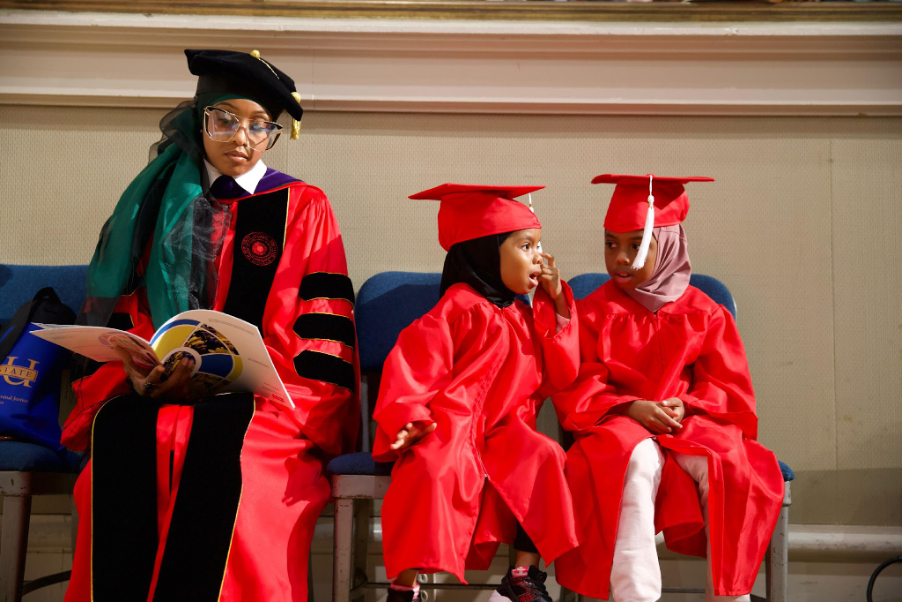
Introduction: Reflective Commentary
When I think of all the pain it took to give birth to my first baby and my dissertation, I am reminded of when the two intersected. I often reflect on all the books I was reading and the intensive writing that was taking place, while my daughter was with me. She was growing in my stomach the entire time. I envisioned her reading the books from the comfort of my womb, while I stressed about what I was studying and how I was going to get the words just right to describe my research topic about the children of incarcerated parents. It was empowering to have a dissertation buddy in tow as we moved through my ethnographic fieldwork together. This was the first way that our baby benefited from my Ph.D. and the process toward achieving it. Consciously, it was a treat to know that every book, every word read was imparted onto her. We were in it as one. Even through morning sickness and the ups and downs of early pregnancy woes. It was a decision and memory that I will forever carry. Most advice gleaned from others is to “wait” on childbirth long after dissertation. After gaining my own experience, I learned that I did not want to be pregnant on the tenure-track. These academic pathways are not for the weak and should be strategically planned around one’s pursuit of higher education.

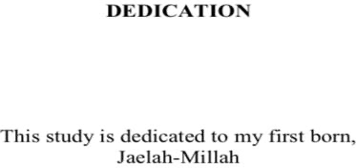
I made the deliberate decision that I wanted my family to benefit the most from all my hard work toward achieving the highest level of education in America, the Ph.D. Everything that I learned, I wanted to give back to our seeds (our children). So, I started by dedicating my dissertation (Muhammad, 2011) to: Jaelah Millah and took a small first step toward doing exactly that.
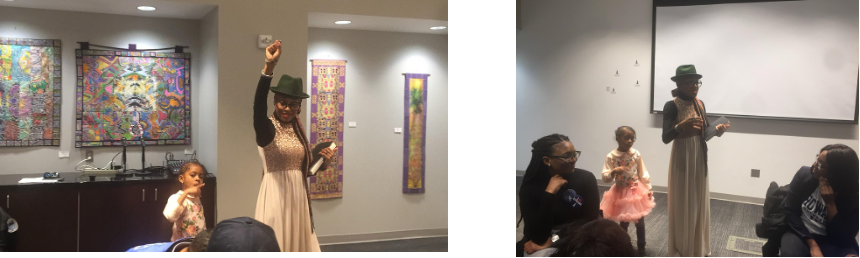
One way I use my Ph.D. within my family is to educate my children. I am a homeschooling mother of three. All our children have been homeschooled. I come from a homeschooling family where my mother, father and siblings were my first teachers. As an academician, this meant that my children were often on campus with me. They were in classes front and center. They were learning in an experiential way. Figure 4 shows my eldest daughter in a college classroom where I was lecturing. She often asked questions and did her version of taking mental notes. As I look back and reflect, my daughter was being prepared for the path that she is on today. There are so many stories of mothers and children in academic spaces (Muhammad & Jenkins, 2023; Muhammad & Neuilly, 2019) and we don’t often interpret them as narratives of strength; rather they are seen simply as babysitting.
This essay was written to serve as motivation for academic mamas to reclaim the throne. All their hard work should not be done in vain. We see you and acknowledge all that you have done to get to your doctorate and beyond the Ph.D. We must begin telling stories to empower other mothers who are struggling within this process. Many with heads down, eyes lowered and in shame of bringing babies (physically or psychologically) into academic spaces. There is nothing wrong with doing either.
My Baby Read 500 Books Before Birth
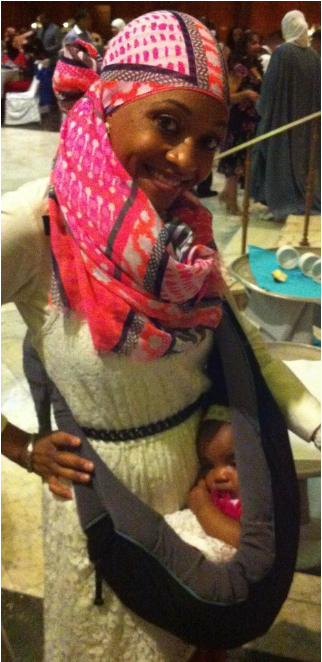
The publication I was able to curate during my first pregnancy was my dissertation (Muhammad, 2011). For this study I was exploring the silence among children of incarcerated parents. This work required me to read about incarcerated parents, caregivers of the incarcerated, grandmothers raising grandchildren because of parental incarceration, and so much more. Every week I was reading approximately 20-30 books or articles that I felt were all digested by my daughter who was growing in my stomach at the time. I carried her around in my pouch, that often made us look like a kangaroo parent and baby duo. As we hopped around from library to library we bonded in spirit, and I sure felt like we were a team in this Ph.D. movement.
Reading has always been a major part of our home and upbringing. To have my entire nine months spent reading and reflecting influenced my daughter. She is now an avid reader and enjoys those thick fiction novels. She has even declared an Honors double major in English and African Studies. My daughter has grown up to start writing her own novels. One of her short stories was published (Muhammad, 2023) and received honorable mention from the publisher.
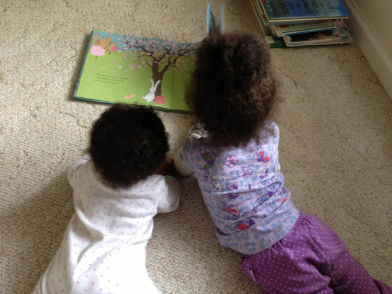
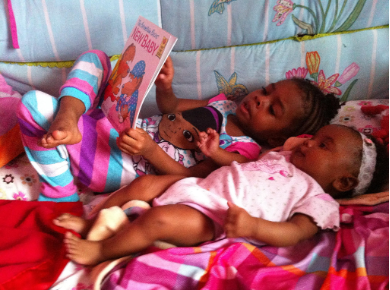
Birthing the Dissertation and My First Baby: Don’t Read the Feedback Until You Are Ready!
While I was completing my Ph.D., I was pregnant with my first child. I remember telling myself that I wanted to finish my final draft and submit it to my dissertation committee before going into labor. Thank God, I was able to do just that. As soon as the final sentence was done, I was in active labor less than 24 hours later. I felt so good because I could now focus on my new life as a mother. I packed my birth bag, practiced what was learned in Lamaze class with hubby, prepared the room for my return home and prayed and prayed. What I wasn’t prepared for was the feedback on my draft that came while I was in the hospital waiting to be released. I told myself I would not read the feedback until I was home and settled a bit. But this did not work. I could not convince myself not to look. When I looked at the feedback from one committee member it tore me open. Although I had a natural birth, reading the feedback felt like I had undergone a C-Section, like I had been cut from the inside out. I can still feel that psychological scar to this day.
The decisions that we make as mothers are so important. This includes the early decisions we make around education at the intersection of motherhood. This article is for all mothers. Those who find themselves facing the reality of motherhood and dissertation, mothering and research, motherhood and thesis, motherhood and book articles, motherhood and book chapters, motherhood and the tenure-track, motherhood and promotion, motherhood and sabbatical, and all the other mothering and mother work that happens in and around academic spaces. Think critically about how you plan to deal with these situations, just as much as you think about and plan the scholarship that results from your educational experiences. There is much to be gained and lost at this intersection that is often unseen and unheard, yet it remains a loud reminder of what is important and can be central in your life. This should always be anchored by your positionality as Mother.
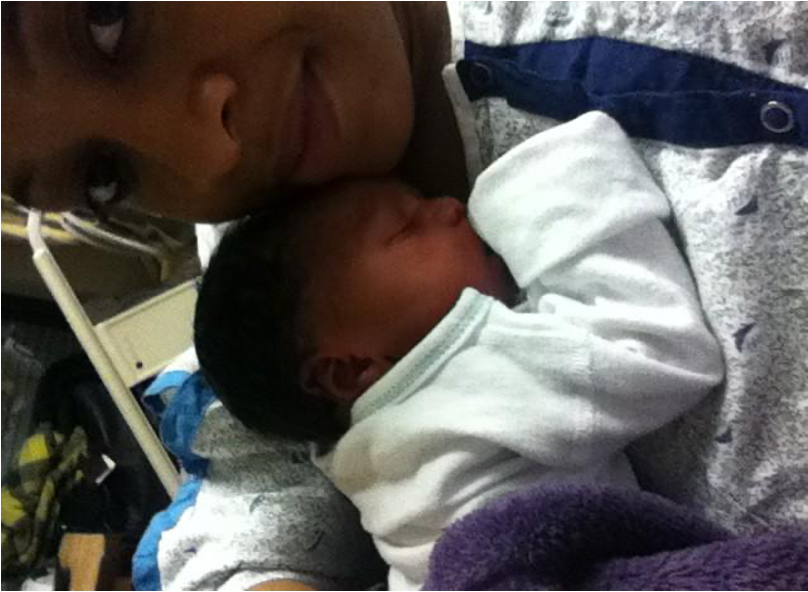
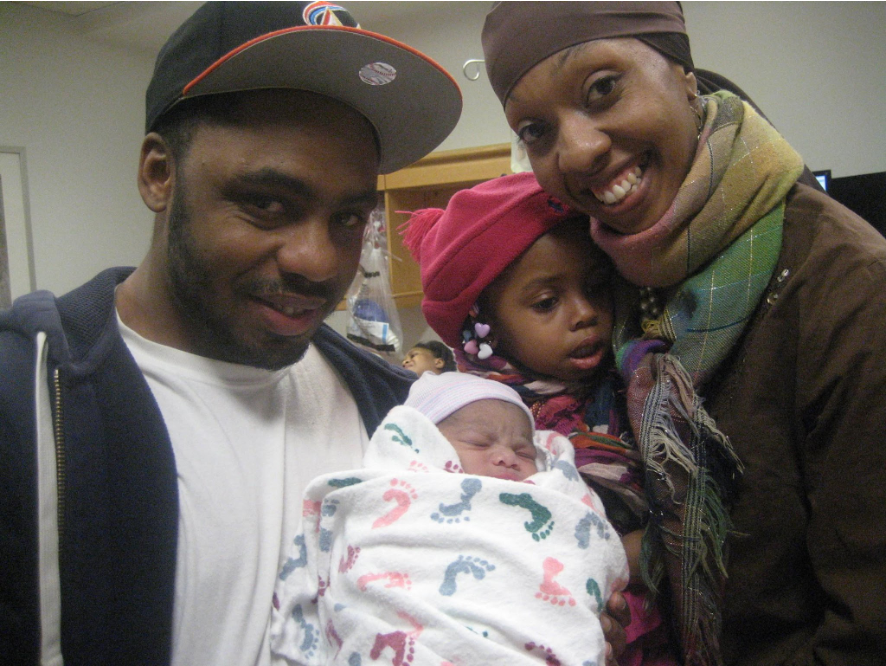
Biggest Mistake Ever: Reading Committee Reviews In The Delivery
When I looked at the feedback from one of the committee members, because I was that connected to the work that I could not fully pull myself away, even during the aftermath of delivery of my first born. It was serious. I was hearing voices in my head. “Read me! Read me!” continued in the top of my mind. I contemplated if I should or should not. I wanted to focus on the moment. I wanted to center this new experience, this new chapter in my life. It was part of my birth plan to finish before my projected delivery date. What I had not planned for was the feedback circling back into me. When I made the decision to read the dissertation reviews, I planned for a brief check-in before the hospital time for visitors to stop by to visit me and my first-born baby.
When I finally got to the content of the committee member review, it crushed me. When my first visitor arrived, I was still in tears from the harshness of the feedback. It took me out for a moment. I remember feeling pain down below and now pain began tingling throughout my entire body. My temperature went up and it felt like my life was falling apart. My sister was there to help me put things back in order. She reminded me of my worth and prayed through the process of liberating that hospital space. She helped us put things into perspective. She told me to “not look at that stuff right now”. To focus on this beautiful moment that was the most important of all. My advice to any of you mothers that find yourselves completing a dissertation and preparing for labor:
(1) think fully about your birthing plan to make sure that you include not just the submission of the dissertation but everything that will come next (review edits, revise, resubmit, etc..) and (2) do not read the comments while in active labor, delivery or immediately after. Prepare for a time when you are more stable, when things have settled and/or you have the support of a loved one. This should never be a time of being broken down. Instead try your best to prepare for a time to be elevated in your blessing of new life.
The curation of your village during this time should become strategic. I have learned through this process and many others that thinking and planning from a longitudinal perspective has many benefits, not just for your scholarship, but also for your personal lifestyle. I have found that using triangulation throughout this academic journey has been of great benefit. You should not only seek to impress your committees and peer reviewers by the ways in which you connect your research to previous works, these impressive connections can be very beneficial when applied to your own livelihood. For example, identify the “statement of the problem” in your life. As a mother in academia, what problems do you face? What is the literature review of your lived experience? What are the findings? Specifically, what themes emerge and what are they telling you about yourself? and what are your personal next steps? These are all questions we engage on our research paths but rarely explore in our own lives.
Graduating Together: Baby Doctoral Regalia
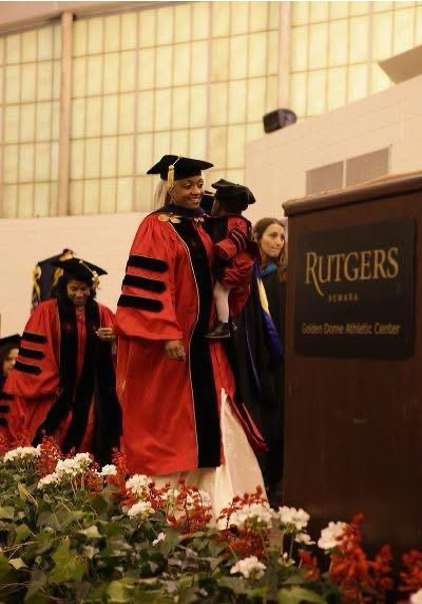
It took me months to plan for graduation. Especially because I had the brave idea of walking across the stage with my baby in arm. It was something I had never seen before at my university, but I knew it was something I had to do. I even ordered a doctoral regalia for my baby girl. It took almost 3 months for it to be designed, and custom made to match my regalia perfectly. I remember when it arrived in the mail, I cried. I was so proud, so grateful and very nervous. The fear of my new baby lasting through a long and exhaustive graduation, became a recurring nightmare. I took the day head on, like us mothers often do. Reminding myself that “you can do this” and packing my pockets full of her favorite snacks. It was a blessing that my regalia had pockets on both sides that allowed me to get to my candy stash easily. I remember that day like it was yesterday. Jaelah did so well. I didn’t have to use most of the sweets I packed. It was as if she knew it was her day too. I wore a cream gown underneath my regalia that allowed me to nurse her on demand. My huge gold flower earrings also kept her attention the entire time. We walked across that stage to be hooded as one. There was a huge round of applause for her and the vibrant cheers from the audience were memorable. That day we became Dr. Muhammad, and she became the first baby to receive her Ph.D. from Rutgers University. History was made on that stage, and it opened the door for more babies to be welcomed into the university graduation ceremonies.
Pathways to Success
The Ph.D. journey is something that I will never forget: All the reading, writing presenting, teaching and running on that long exhausting track–the infamous tenure-track that some decide to run, while others strategically resist it. I started the tenure track after giving birth to our 2nd daughter, Jian Muhammad. She was only two months old when I was flown in for what became my first tenure-track university position. Although, more than a decade ago, I remember it like it was yesterday.
I took much care to decide what to wear, because I was nursing and did not want any leaking to be visible or becoming engorged to show through my shirt. I did not have any time to pump with a 9am-5pm schedule of interviews and vetting that it takes for consideration for a tenure-track position. At the hotel the night before my interview day on campus, I face-timed with family as motivation for the next day. We prayed together on that call and knew that this would mark a huge shift in our current family structure. Figure 10, depicts that night before my campus interview on facetime with the babies and hubby. Figure 11, highlights me at the end of that day, painfully engorged, yet somehow happy after that 8-hour campus interview.
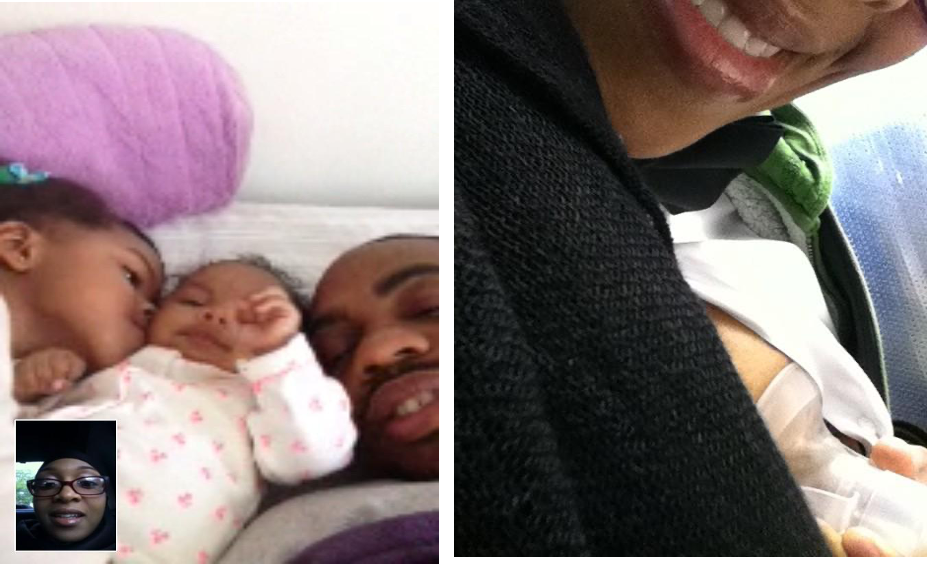
Figure 11.Pumping In Flight and Engorged., From “The Dr. Muhammad Experience” Instagram Live, by M. Muhammad, 2013, https://www.instagram.com/drmuhammad_experience/?hl=en. Reprinted with permission.
You Decide Who Benefits
The wonderful thing about having a Ph.D. is that you can use it in any way you desire. We are often mentored and warned that Ph.D.’s are best situated within academic settings or research firms – this is not true. With the highest level of education, you can at least use it to decide how you want to apply it. My advice is to dream big and make sure to include your family, especially the children. It is not a waste of your degree and hard work to focus on educating your own children. Even when you have not majored in traditional school subjects (Math, English, Science, Social Studies, STEM, etc.) it can still be a great benefit to your children. I am a criminologist, and this has not gotten in the way of me being a lifelong educator who learns alongside my children. Our families and children should benefit from all of who we become. This includes our most educated selves. We do not have to keep the Ph.D. parts of our lives separate. It is not boring and should not be kept inside the “ivory towers”. In fact, some kids may find a variety of what we research, write about or teach, interesting. Just like the kids we teach on campuses, we can do the same for our own children. I have found so much joy in having my children witness me in my roles as professor, facilitator, curator, instructor and all the many hats that I wear in and around academia. This transparency has made our relationship stronger and even more dynamic.
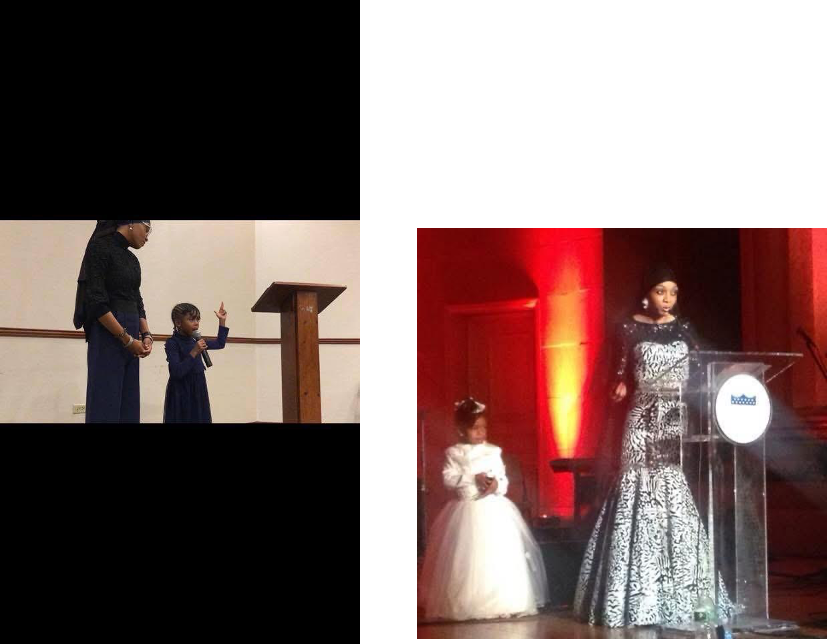
Figure 13.Mommy Howard University Professor of the Year With Jaelah Stageside., From “The Dr. Muhammad Experience” Instagram, by M. Muhammad, 2016, https://www.instagram.com/drmuhammad_experience/?hl=en. Reprinted with permission.
Putting Family First
It was always my long-term goal to use the Ph.D. as a ladder, to bring people up and down the educational journey toward success. Although I love teaching on the college campus and working with the dynamic students that I encounter each year, my ultimate plan was to be Professor of the Year in my household, in my hood, to be of benefit to my children, family and village. It is wonderful to be continuously acknowledged as Professor of the Year on campus and to have classes that students feel they “must take before graduation”. What has been even better for me is becoming that same person in my home. To be acknowledged by my children as their favorite professor. To be actively keeping the family legacy alive that my mother and father created by homeschooling me and my nine brothers and sisters birthed through our mother, Khadijah Muhammad. This is my motivation to continue putting our family first. To continue homeschooling. To continue cultivating my soul and not losing it in the hype of the so-called “Ivory Tower”.
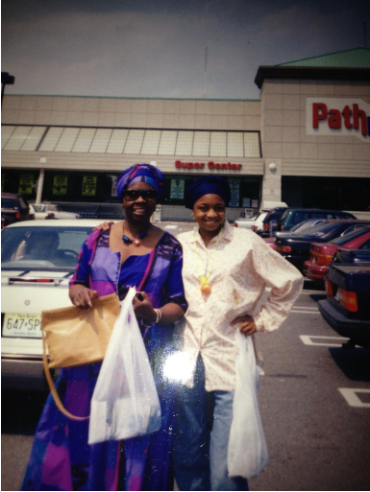
Although putting family first for me looks a particular way, yours will look like anything you desire. If you think about your personal journey, there are probably already so many ways that you are already doing these kinds of things, like including family on research travel. That may look like fieldwork most of the time and some down time to travel around with your family and kids. It could also be bringing your children with you to a conference. I am grateful to have so many of these experiences as I conduct research and work in prisons around the world, with my husband and babies right there by my side (Muhammad & Muhammad, 2019). Not only are we able to explore new worlds together, but they also gain a deeper understanding and appreciation for the work that I do. This helps them to help me when needed. When they understand what you do, they gain a better understanding of how to help you. Having family support backing you is a powerful force of privilege. This should not be underestimated.
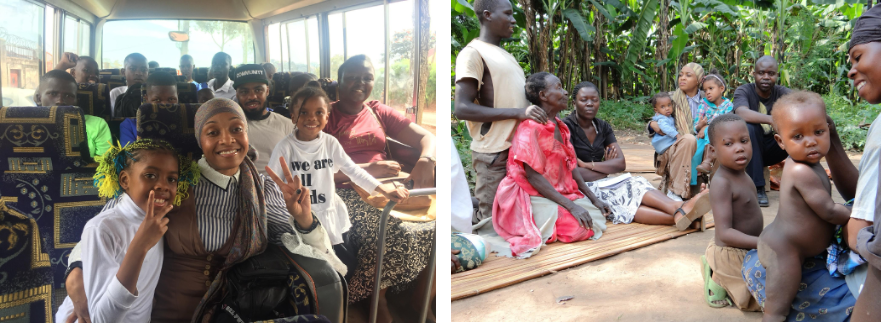
Figure 16.African Village With Family During Field Interviews., From “The Dr. Muhammad Experience” Instagram, by M. Muhammad, 2017, https://www.instagram.com/drmuhammad_experience/?hl=en.
Fourteen And On The College Campus: A Force to Reckon With
The journey has been long and winding, but also a true blessing. All the planning and preparing did in fact pay off. Being able to see my eldest at the young age of 14 years enter college for the first time and become the youngest female student in the history of the university, made it all worth it. The feeling of knowing that she was homeschooled to college is evidence that HOW we use our Ph.Ds. matter. It is not just an advanced degree that leads to employment outside of the home, it is also, so much more. For me, it became another opportunity to pour into family and children, and to educate my daughter. From teaching her how to read and write, to her becoming an award- winning author (Muhammad, 2023) and co-author (Muhammad & Muhammad, 2024). To family presentations at national (Muhammad, 2025) and global (Muhammad, Muhammad, Muhammad & Muhammad, 2025; Muhammad & Muhammad, 2025) peer-reviewed conferences.
As a mother who was homeschooled to Ph.D. and now our daughter who was also homeschooled to starting college while living on campus at 14-years, to receiving her associate’s degree at 16- years, is evidence of how your degrees can be used to benefit family. When we limit family to the pomp and circumstance of academic accomplishments, we miss the opportunity to raise our families and children through educational elevation. I see my homeschool curriculum like that of a university independent study course. The care that goes into these designs allows for learning to be naturally alive. Pouring into family in this way and many others have allowed me to remain, tenured and promoted in academia and in my growing household.
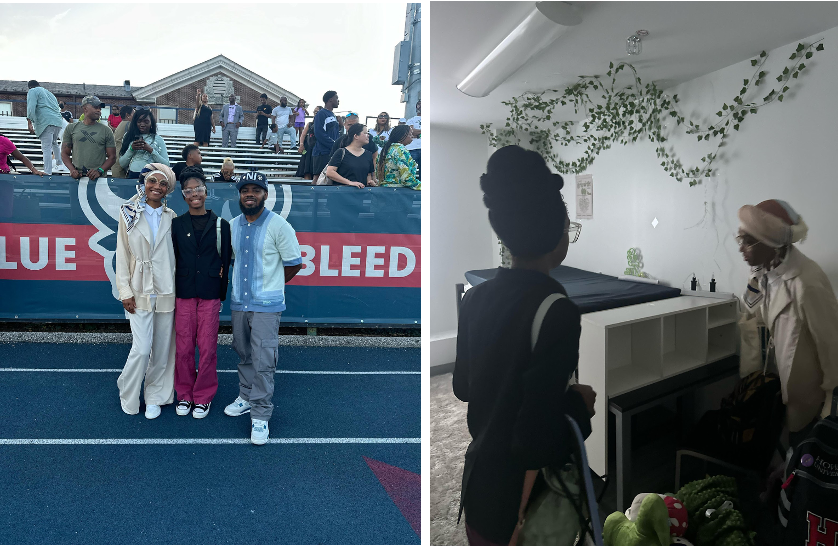
Figure 18.14-Year Old Jaelah Muhammad Moving Into Her Dorm Room At Howard University., From “The Dr. Muhammad Experience” Instagram Live, by M. Muhammad, 2024, https://www.instagram.com/drmuhammad_experience/?hl=en. Reprinted with permission.
Author Note: This photo essay was adapted from a presentation (Muhammad, 2025) at Texas Southern University (TSU) for newly minted PhD scholars on the tenure track. Some scholars were mothers, and all held many questions about the positionality of family throughout the entire process of advancing in the academy. I have also presented on this topic at the Faculty Women of Color in the Academy National Conference (Muhammad, 2024) and for the Howard University Center for Excellence in Teaching, Learning and Assessment (Muhammad, 2021). Over the years of sharing parts of this story, I have been told to share it more widely. This is my attempt to do just that.
References
Muhammad, B. (2025). Tenured in Academia and in my Household.
Presented for The Hidden Curriculum Fellowship Summit. Barbara Jordan- Mickey Leland School of Public Affairs, Center for Justice Research. June 10- 12. Houston, TX: Texas Southern University.
Muhammad, B. (2024). Publish NEVER Perish: P.O.W.E.R Writing to
Strengthen & Sustain Research and Publications Beyond Tenure. Presented for the Faculty Women of Color in the Academy National Conference. Arlington, VA. April 11-14, 2024.
Muhammad, B. (2021). What I Wish I Knew While on the Tenure Track.
Presentation for Center for Teaching Learning and Assessment (CETLA): Washington, DC: Howard University.
Muhammad, B. (2019). Ethnographic Research in Africa: The Hidden Costs
of Conducting Fieldwork for Mothers and Children in Mothering From the Field: The Impact of Site-Based Research by Muhammad & Neuilly. New Jersey: Rutgers University Press.
Muhammad, B. M. & Neuilly, M. A. (2019). Mothering From the Field:
The Impact of Site-Based Research. New Jersey: Rutgers University Press.
Muhammad, J. (2025). 80th Annual American Society of Criminology Conference,
“Building the Future Us: Youth Ambassadors on A Mission,” Criminology, Law and the Democratic Ideal, Washington, DC.
Muhammad, J. (2023). Scattered Emotions. Notable Entry, Youth Contest. A Collection of Winning Essays edited by Blanca Godoy & Jessica Hatrick. National Systems-Impacted Writers Contest. USC Prison Education Project.
Muhammad, B., Muhammad, J. (2025). 4th Annual Meeting- Voices of Strength: Resilience of Children with Incarcerated Parents, “Highly Successful Educational Experiences Among Children of Incarcerated Parents,” International Conference of Children with Incarcerated Parents (INCCIP), Seoul, South Korea.
Muhammad, J., & Muhammad, J. (2024). Building the Future Us: Youth
Ambassadors on A Mission in Gatewood, Muhammad, Turner’s Social Revolution: Black Children of Incarcerated Parents Speak Truth to Power. New York: NY: Routledge Press.
Muhammad, J., & Muhammad, J. (2024). Helping Flowers Grow: Sunlight,
Water, and Love in Gatewood, Muhammad, Turner’s Social Revolution: Black Children of Incarcerated Parents Speak Truth to Power. New York: NY: Routledge Press.
Muhammad, B., & Jenkins. N. (2022). Are Black Student-Parents
Alright? Stories of Stigma, Motivation, and Legacy-Building at Howard University. Center for Women, Gender and Global Leadership. Washington, DC: Howard University.
Muhammad, B., & Muhammad, M. (2019). Teamwork Makes the
Dream Work: The Importance of Networks and Family Support in Mothering From the Field: The Impact of Site-Based Research by Muhammad & Neuilly. New Jersey: Rutgers University Press.
Muhammad, B., Muhammad, J., Muhammad, J., Muhammad, M. (2025). 4th Annual
Meeting- Voices of Strength: Resilience of Children with Incarcerated Parents, “Project Iron Kids: Working to Empower Children of Incarcerated Parents with Coloring Parties & The Prison Alphabet,” International Conference of Children with Incarcerated Parents (INCCIP), Seoul, South Korea.
Figures and Photographs
Muhammad, M. (2019). Parent Ph.D. regalia with matching graduates’ gowns awaiting commencement speech at local high school in Washington, D.C. [Photograph]. The Dr. Muhammad Experience Instagram. https://www.instagram.com/drmuhammad_experience/?hl=en
Muhammad, B. (2010). Pregnancy stomach and ABD. [Photograph]. Family Photo Album.
Muhammad, M. (2011). Dedication page from Exploring The Silence dissertation. [Photograph]. The Dr. Muhammad Experience Instagram Live.
Muhammad, M. (2015). My daughter shadowing me as I teach in my university classroom. [Photograph]. The Dr. Muhammad Experience Instagram. https://www.instagram.com/drmuhammad_experience/?hl=en
Muhammad, M. (2012). Baby in pouch while out and about with mom. [Photograph]. The Dr. Muhammad Experience Instagram. https://www.instagram.com/drmuhammad_experience/?hl=en
Muhammad, M. (2013). Love of books with big sis reading to lil sis. [Photograph]. The Dr. Muhammad Experience Instagram. https://www.instagram.com/drmuhammad_experience/?hl=en
Muhammad, M. (2010). Hospital labor capture of mother and baby. [Photograph]. The Dr. Muhammad Experience Instagram. https://www.instagram.com/drmuhammad_experience/?hl=en
Muhammad, M. (2010). Husband, big sister, auntie, and baby during delivery visitation.
[Photograph]. The Dr. Muhammad Experience Instagram. https://www.instagram.com/drmuhammad_experience/?hl=en
Muhammad, M. (2011). Mother and baby in doctoral regalia during Ph.D. hooding
graduation ceremony. [Photograph]. The Dr. Muhammad Experience Instagram. https://www.instagram.com/drmuhammad_experience/?hl=en
Muhammad, M. (2013). Family FaceTime motivation before campus interview.
[Photograph]. The Dr. Muhammad Experience Instagram. https://www.instagram.com/drmuhammad_experience/?hl=en
Muhammad, M. (2013). Pumping in flight and engorged. [Photograph]. The Dr. Muhammad
Experience Instagram Live. https://www.instagram.com/drmuhammad_experience/?hl=en.
Muhammad, M. (2014). Jaelah lecturing to large audience by mommy’s side. [Photograph].
The Dr. Muhammad Experience Instagram. https://www.instagram.com/drmuhammad_experience/?hl=en.
Muhammad, M. (2016). Mommy Howard University Professor of the Year with Jaelah stage
side. [Photograph]. The Dr. Muhammad Experience Instagram. https://www.instagram.com/drmuhammad_experience/?hl=en.
Muhammad, M., & Muhammad, B. (1999). Khadijah Muhammad posing alongside daughter
Bahiyyah Muhammad. [Photograph]. Family Photo Album.
Muhammad, M. (2017). Research travel with family & children in Africa. [Photograph]. The
Dr. Muhammad Experience Instagram. https://www.instagram.com/drmuhammad_experience/?hl=en.
Muhammad, M. (2017). African village with family during field interviews. [Photograph]. The
Dr. Muhammad Experience Instagram. https://www.instagram.com/drmuhammad_experience/?hl=en.
Muhammad, M. (2024). Mother, father, and daughter at Howard University pinning
ceremony. [Photograph]. The Dr. Muhammad Experience Instagram Live. https://www.instagram.com/drmuhammad_experience/?hl=en.
Muhammad, M. (2024). 14-year-old Jaelah Muhammad moving into her dorm room at
Howard University. [Photograph]. The Dr. Muhammad Experience Instagram Live. https://www.instagram.com/drmuhammad_experience/?hl=en.


