
October 17, 2023 – Since writing this essay, evil raised its bestial head and brutalized my country. Now, Mothers have sent their children: their sons and daughters, their husbands, brothers and sisters to face this enemy and eradicate it from our midst. Wishing all good people everywhere the courage and moral fortitude to recognize evil for what it is and the strength to stare it down.
I raised two children, protected and safeguarded them as best I could, and then sent them off to the army. When that happened it felt as if something shifted, primordially, almost as if the tectonic plates moved the earth beneath my feet. Sending a child away as a soldier feels paradoxical, and inconsistent with the very nature of the mother-child connection. My sons seemed to manage this challenge just fine. The army and its innate risk to physical, mental, spiritual and emotional wellbeing was taken in their stride, or perhaps they walked in the bliss of ignorance. As a mother, I did not enjoy this privilege. The new status as a mother-of-soldiers raised more and more questions about the very nature of motherhood and the mother-child relationship.
As a visual artist I began searching for images that might give me some comfort and further insight into the mother I had become. My first inclination drew me to the images I know best: Mother and child paintings within Western Christian art, specifically, the iconic images of Mary and the infant Jesus, as seen in Fig 1 and Fig 2. In these paintings, Mary lovingly gazes at her infant and Jesus is confidently held by his mother. The two are encircled in a world of faith, prophecy, blessings and devotion.

Fig 1.: Madonna and Child with Book, oil on canvas, 1502-3,: Raphael

Fig 2: The Madonna del Granduca, oil on canvas, 1505, artist: Raphael
Historically these images can be traced back to ancient Roman and Greek terracotta modeled reliefs and figurines, which represent fertility and motherhood. I found many examples of such figurines from various cultural and historical backgrounds. (see Figs 3, 4, 5 and 6).Whilst fascinating, their specific backgrounds were of less interest to me. Rather it was the karmic connection I felt with them, the almost magical attraction that they held for me. I think it was also the fact that I found myself more often at the altar of prayer, as these figurines were originally intended as shrines, and for the purpose of worship.

Fig 3: The Queen of the Night, also known as: The Burney Relief”) terracotta baked relief, Mesopotamia,. 1792-1750 BCE.
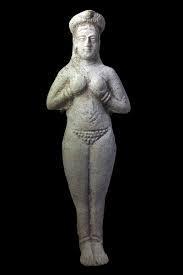
Fig 4: Fertility Goddess idol,terracotta Ishtar, Susa, 1100 to 1300 B.C.E.
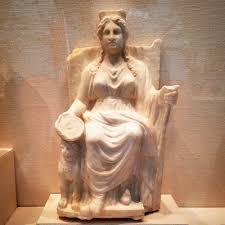
Fig 5:Goddess Cybele from Anatolia. Roman, 1st century AD

Fig 6 Snake Goddess & Child (Woman Suckling a Child), Ubaid in Iraq (first half of the 4th millenium BCE)
In visual art, mythical and spiritual thinking and emotions such as longing and desire can be embodied in matter, so that they can be seen, touched and felt. These images, molded from the earth, embodied all that and allowed me to place my fears and questions at their feet.
They encouraged me to create paintings and drawings and inspired me to search for forms and shapes that would hold my own spirit. They urged me to work with earth pigments and natural charcoal upon unprimed canvas and paper. I would work directly with my hands, not always relying on a brush and allow my gestures to move freely, summoning images onto the page. The dust of the charcoal and pigment left traces on the paper, like whispers, which if listened to carefully enough turned into images. I tried to allow this intuitive process to unfold with as little conscious intervention as possible, and be led into a dialog with the evolving imagery. The images spoke to me of “holding” – a shape holding a shape, a color enclosing another.
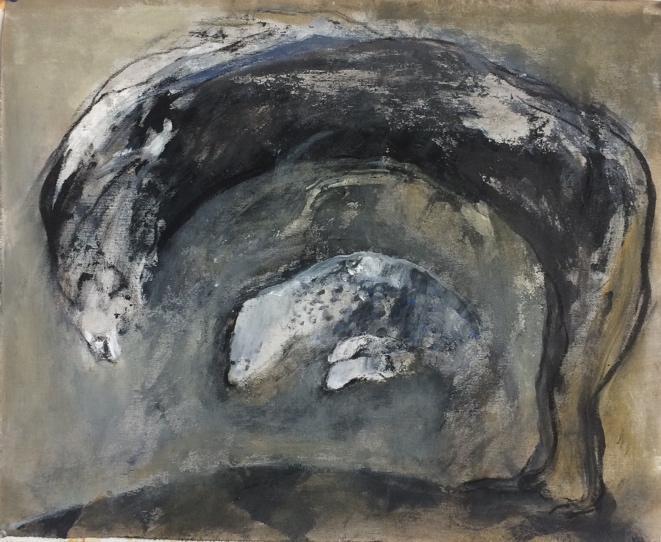
Fig 7: ”holding” pigment & acrylic on canvas, 68x52cm, 2021, artist: Caron Greenblatt

Fig 8: “holding” charcoal & pastel on canvas, 60x46cm, 2021, artist: Caron Greenblatt

Fig 9: untitled, acrylic on canvas, 60x40cm, 2021, artist: Caron Greenblatt
They also presented with a sense of compressed space, as opposed to a deep space which resonated with the feeling of holding and being held, like a Mother who keeps her child close in a protected space, that almost becomes one with her own.

Fig 10: “holding” acrylic & pastel on board, 35x45cm, 2022, artist: Caron Greenblatt
Unlike the other gods, who were given gifts such as fire, water or wind, the Mother Goddess represented the gift of life itself. Crafted out of the earth, the Mother Goddess is an integral part of nature and creation. She is “of the earth” and imbued with the life spirit.
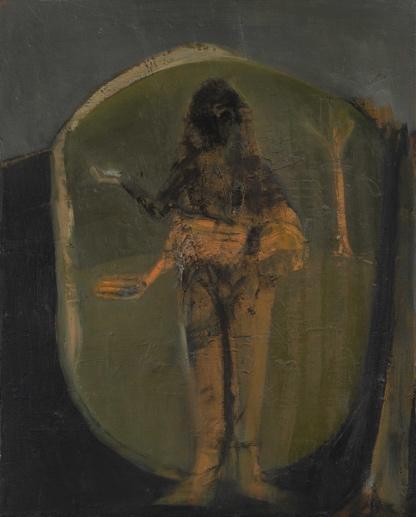
Fig 11: untitled, charcoal and oil on canvas, 50x40cm 2022, artist: Caron Greenblatt
In Judeo-Christian tradition, God created man out of the earth and then breathed life into him. The Mother, created from the earth and the breath of God, gives birth to her child from within her being, a being of earth and godly breath.

Fig 12:“Mother/breath” acrylic & pastel on board, 45x33cm 2022, artist: Caron Greenblatt
There are fascinating examples of Mother goddesses who express this life-giving frce. For instance: in Egyptian mythology, the sky goddess Nut is sometimes called Mother, because she bore the stars and the sun god. She was thought to draw the dead into her body and then nourish them back to life.

Fig 13: sky goddess Nut, Egyptian
In Hinduism, the divine Mother Goddess manifests herself in various forms, representing the universal creative force. She becomes Mother Nature who gives birth to all life forms and nourishes them through her body. Ultimately she re-absorbs all life forms back into herself to sustain herself as the power of death feeds life to produce new life.
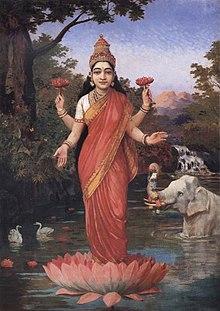
Fig 14: Lakshmi, Mother Goddess in Hinduism
The concept of the Mother Goddess as a force who not only gives birth to another and sustains that life, but through the ultimate gift of giving of herself, also sustains herself, is a very powerful one. As a mother of soldiers, I can only aspire to such sustenance, but for me, the gift of giving is filled with fear and trembling.
The mother of a soldier gives the life she has created, only to watch it dance within the shadow of death, standing helplessly at the gate until the game ends, this way or that.
At the point of separation between Mother and Child (forced or not), the mother becomes even more aware of her creation, aware of its existence and therefore of its possible non-existence. The giver of life becomes aware of the possibility of death and so holds on to life with even more desperation.
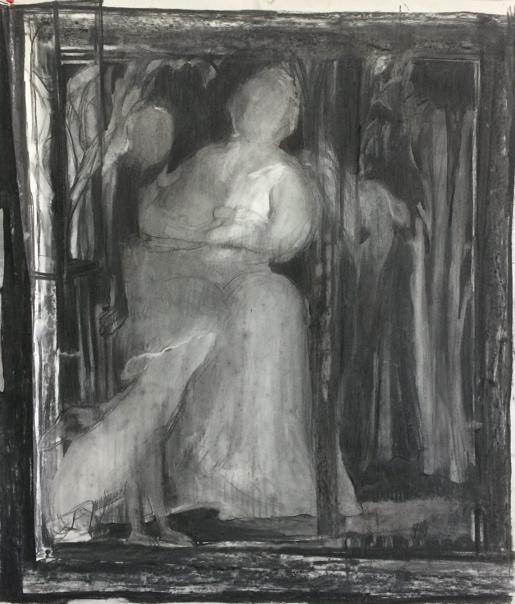
Fig 15: ”Mother at the Gate”, charcoal on paper, 100x80cm 2022, artist: Caron Greenblatt
As she stands between this gift of life and the certainty of death entailed by this gift, it is as if she stands at the gate of the Garden of Eden, at the limen where the promise of the eternal light of creation and the point of expulsion meet. She teeters between knowing and not knowing and between the conscious and the subconscious worlds.
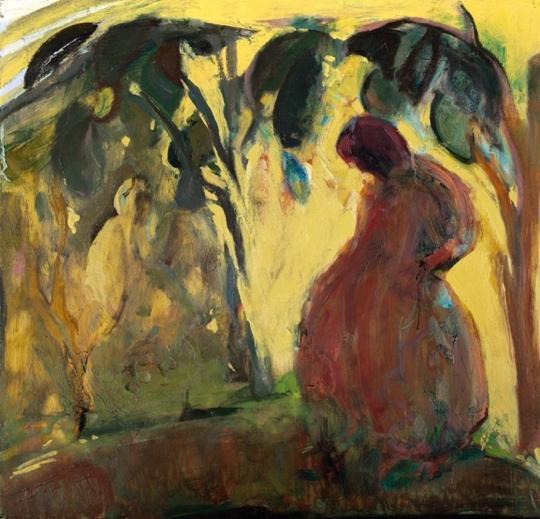
Fig 16: “at the gate” oil on metal, 50x40cm, 2022, artist Caron Greenblatt
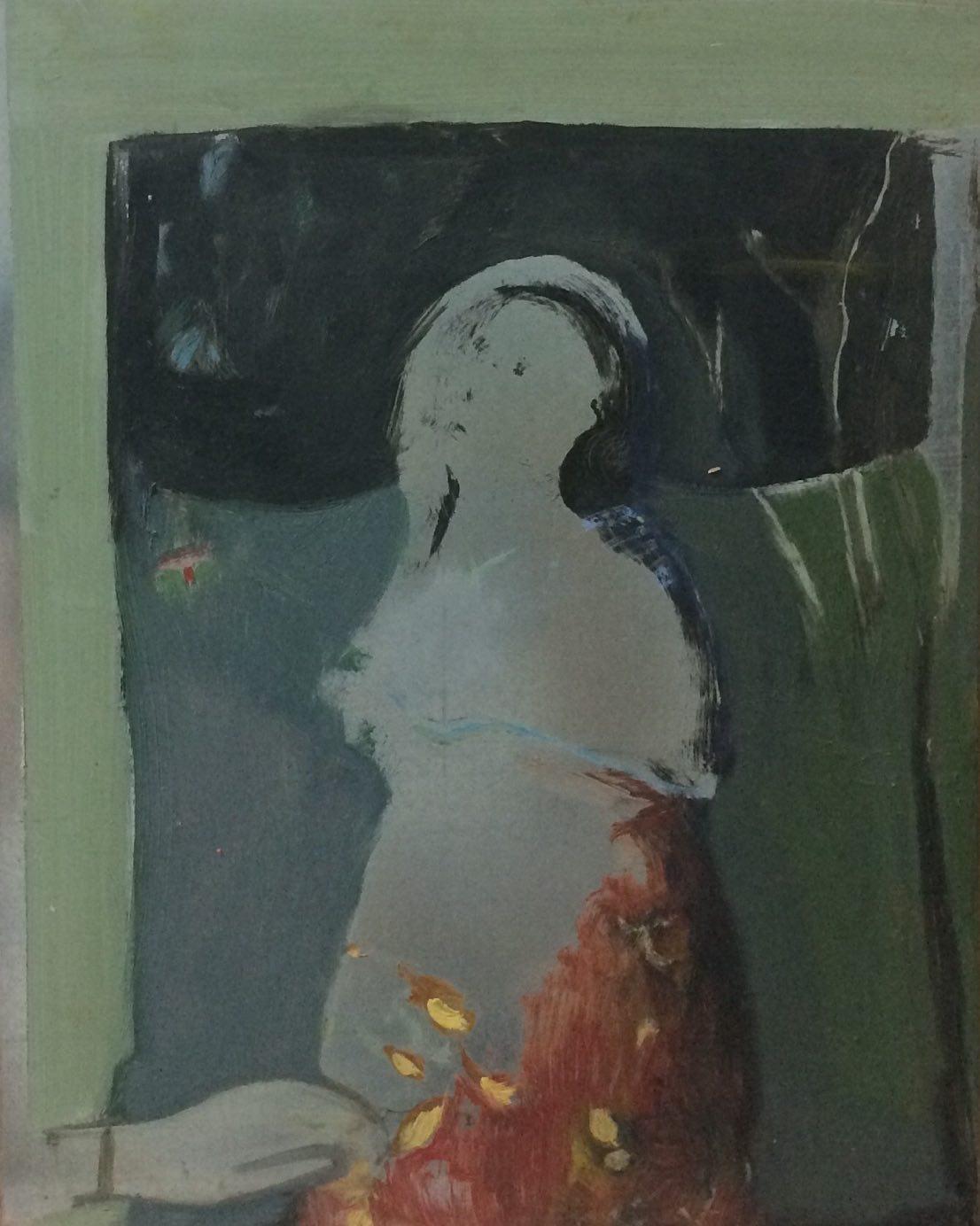
Fig 17: Untitled, oil on metal,32x28cm, 2022, artist: Caron Greenblatt
At this point, she may think that her gifts of creativity and protection are futile and perhaps even vain, as they don’t seem to have an effect on the course of events. She is not a figure of action, but rather an observer and a watcher, a guardian at the gate.
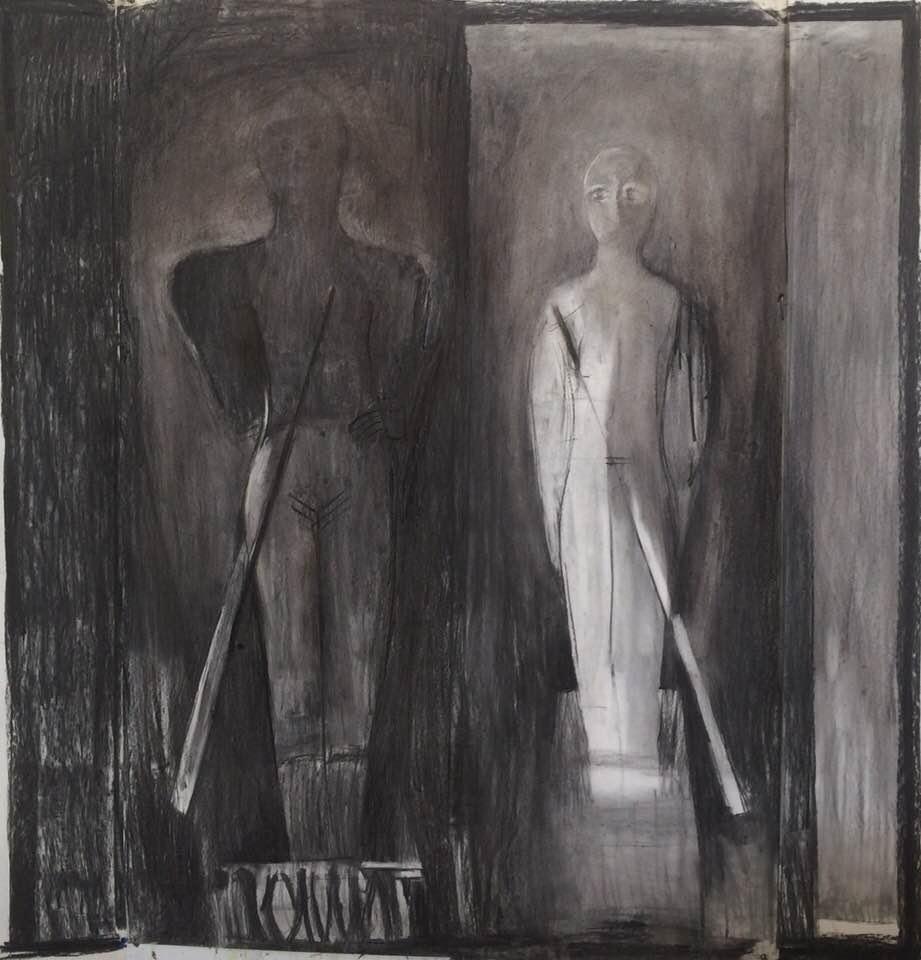
Fig 18: “Watchers”, charcoal on paper, 110x98cm, 2022, artist: Caron Greenblatt

Fig 19: “guardians” acrylic &,charcoal & pastel on canvas, 85x90cm 2022, artist: Caron Greenblatt
This is a strange place to exist; an uncomfortable and frightening place from which to observe one’s children. Yet it is exactly at this point in which the language of image making brings comfort because here imagination and magic takes over. The transformation of matter into imagery takes place in the spiritual realm in which intuition, hope and love can reveal themselves. The act of creating images requires a dialog in which the art maker listens carefully to the unfolding imagery, observing, holding and protecting with great patience and attention, not unlike a mother holding her child.
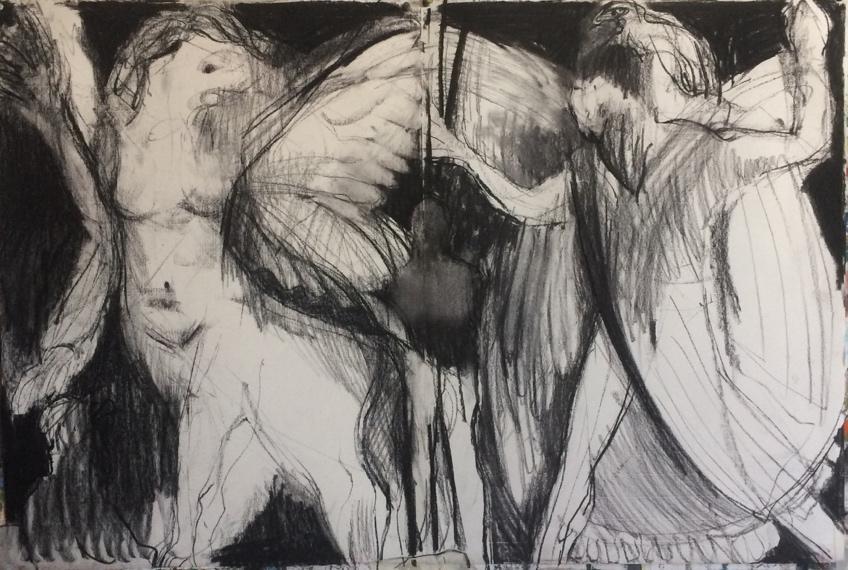
Fig 20: ”guardians at the gate” charcoal on paper, 120x80cm 2023, artist: Caron Greenblatt
In contemplating the mother-child relationship through the prism of a mother of soldiers, I experience “Mother” on many levels: as a creator and life giver, a protector and “holder” and ultimately as an observer and guardian.
Images of the Mother Goddess adorn my studio walls and imbue my painting practice with their spirit. They remind me of the intense power of creativity and the powerful gift of life. Yet they also point me towards my own frailty as a mother and specifically as a mother of soldiers, who must find her own way to brave a world of danger, helplessness and the unknown. The magic of image-making encourages me to hold a world of contradictions in my hands and brush upon the canvas my fears, hopes, thoughts and prayers. As I enter into the 4th year as a mother of soldiers, I sustain this daily practice–and it sustains me.
Sources
[2] https://en.wikipedia.org/wiki/Madonna_del_Granduca
[3] https://www.worldhistory.org/image/2314/queen-of-the-night-plaque
[4] https://en.m.wikipedia.org/wiki/File:Naked_woman_holding_her_breasts-Sb_7742-IMG_0880-black.jpg
[5] https://experiencesicily.com/2019/03/08/the-goddess-within/
[6] https://www.pinterest.com/pin/331155378826229249
[13] https://en.wikipedia.org/wiki/Nut_%28goddess%29
[14] https://study.com/academy/lesson/hindu-goddess-lakshmi-history-facts-names.html


 - JourMS -
