
Abstract
New Mexico has been central to two consequential and deeply interconnected histories: the development and detonation of the first nuclear weapon at Trinity Site in 1945, and the ongoing crisis of Missing and Murdered Indigenous Women and Girls (MMIWG). This paper examines two multimedia artworks Suttee, Moths and the Bomb, A Trinity and They Had No Time to Say Goodbye, both of which emerged from these histories. The former developed from the artist’s proximity to Los Alamos National Laboratory, where the atomic bomb was developed; the latter emerged from a collective of artists’ encounters with the MMIWG crisis and their subsequent determination to address it through artistic practice. Drawing on the work of other artists and activists who have brought these issues to public attention, the paper considers the seemingly disparate subjects of nuclear violence and violence against Indigenous women within a shared framework of patriarchy and colonialism. It argues that both histories reveal the disproportionate burdens borne by Indigenous communities, whose lands and bodies have been subjected to the enduring consequences of nuclear development, environmental contamination, and gendered violence.
Introduction
I was born and raised during South Africa’s apartheid-era (1948–1994). White South Africans of European descent made up approximately 13% of the population. We were the “first-class” citizens. The remaining population was classified as Native/Bantu, by far the majority, “Coloured,” and Indian/Asian. This racial hierarchy, and the systems of oppression that sustained it, were enforced by a police state.
Raised a devout Christian, I was told to “love thy neighbor as thyself”…”suffer the little children to come unto me”…“Inasmuch as ye have done it unto one of the least of these my brethren, ye have done it unto me.” Yet, in apartheid South Africa, those teachings seemed to apply only if your neighbor, the little children, or the least of these, were white.
At twenty, I traveled to England to live and work. Eighteen months in Europe profoundly changed my perspective. When I returned to South Africa I became far more conscious of the dynamics of the oppression of the majority of the population. Previous blinders had been removed. Years later, after emigrating to the United States, I encountered a different but still persistent form of racism—often less overt, but no less real.
To be racist is, in part, to lack empathy. Empathy was something our mother taught and practiced throughout her life. She raised four biological children, two foster children, and two adopted children. She demonstrated through her actions what she believed. Our father was the breadwinner, as was typical in that era.
Our mother volunteered with the Red Cross, teaching home nursing and first aid to girls at a Catholic school in Alexandra Township, a Black township outside Johannesburg. On Friday evenings, she drove into a seedy part of Johannesburg to teach home nursing and first aid to Black domestic workers employed by white families nearby. When she was invited to a Red Cross convention in Geneva, Switzerland, she refused to attend because Evelyn, her Black assistant, was not permitted to leave the country.
I can never hear a John Philip Sousa march without remembering the Red Cross parades on Sunday afternoons: the members of the Voluntary aid Detachment (VADs) in their white uniforms and the District Officers—our mother eventually became one—in dark gray uniforms, teaching the VADs to goose-step to the music.
Decades later, while living in Florida, I received a call early one Sunday morning from a hospital in Brooklyn, “Your son is dead.” In that instant, the empathy my mother had taught us acquired an entirely different meaning: This is what it feels like to lose a child.
My son was a member of Generation X, a generation that came of age during the Cold War under the threat of nuclear annihilation. From the age of four, he lived with me in a small adobe house in El Rancho, New Mexico. We were within walking distance of San Ildefonso Pueblo and only a few miles from Los Alamos, where the atomic bomb had been developed. He attended elementary and middle school in nearby Pojoaque, where the majority of his classmates were Hispanic or Native.
Artists in the area often went to the Los Alamos National Laboratory (LANL) salvage yards on Thursdays to purchase discarded metal—the detritus of the nuclear weapons program—at inexpensive prices. I was one of them. I also scoured the surrounding desert and mesas for animal bones.
After being hired as an Artist-in-Residence at Pojoaque High School, I brought my collection of bones into the classroom. I introduced my students to the controversy surrounding the Waste Isolation Pilot Plant (WIPP), a project planned for the transportation of nuclear waste through the region to an underground repository near Carlsbad in southern New Mexico.1 Some residents opposed the project on safety grounds. The issue was particularly complicated for my students as many of their parents worked at the laboratories and depended upon LANL for their livelihoods.
A small group of students joined me in creating a larger-than-life “Nuclear Monster” from bones and wire. We entered it in Art Windows on Route 66, a juried exhibition in which artists transformed storefront windows along Central Avenue in Albuquerque into art installations. The students created a scene that included their Nuclear Monster pushing an ancient, rusted wheelbarrow through desert sand. They titled it I’ll WIPP You and Waste You Away.
Competing against professional artists, the students won an award. The work was subsequently included in an exhibition at the Center for Contemporary Arts in Santa Fe titled Artists Against WIPP.
At the same time, I was becoming increasingly involved in yoga, both the asanas and meditation. Because yoga originated in India, I began researching its history and the gods and goddesses of Hinduism. I encountered the myth of Shiva and Sati: after Sati’s father insulted her husband, Shiva, she immolated herself on a sacred fire, overcome by anger and grief. The myth was reflected in the practice of suttee, in which widows of deceased high caste men were immolated on their husbands’ funeral pyres.
In the following pages I focus on two of the major art projects on which I worked while living in New Mexico from 1980 to 2002, and 2022 to the present. I also refer to the people, places, politics, and events that impacted the evolution of these works for without the broader context they have little relevance. Social practice art (also referred to as social art practice), the category to which these projects belong, does not function in a vacuum.2 The intersections of racism and empathy, grief and loss, nuclear destruction and transformation, the sacred and the horrific became part of the landscape from which much of my work emerged.
Here I explore two art installations created during two distinct periods of residency in New Mexico: the 1980s through the early 1990s, and 2022 ongoing to the present. Both bodies of work address critical social and political issues endemic to the region through a feminist lens and multimedia installations.3
At the end of the paper I quote Susan Griffin, author of Woman and Nature: The Roaring Inside Her. In the preface to the book she states, “I [trace] a history of patriarchy’s judgements about the history of matter, or the nature of matter, and place these judgements side by side, with men’s opinions about the nature of women throughout history… the book… [treats] the effect of patriarchal logic on material beings… [and] continues the analogy between woman and nature into explorations of the earth… and women’s bodies as we all exist in patriarchy… in this matter of woman and nature, we have cause to feel deeply.”4 This was written in 1977. Now, almost five decades later, we are experiencing a fierce backlash which many in much of the Western world are feeling deeply. We are experiencing a backlash in which nature is desecrated and women, feminists in particular, as well as people of color, are designated “the other” and are fast losing autonomy. I envision a day when the projects that I write about below become redundant. In the worst case scenario human beings will have proven to be a failed experiment and Planet Earth will survive without us. A parallel is the Diné creation myth of the First World, Nihodilhil, the Black World. “This world, being small in size, became crowded, and the people quarreled and fought among themselves, and in all ways made living very unhappy.”5 Hence, the Black World ended. From this dark world the Diné began a journey of emergence into the present world.
In the best-case scenario, our feminist and activist projects will be redundant. We will have awoken to the urgency of our situation, recognizing what is at stake for both human and environmental survival. Humanity will no longer live under the threat of nuclear annihilation. The constant threats to our natural environment and to Indigenous people and women, in particular, will be a thing of the past.
Suttee, Moths and the Bomb: a Trinity
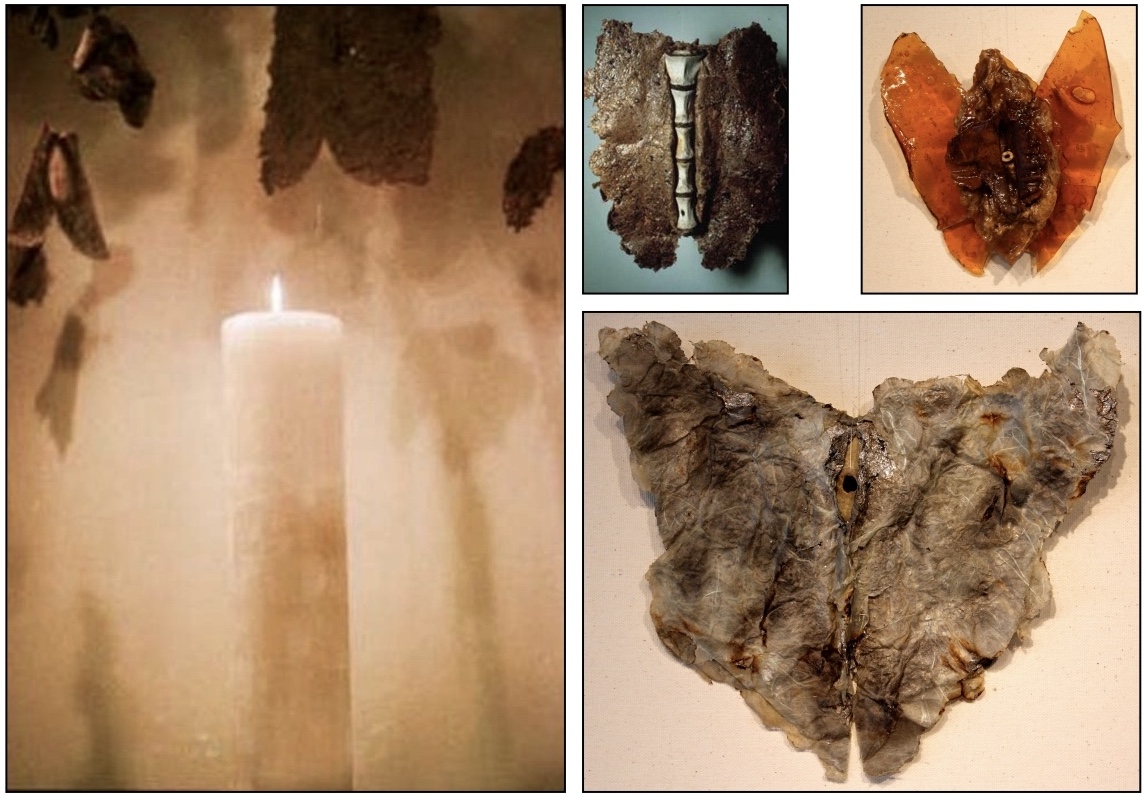
The first installation, commenced in the early 1980s. Titled Suttee, Moths and the Bomb: a Trinity, it evolved from proximity to Los Alamos National Laboratory and Trinity Site, locations integral to nuclear weapons development; also from a burgeoning interest in Eastern mythology and religion, in particular the story of Shiva and Sati. Her self-immolation became perverted into the rite of suttee. This work establishes conceptual parallels between three phenomena: the evolutionary maladaptation of moths that drives them toward flame, the Hindu practice of suttee wherein widows were immolated on their husbands’ funeral pyres, and humanity’s capacity for self-destruction alongside environmental catastrophe through nuclear weapons and the accompanying metaphorical mushroom cloud that hung over our heads during the Cold War.
This installation premiered at the Center for Contemporary Arts in Santa Fe, New Mexico. A panel discussion titled “The Future and the Bomb” was held in conjunction with the exhibition. The central element of the installation was a five-foot candle embedded with an oil lamp (in place of a wick) that burned continuously. Suspended overhead, moth-like sculptures fabricated from bones collected in the High Desert, and handmade paper embedded with organic materials—including grasses, human hair, and seeds—rotated slowly via a small fan (see figs. 1- 4). Desert sand covering the gallery floor incorporated visitors’ footprints as ephemeral components of the work and reminders of humanities’ culpability. Two audio tracks played simultaneously: excerpts from the Padma Purana, one of the eighteen principal texts of Hinduism, detailing wifely virtues and concluding with instructions to self-immolate on her husband’s funeral pyre (Padma Purana chapter 51); and Prins’ poetry describing moths’ “dervish dance to a fiery oblivion.” Suttee, Moths and the Bomb: a Trinity, subsequently toured venues in Los Angeles, Atlanta, Montana, and Florida.
The legacy of the bomb and nuclear testing continues to affect New Mexican populations decades later. So-called “downwinders” suffer ongoing health consequences from the Manhattan Project’s “Gadget,” the prototype device detonated July 16, 1945. Contemporary activist groups challenge uranium processing at Los Alamos National Laboratory. The most prominent of these anti-nuclear organizations is Nuclear Watch.6
Myrriah Gómez’s Nuclear Nuevo México: Colonialism and the Effects of the Nuclear Industrial Complex on Nuevomexicanos documents the impact of the nuclear industrial complex following the forcible dispossession of Nuevomexicanas/os and Tewa people in the early 1940s to facilitate the Manhattan Project. In the preface to her book Gómez describes the case of her cousin Ricky, a lifelong LANL employee who “suffered multiple organ failures” over ten years following radiation exposure from “at least one nuclear spill” before dying at age forty-one. He was survived by his wife and two daughters (Gómez). This is but one of countless anecdotes related to the negative impacts of the nuclear industry on human health in New Mexico.
The impacts of uranium mining in New Mexico has compelled numerous visual artists to create work addressing the many issues surrounding it. One of these artists was Tony Price (1937–2000), who transformed materials associated with mass destruction into anti-nuclear sculptures and deity-inspired masks he called “sympathetic magic.” He became known as the “Atomic Artist.”7
Prominent among living New Mexican artists is Shayla Blatchford (Diné), whose Anti-Uranium Mapping Project began by using maps and other visual aids to chronicle the devastating impacts of the 1979 Church Rock Uranium spill. Through her art and educational projects Blatchford continues to educate the public about the importance of resisting modern uranium mining in New Mexico. She states that the American government’s approach “is rooted in colonization so [they] don’t want to bring attention to what’s happening in marginalized communities, because they know the reason they initially went into these places was to take advantage of them” (Ferguson).
Historically Native peoples have revered Mother Earth, viewing Earth as a source of life rather than a resource to be owned. Blatchford demonstrates this deep connection in her work.
While visual art can evoke emotions and initiate discussion, the inaugural exhibition of Suttee, Moths and the Bomb: a Trinity in Santa Fe specifically included a panel discussion that was an essential component of the piece. As an educational component, similar to those Blatchford employs, it was videotaped,8 and articles about it appeared in the press in California and New Mexico.9 As planning for the panel discussion progressed, some individuals invited to participate refused—the topic of nuclear armaments was a divisive issue, and remains so to this day. The complexities surrounding nuclear armaments were brought to light by the press coverage and during the panel discussion by both panelists and audience members. Issues related to the nuclear industry continue to generate discussion, and controversy.
Figures 5-7
They Had No Time to Say Goodbye
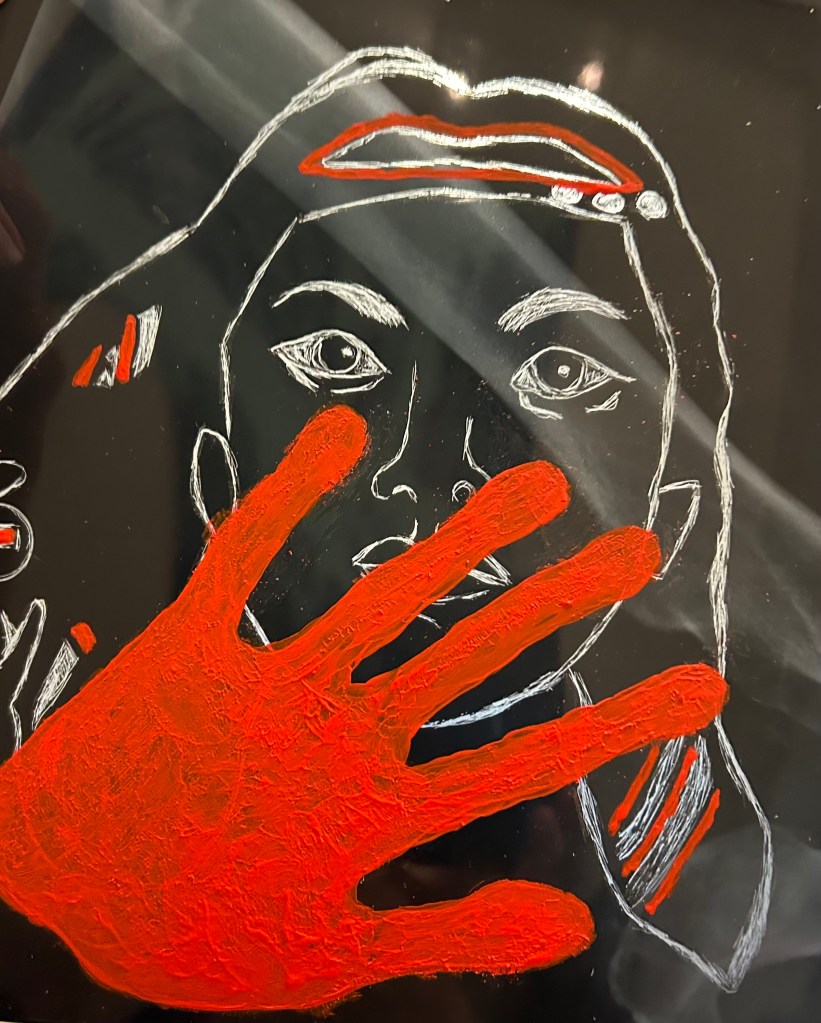
The second project relevant to New Mexico and, tragically, to a number of other places throughout North America, as well as to feminism in general, is They Had No Time to Say Goodbye. It draws inspiration from Jaimie Black’s REDress project and athlete Jordan Marie Daniel’s red hand symbolism (see fig. 5).
They Had No Time to Say Goodbye, a collaborative multimedia art project, addresses the crisis of Missing and Murdered Indigenous Women (MMIW) through multimedia collaborative practice. It evolved in consultation with Linda Piper, Black activist, theater director, writer and storyteller (who later became a collaborator) and Patricia Yazzie, a Diné woman who was raised on the Navajo Nation and worked as an educator with Indian Health Service there. Later, Sandi Ludescher, New Mexican figurative painter, joined us. Sandi is painting portraits of actual MMIW. Their families have given permission to use their images and relate their stories through local lawyer and activist Darlene Gomez. These portraits reflect the reality of the loss of individual women’s lives. They are differentiated from the images on the X-rays representing the countless anonymous Indigenous women who go missing without a trace: to protect the grieving families’ privacy we do not use actual MMIW’s images on the X-rays.
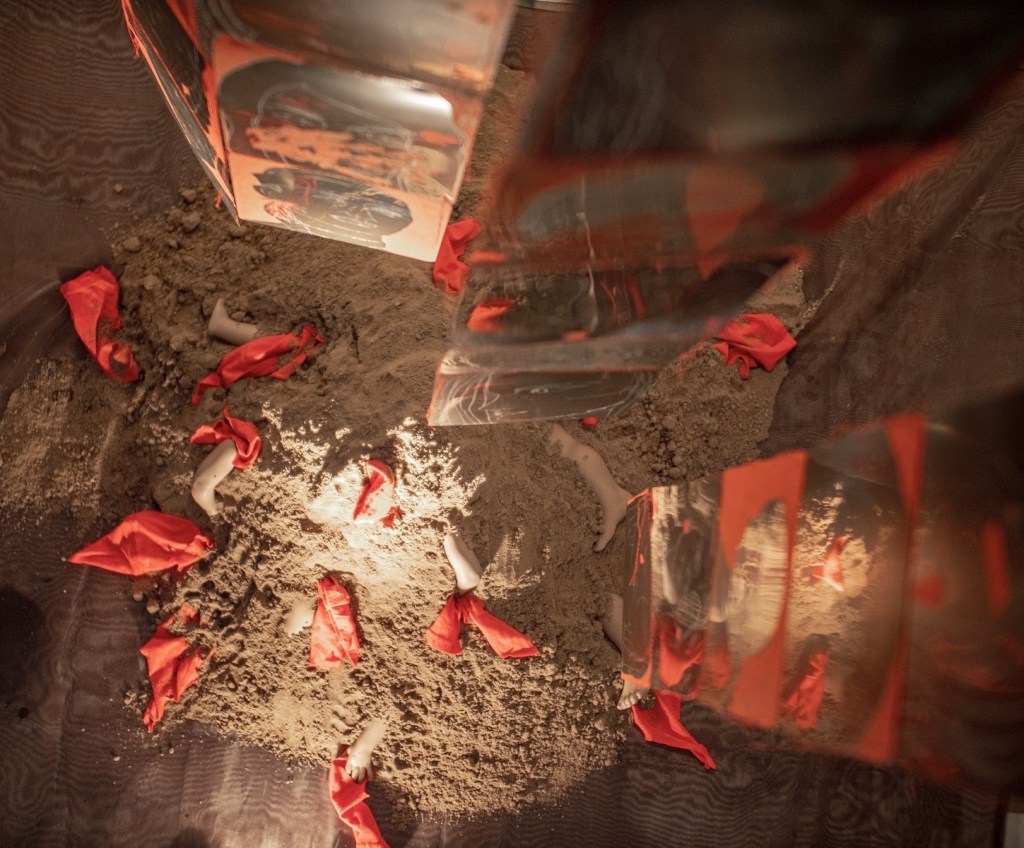
They Had No Time to Say Goodbye, presented at The Museum of Motherhood’s 2026 Conference, originated from an encounter with a billboard in Albuquerque in mid 2022 featuring an Indigenous woman with the single word “HOMICIDE.” Later, the discovery of dismembered porcelain dolls in an antique mall revealed metaphorical connections to missing and murdered Indigenous females, reflecting their perceived disposability by mainstream culture.
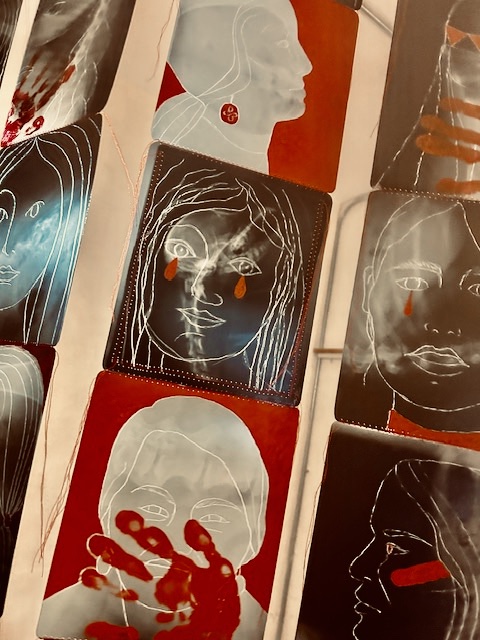
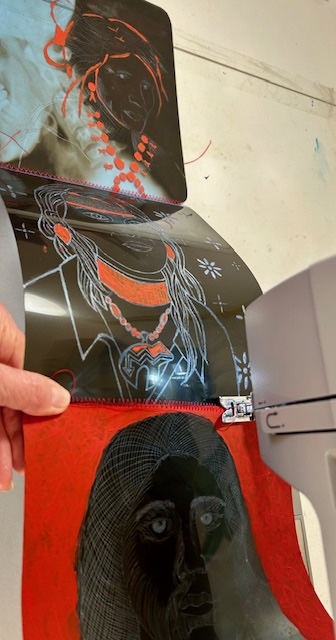
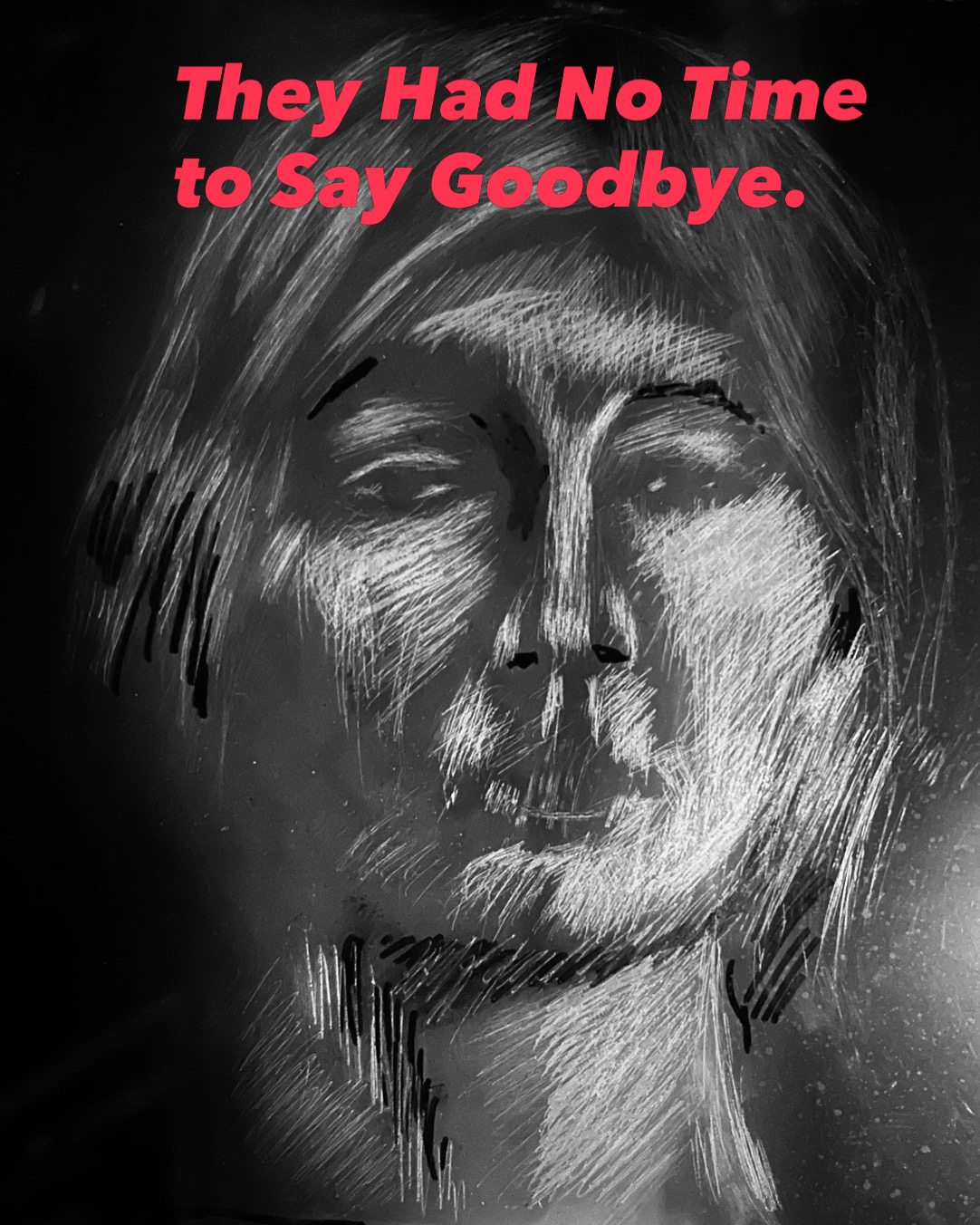
The installation started with accordion-fold artist’s books that unfurl as long scrolls that hang from the ceiling. The scrolls comprise nine-by-eight-inch X-rays featuring etched Indigenous women’s faces, enhanced with red pigment and stitched together with crimson thread. Red signifies the MMIW movement. These images represent countless anonymous missing or murdered Indigenous women, metaphors for disappeared daughters. Hung above desert sand partially concealing the doll parts and red women’s clothing fragments, the scrolls move gently via a small fan. This combination creates a ghostly presence through skeletal imagery emphasizing Indigenous women’s vulnerability (see figs. 6, 7).10
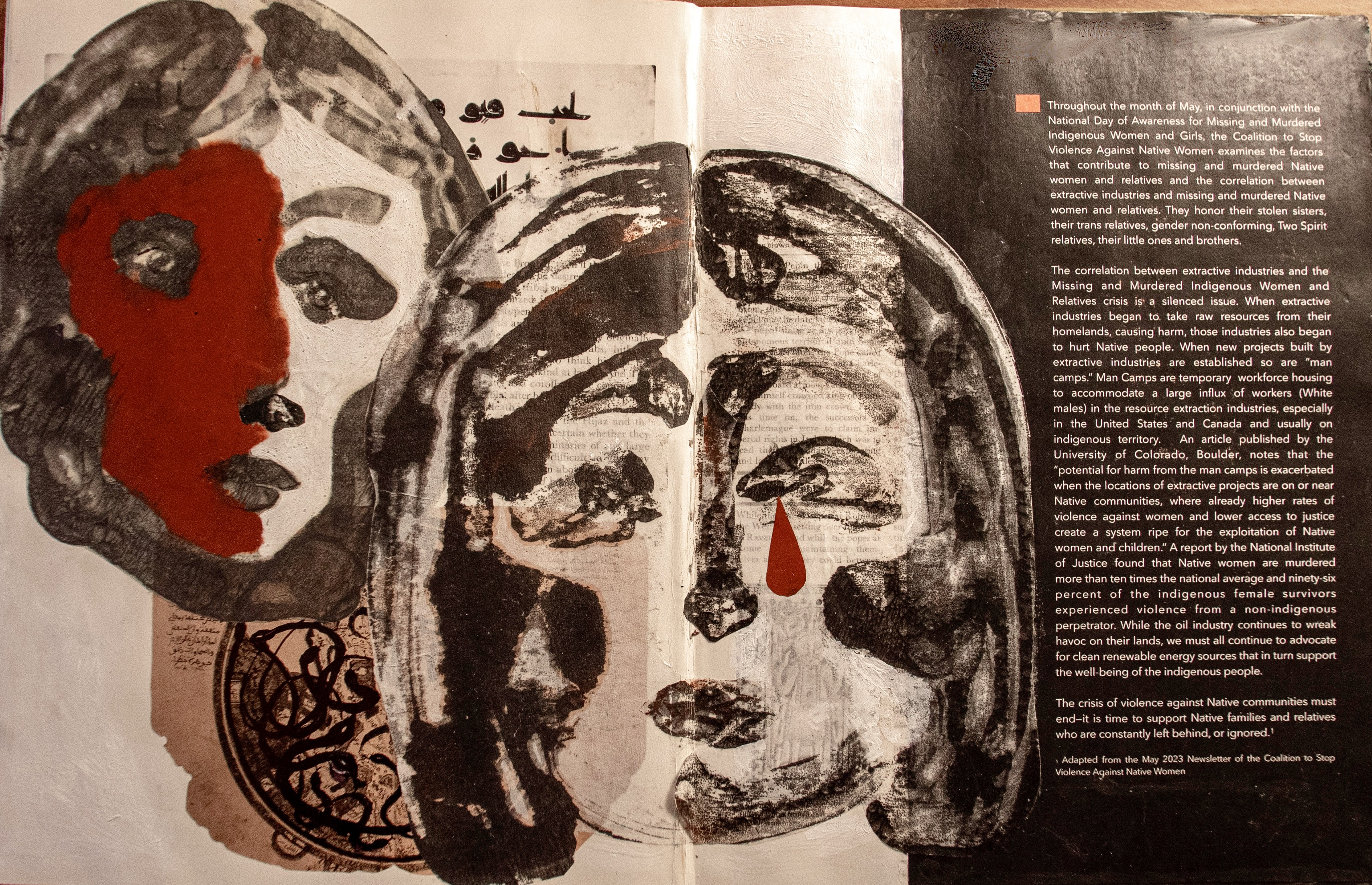
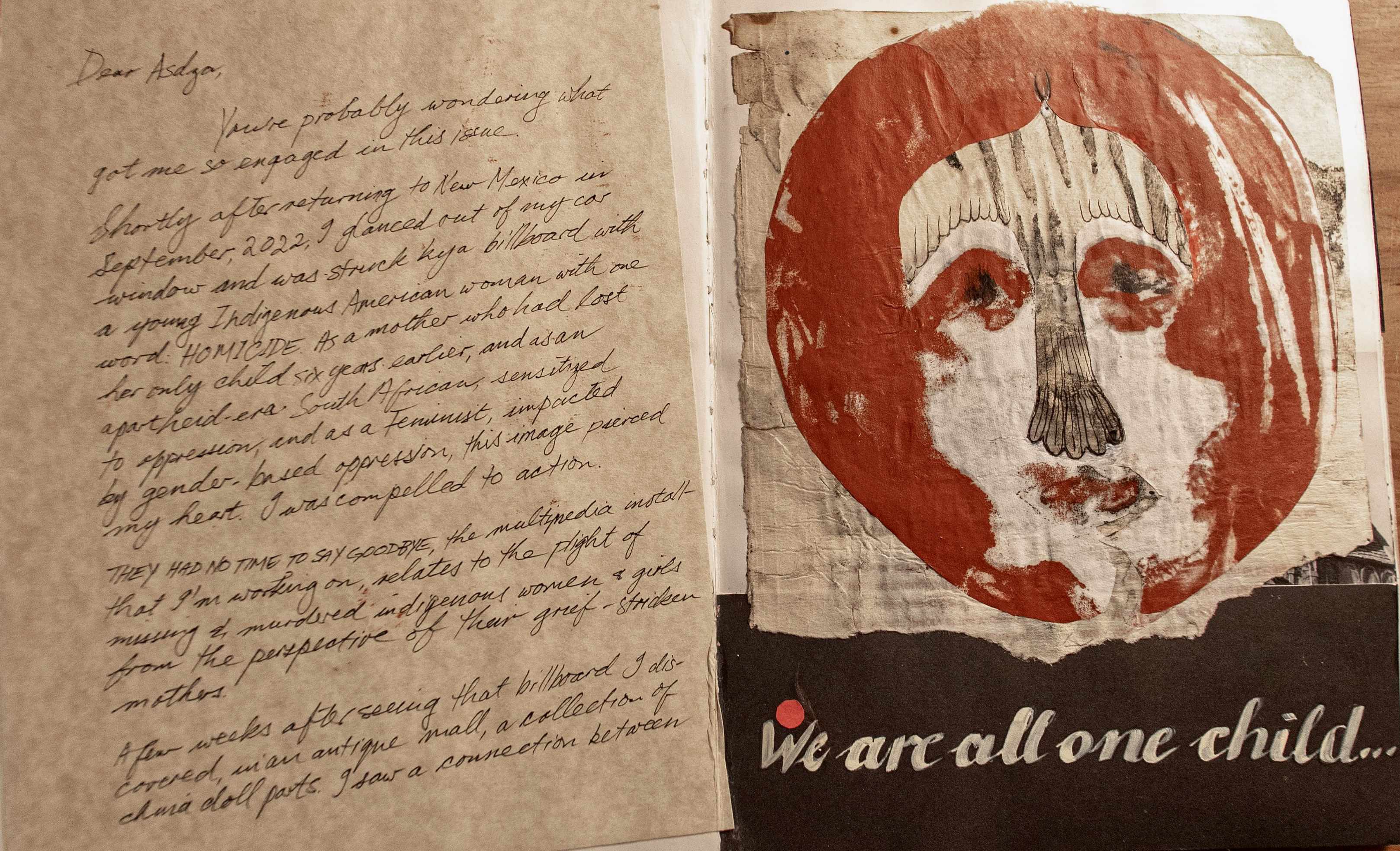
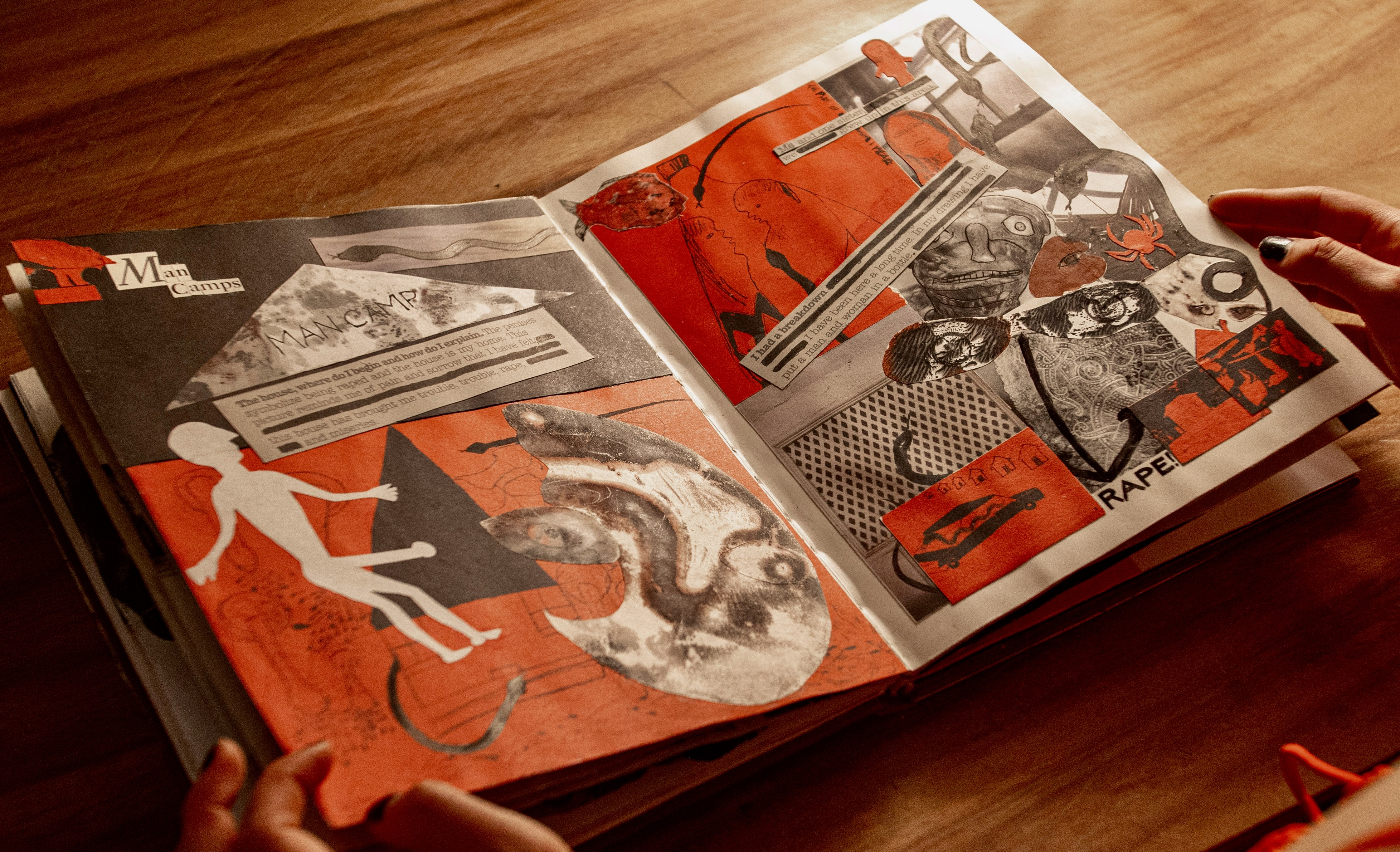
An accompanying artist’s book, dedicated to the mothers of MMIW, includes information on “Man Camps” established on Native land by the extractive industry. Increasingly the men at these camps prey on Native women, thus adding to the MMIW crisis. The book includes statistical data; also fictional correspondence with Asdzá, an imaginary Diné woman, exploring shared maternal experiences and grief (see figs 8–10).
Figures 8-10
While comprehensive current data remains unavailable, Indigenous women disappear and are murdered at disproportionate rates. The National Crime Information Center reported 5,712 missing American Indian and Alaska Native women and girls in 2016, while the Department of Justice’s NamUs database recorded only 116 cases. This reveals systematic underreporting.
At an artists’ retreat in Guadalajara, Mexico, the project expanded into an international collaboration ending with an initial exhibition there in January 2024. Locally, Patricia Yazzie continues as project consultant. Linda Piper and Sandi Ludescher continue as collaborators.
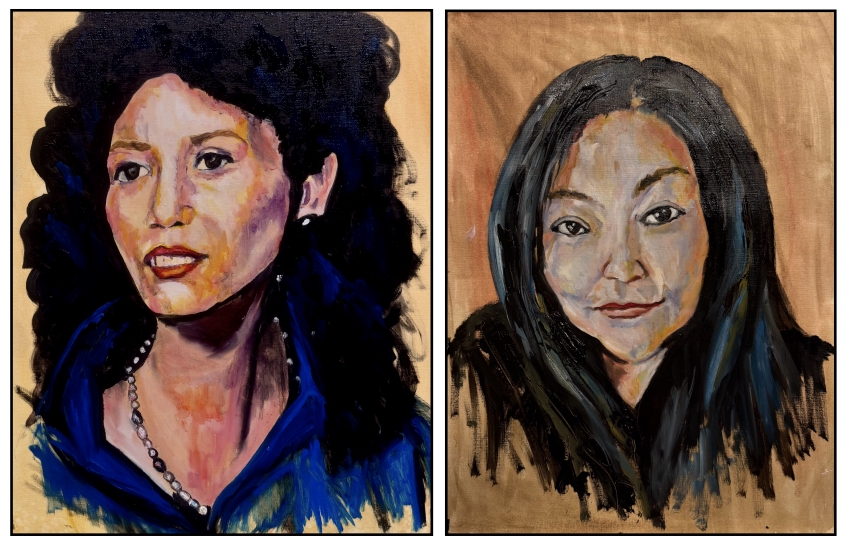
Among the subjects painted by Ludescher is Melissa Ann Montoya, who disappeared from Dulce, New Mexico, and remains missing (see fig. 11). Another is Jamie Yazzie, mother of three, who went missing in 2019 from the Piñon community on the Navajo Nation (see fig. 12). Her murderer, Tre James, was sentenced to life in prison in 2024. Yazzie’s case is one of the few in which justice was served. These portraits are central to the project’s planned exhibitions.
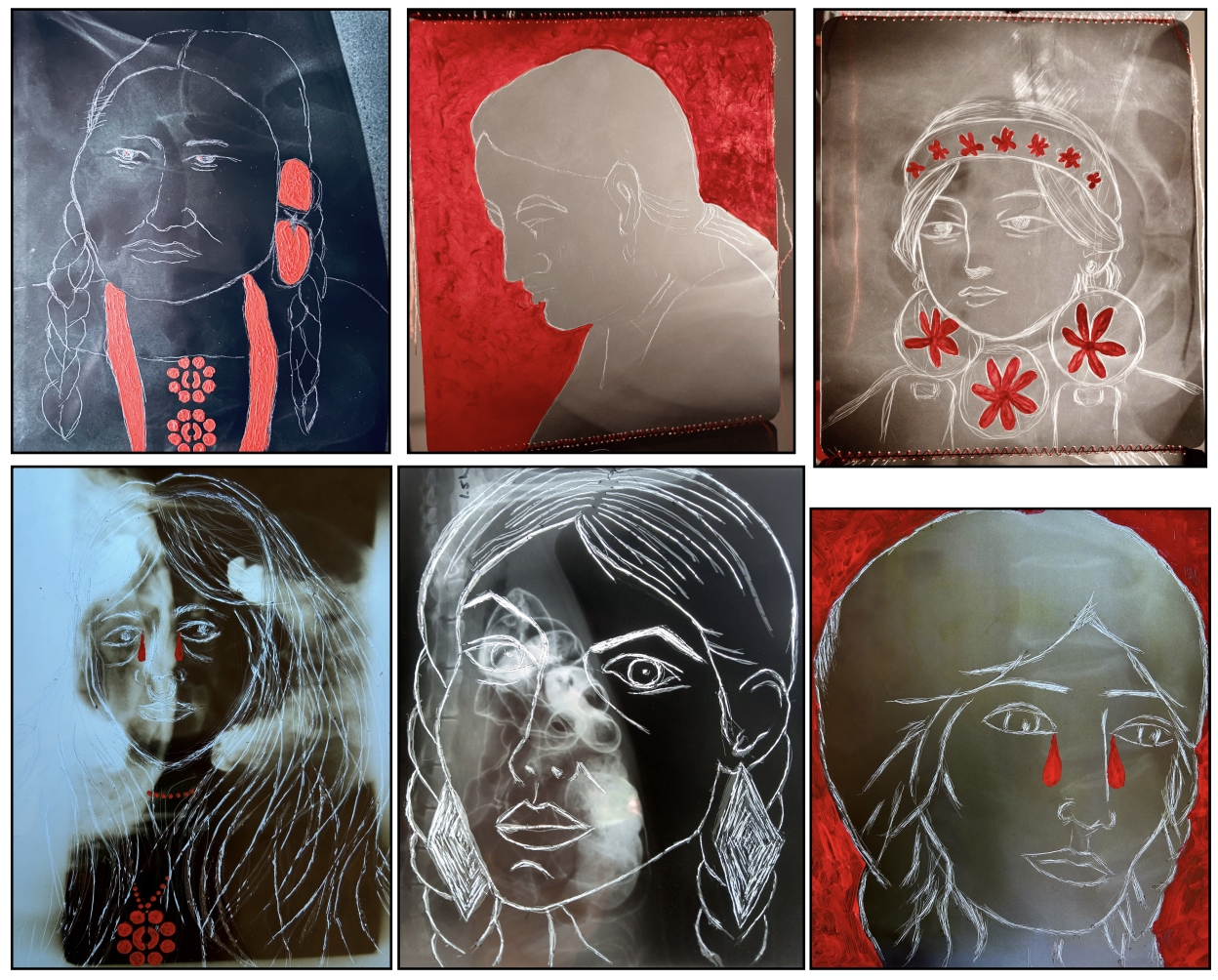
The initiative invites international artistic participation through the creation of etched X-ray portraits depicting North American Indigenous women. To date, over 200 artists from Korea, England, Portugal, Germany, Canada, Mexico, and throughout the United States have contributed etched X-ray portraits (see figs. 13 – 18.) We credit all participating artists in our exhibitions demonstrating Linda Piper’s assertion that “the whole is always greater than the sum of its parts.” Artists interested in contributing to the project may obtain instructions for etching an X-ray through rosemarieprins.com.
The crisis of Missing and Murdered Indigenous Women (MMIW) in regions such as New Mexico—where Albuquerque records among the nation’s highest MMIW rates—stems from multiple contributing factors. These include “Man Camps”mentioned above, and domestic violence—but one of the many outcomes of colonialism. Native American women experience disproportionately high rates of violence, disappearances, and murder—rates reaching ten times the national average. Many missing women have become victims of sex trafficking.
The They Had No Time to Say Goodbye workshops and presentations address these critical issues. The project has been presented in workshops in London, England; Tomar Portugal (see fig. 26); St. Petersburg, Florida; and a number of locations in Albuquerque, with an additional workshop scheduled for November 26, 2026, at Albuquerque’s Juan Tabo Public Library.
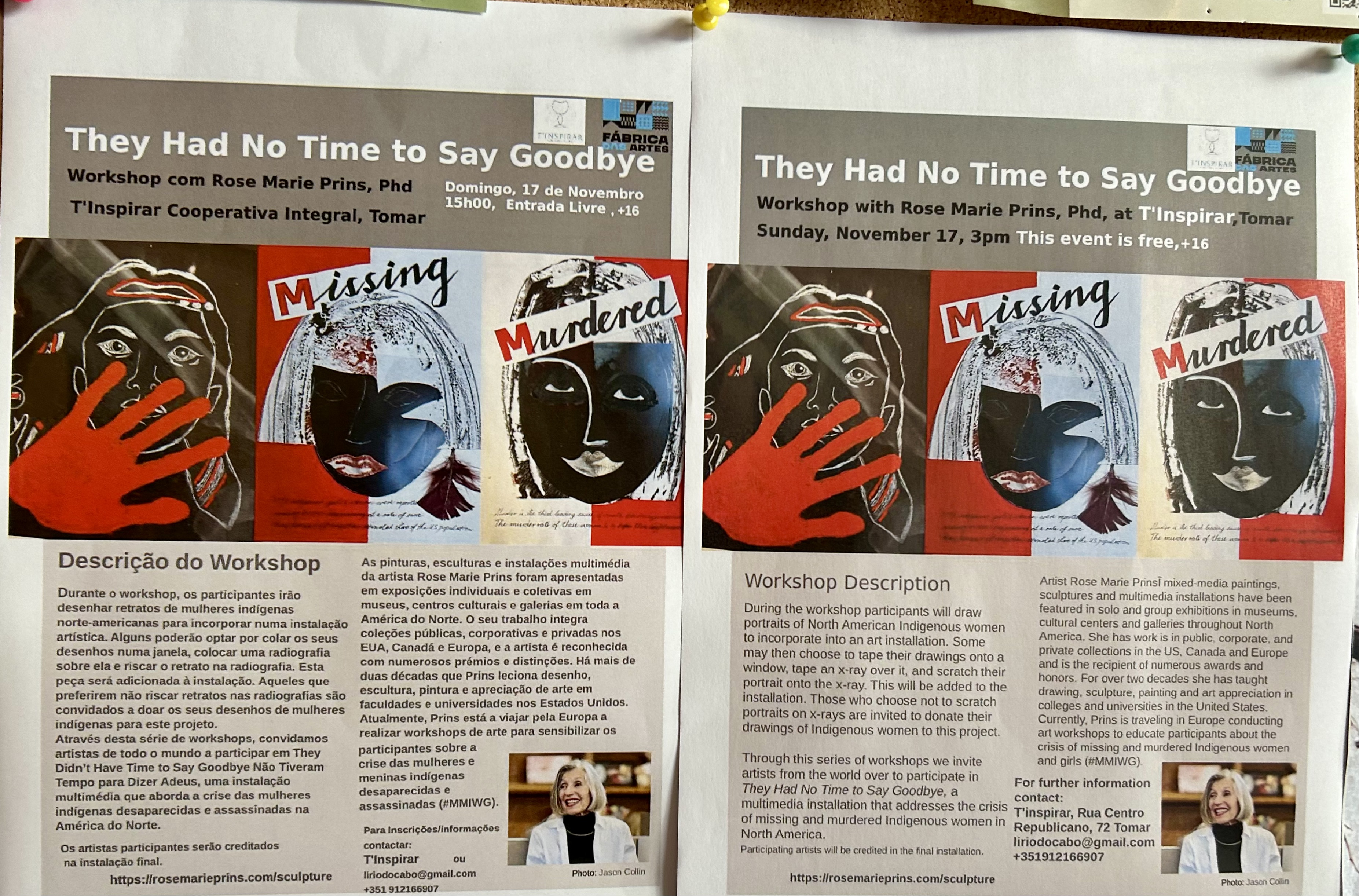
These complimentary workshops educate participants about the MMIW crisis. The workshop structure includes viewing an installation video followed by discussion. Participants then create portraits of North American Indigenous women on nine-inch-by-eight-inch tracing paper. Subsequently, participants tape their drawings to windows or light boxes, overlay the X-rays, and etch their portraits using sharp objects such as scissors. Following embellishment with red paint.the etched X-rays are stitched together to be integrated into the installation (see fig. 27).
The inaugural edition of Horizon Review, FUSION’s annual literary and fine arts magazine, published in April 2026, features an in-depth article about They Had No Time to Say Goodbye (see figs. 29, 30). The article highlights key collaborators, including Patricia Yazzie, mother and grandmother, whose “input, guidance, wisdom, and consultation have been pivotal in helping the art project become what it is today” (Tracy et al. 46). The collaborative effort aims to increase public awareness of the crisis for the protection of victims and to instigate action. As one of the participants, an Indigenous woman and sex trafficking survivor, emphasizing the urgency of intervention, states, “I am standing in the gap, and as hard as it is, I’m the one saying “no more’” (Tracy et al. 47). “Project founder Rose Marie demonstrates similar commitment,
indicating her intention to continue accepting etched X-rays and hosting workshops ‘when there is no more missing and murdered Indigenous women’s crisis or when I can no longer get X-rays…or when I’m dead’” (Tracy et al. 49).
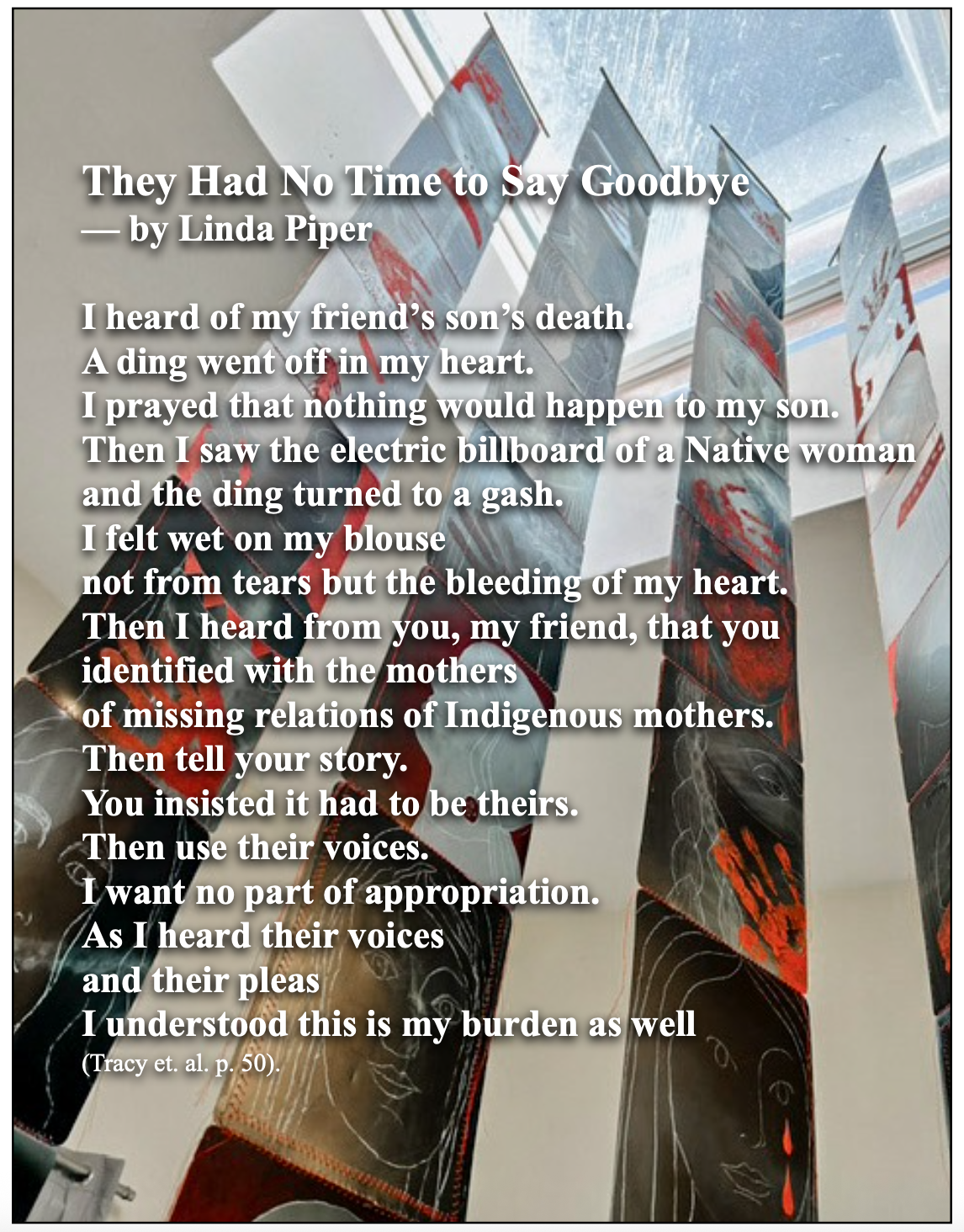
The project’s objective involves exhibiting They Had No Time to Say Goodbye throughout North American locations where MMIW crisis prevalence is highest. As stated in Horizon Review, the initiative emphasizes collaborative community engagement: “It’s important to not just align myself with fellow artists but with people like Darlene Gomez, and Linda Piper (see fig. 23). …It’s about teaming up. It’s about a community. It takes a village” (Tracy et al. 48).
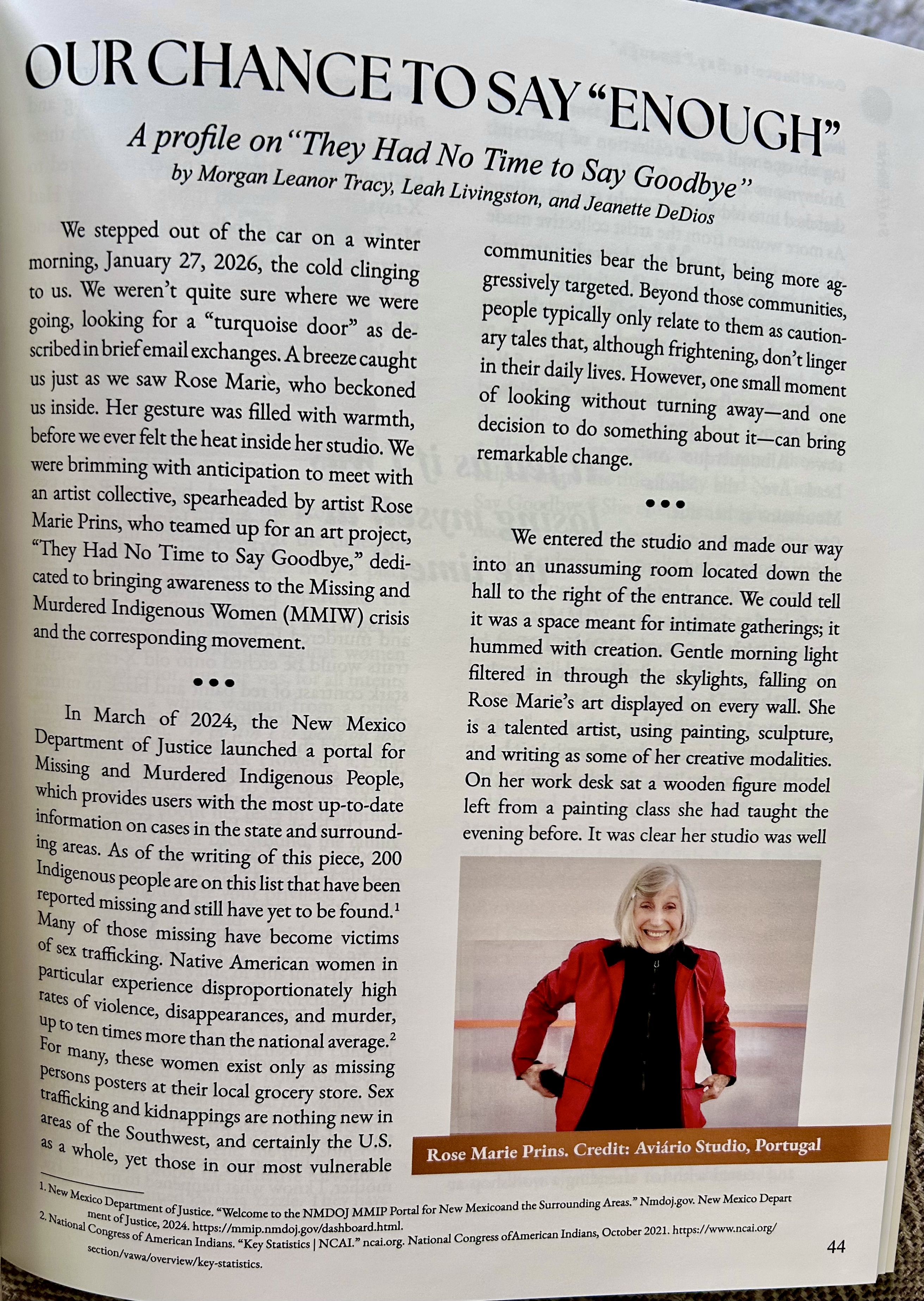
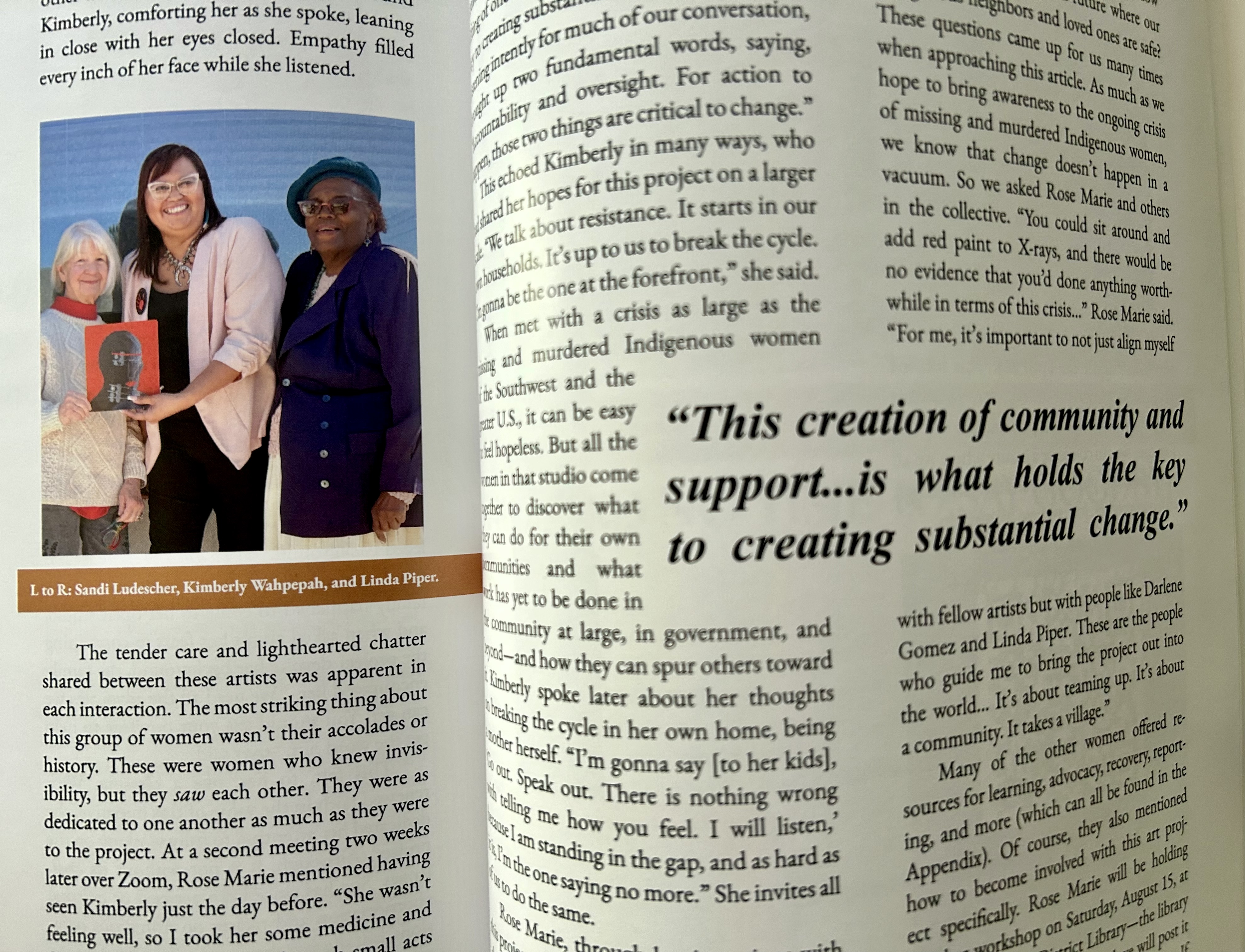
Figures 21-22
The following is a quote from the Horizon Review article:
In March of 2024, the New Mexico Department of Justice launched a portal for Missing and Murdered Indigenous People, which provides users with the most up- to-date information on cases in the state and surrounding areas. As of the writing of this piece, 200 indigenous people are on this list that have been reported missing and still have yet to be found.11 Many of those missing have become victims of sex trafficking. Native American women in particular experience disproportionately high rates of violence, disappearances, and murder, up to ten times more than the national average.12 For many, these women exist only as missing persons posters at their local grocery store. Sex trafficking and kidnappings are nothing new in areas of the Southwest, and certainly the U.S. as a whole, yet those in our most vulnerable communities bear the brunt, being more aggressively targeted. Beyond those communities, people typically only relate to them as cautionary tales that, although frightening, don’t linger in their daily lives. However, one small moment of looking without turning away—and one decision to do something about it—can bring remarkable change (Tracy et al. 44).
In the 1960s to1980s, during the second wave of feminism, several writers explored the conflation of women and nature in Western patriarchal attitudes. Among these is Susan Griffin whose book, Woman and Nature: The Roaring Inside Her (Griffin 1), explores how patriarchy perceives both women and nature as inferior. Throughout the book she refers to the patriarchy as the singular “he” thus treating an abstract social structure like a living actor with intent:
- He says that woman speaks with nature. That she hears voices from under the earth. That wind blows in her ears and trees whisper to her… He says he is not part of this world, that he was set on this world as a stranger. He sets himself apart from woman and nature… And he says he cannot hear us speak.13
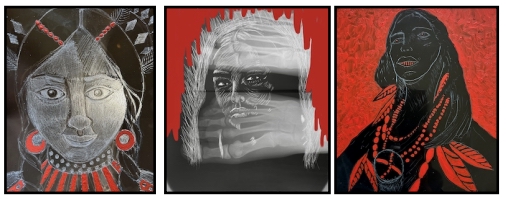
Figures 23-25
It would seem then, that the decimation of nature and the degradation of women are the inevitable outcomes of this stance, that the disregard for nature, and the peoples dependent on it, exhibited by Los Angeles National Laboratories in particular here in New Mexico are a microcosm of a macrocosm. So too, is the treatment of Indigenous women.
Patriarchal colonizers link women and Indigenous peoples to nature through a philosophical framework known as dualism. This splits reality into superior and inferior categories. In this framework the colonizer positions himself as “Culture, Reason and Mind,” while categorizing women, Indigenous populations, and the natural environment as “Nature, Emotion, and Body.” Ecofeminism and decolonial theory analyze dualism to explain how resource extraction and human subjugation—in which the land and its inhabitants become resources to be mined—justify one another.14
In spite of continuing opposition and erasure due to ingrained patriarchal attitudes women are emerging at the forefront of change. The multifaceted nature of Suttee, Moths and The Bomb: a Trinity and the collaborative model of They Had No Time to Say Goodbye parallel the community support required for New Mexico’s downwinders, representing the intersection of feminism, multiculturalism, artistic expression, and lived experience.
Footnotes
- 1 https://www.epa.gov/pcbs/waste-isolation-pilot-plant-carlsbad-new-mexico ↩︎
- 3.The Art Story, https://www.theartstory.org/movement/social-practice-art/ ↩︎
- 4. These, as well as a number of other works, were influenced by Prins’ experience studying in the Feminist Studio Workshop at The Woman’s Building, Los Angeles. Suzanne Lacy, editor of Mapping the Terrain: New Genre Public Art, together with Judy Chicago, one of the founders of the Woman’s Building, were foremost among those advocating for new genres in artistic practice. ↩︎
- Griffin, Susan, Woman And Nature: The Roaring Inside Her pp. xvi, xvii ↩︎
- https://navajopeople.org/blog/navajo-creation-story-the-first-world-nihodilhil-black-world/#google_vignette ↩︎
- https://nukewatch.org/ ↩︎
- https://tonypriceatomicartist.com/ ↩︎
- The video of the panel discussion will soon be available for viewing on YouTube and at rosemarieprins.com ↩︎
- Zan Dubin, “Show Studies Survival,” Los Angeles Times, June 28, 1987. Also: David Bell, “Art Exhibit Covers Ground From Familiar to Abstract,” June 25, 1986. ↩︎
- I lost my only child a few years before I moved to New Mexico. This was a major impetus for this project—I identified with the mothers of MMIWG. ↩︎
- New Mexico Department of Justice. “Welcome to the NMDOJ MMIP Portal for New Mexico and the Surrounding Areas.” Nmdoj.gov. New Mexico Department of Justice, 2024. https://mmip.nmdoj.gov/dashboard.html ↩︎
- National Congress of American Indians. “Key Statistics / NCAI.” Ncai.org. National Congress of American Indians, October 2021. https://www.ncai.org/section/vawa/overview/key-statistics ↩︎
- Susan Griffin was Prins’ advisor when she was a student in the Feminist Studio Workshop at the Woman’s Building working on her Master’s Degree. ↩︎
- Decolonial theory is an academic framework, originating in Latin America during the late 1980s and early 1990s, that examines how power structures, knowledge systems, and psychological impacts of European colonialism persist today, long after colonies gained independence. ↩︎
Works Cited
Padma Purana, translated by N.A.Deshpande, Motilal Banarsidasss, 1951.
Ferguson, Adam, “Three Questions with Photographer/Activist Shayla Blatchford,” Santa Fe Reporter, Oct 29, 2025. https://sfreporter.com/api/search.html?q=Shayla+Blandford&sa=
Gómez, Maria. Nuclear Nuevo México: Colonialism and the Effects of the Nuclear Industrial Complex on Nuevomexicanos. University of Arizona Press, 2022.
Griffin, Susan. Woman and and Nature: The Roaring Inside Her. Harper and Row, 1978.
Horizon Review. FUSION, www.horizonreview.org/purchase.
Lacy, Suzanne, (ed.), Mapping the Terrain: New Genre Public Art. Bay Press, 1994.
Mignolo, Walter D. et al., editors. Aníbal Qyijano: Foundational Essays on the Coloniality of Power. Duke University Press, 2024.
Prins, Rose Marie. They Had No Time to Say Goodbye. Rose Marie Prins, Patricia Yazzie. www.rosemarieprins.com/they-had-no-time-to-say-goodbye/#bwg35/1000.
Prins, Rose Marie. They Had No Time to Say Goodbye. 2026. Collection of Rose Marie Prins, Albuquerque, NM.
Tracy, Morgan Leanor, et al. “Our Chance to Say ‘Enough’: A Profile on They Had No Time to Say Goodbye.” Horizon Review, issue 1, 2026.
List of Figures
1- 4. Suttee Moths and The Bomb: A Trinity, installation details.
5. Etched and painted nine-inch-by-eight-inch X-ray with hand imprint signifying the MMIW’s movement.
6 – 7. They Had No Time to Say Goodbye installation details.
8 – 10. Spreads from They Had No Time to Say Goodbye, unpublished artist’s book by Rose Marie Prins.
11. Melissa Ann Montoya, oil painting by Sandi Ludescher.
12. Jamie Yazzie, oil painting by Sandi Ludescher.
13 – 18. Etched X-rays created by artists in Asia, Europe and Mexico.
19. They Had No Time to Say Goodbye workshop flyer.
20. Stitching etched X-rays together with red thread to be incorporated into the They Had No Time to Say Goodbye installation.
21, 22. Page and spread from Tracy, Morgan Leanor, et al. “Our Chance to Say ‘Enough’: Profile on They Had No Time to Say Goodbye. Horizon Review, issue 1, 2026, depicting members of the They Had No Time to Say Goodbye collective.
23. Piper, Linda, poem in Tracy, et. al. p. 50, superimposed on scrolls of etched and painted X-rays hanging from the ceiling during the exhibition of They Had No Time to Say Goodbye in Guadalajara.
24, 25. X-rays depicting faces of North American Indigenous women etched by artists in the USA.


